
Economist of the Austrian School, author of Man, Economy, and State (1962) and For a New Liberty (1973)
See also: Freedom Founts , FreedomPedia
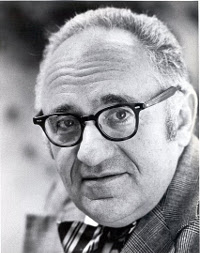
Murray Newton Rothbard (1926-1995) was an economist of the Austrian School, economic historian, political theorist and activist. He was a central figure in the 20th-century American libertarian movement and a founder and leading theoretician of anarcho-capitalism (as termed by Rothbard; but later opposing the "anarchism" label on both etymological and historical grounds). He wrote over twenty books on political theory, history, economics and other subjects.
Related Groups
Reference
Rothbard, Murray (1926-1995), by Brian Doherty, The Encyclopedia of Libertarianism, 15 Aug 2008
Biographical and bibliographical essay
Biographical and bibliographical essay
Murray Rothbard, a libertarian economist, political philosopher, historian, and activist, strove throughout his life to craft a systematic approach to liberty covering all the disciplines of the humane sciences. He was of central importance to the American libertarian movement because of both his writing and scholarship and his personal outreach ... For his coverage of the full range of libertarian philosophy and application ..., and his near ubiquitousness through most institutions of the libertarian movement ..., he was often thought of as having shaped modern American libertarian thought ...
Images
Rothbard smiling - Mises.org
764x988 JPEG, grayscale

764x988 JPEG, grayscale
Rothbard writing on chalkboard - Mises.org
2167x2490 JPEG, grayscale

2167x2490 JPEG, grayscale
Young Rothbard - Mises.org
2373x2991 JPEG, grayscale

2373x2991 JPEG, grayscale
Born
2 Mar 1926, Murray Newton Rothbard, in The Bronx, New York City
Died
7 Jan 1995, in New York City
Biography
Laissez Faire Books
Murray Rothbard (1926-1995) was the greatest radical libertarian author, writing authoritatively about ethics, philosophy, economics, American history and the history of ideas. He presented the most fundamental challenge to the legitimacy of government, and he refined thinking about the self-ownership and non-coercion principles.
Murray N. Rothbard (1926-1995), by David Gordon
Ludwig von Mises Institute biographical profile
Ludwig von Mises Institute biographical profile
Murray N. Rothbard, a scholar of extraordinary range, made major contributions to economics, history, political philosophy, and legal theory. He developed and extended the Austrian economics of Ludwig von Mises, in whose seminar he was a main participant for many years. He established himself as the principal Austrian theorist in the latter half of the twentieth century and applied Austrian analysis to historical topics such as the Great Depression of 1929 and the history of American banking.
Web Pages
The life and times of Murray N. Rothbard, by Jim Powell, LibertyStory.net
Full title: The life and times of Murray N. Rothbard, who showed why private individuals can do just about everything that needs to be done
Lengthy biographical essay; expanded version of the "Markets Unlimited" chapter in section 6 "Economic Liberty" of The Triumph of Liberty (2000)
Full title: The life and times of Murray N. Rothbard, who showed why private individuals can do just about everything that needs to be done
Lengthy biographical essay; expanded version of the "Markets Unlimited" chapter in section 6 "Economic Liberty" of The Triumph of Liberty (2000)
Economist Murray N. Rothbard mounted the most comprehensive intellectual challenge ever attempted against the legitimacy of government. During a career that spanned more than 40 years, he explained why private individuals, private companies and other voluntary associations can do whatever needs to be done ... He insisted that individuals should be free to go about their business peacefully without interference from anybody ... He acknowledged that there are plenty of problems affecting the private sector, but historically government has been the biggest, hardest-to-control problem ...
Related Topics: American Revolutionary War, analysis, Walter Block, Compulsory education, John T. Flynn, Foundation for Economic Education, Milton Friedman, Government, F. A. Harper, Karl Hess, Human Action, Manny Klausner, Libertarianism, Man, Economy, and State, Mises Institute, Ludwig von Mises, Money, Monopoly, Property Rights, Ayn Rand, Lew Rockwell, Mark Skousen, The State, Taxation, Vietnam War
Murray N. Rothbard - Online Library of Liberty
Includes short profile, photograph and links to some of his works
Includes short profile, photograph and links to some of his works
Rothbard was an Austrian economist, economic historian, and libertarian political philosopher.
Murray N. Rothbard | People | Foundation for Economic Education
Includes short profile, picture and links to Rothbard's FEE articles
Includes short profile, picture and links to Rothbard's FEE articles
Murray N. Rothbard (1926-1995) was an economist of the Austrian School, a revisionist historian, and a political theorist whose writings and personal influence played a seminal role in the development of modern libertarianism.
Murray Rothbard - Libertarianism.org
Short profile and links to essays, videos and other resources about Rothbard
Short profile and links to essays, videos and other resources about Rothbard
A prolific author and Austrian economist, Murray Rothbard promoted a form of free market anarchism he called 'anarcho-capitalism.'
Murray Rothbard - The Advocates
Biography (from Laissez Faire Books), picture and quotes
Biography (from Laissez Faire Books), picture and quotes
Rothbard’s most popular book, For a New Liberty: The Libertarian Manifesto (1973) presents a stirring brief history of libertarianism along with a candid chronicle of statism. He explains how education, crime, poor relief, environmental protection, and other issues could be better resolved by relying on private initiative. The book was expanded and updated in 1978.
Articles
The 1977 Libertarian Party National Convention, by Tom Avery, Tom G. Palmer, Libertarian Review, Oct 1977
Recounts the main events of the convention, highlighting several of the speakers and their messages
Recounts the main events of the convention, highlighting several of the speakers and their messages
The convention’s keynote address was by Murray Rothbard: "Turning Point 1777/1977." Drawing on the parallels between the American revolution and our own time, Rothbard drew an important lesson: "The American Revolutionaries, our libertarian forefathers, were not only interested in setting forth a glorious set of principles," he told the audience, "they were also interested in action, in putting these principles into practice in the real world." ... The stirring call to arms, drawing on the memories and words of George Mason, Charles Lee and Thomas Paine, brought forth a standing ovation.
Anarcho-Capitalism: An Annotated Bibliography, by Hans-Hermann Hoppe, LewRockwell.com, 31 Dec 2001
Lists multiple books as well as Journal of Libertarian Studies articles considered essential to understanding anarcho-capitalism, categorized into Rothbard and Austro-Libertarianism, Alternative Approaches, Precursors and Congenial Writings
Lists multiple books as well as Journal of Libertarian Studies articles considered essential to understanding anarcho-capitalism, categorized into Rothbard and Austro-Libertarianism, Alternative Approaches, Precursors and Congenial Writings
At the top of any reading list on anarcho-capitalism must be the name Murray N. Rothbard. There would be no anarcho-capitalist movement to speak of without Rothbard. His work has inspired and defined the thinking even of such libertarians such as R. Nozick, for instance, who have significantly deviated from Rothbard, whether methodologically or substantively. Rothbard's entire work is relevant to the subject of anarcho-capitalism, but centrally important are: The Ethics of Liberty ... For A New Liberty ... Power and Market ... Egalitarianism As a Revolt Against Nature ...
The Anatomy of Antitrust: An Interview With Dominick T. Armentano, by Dominick T. Armentano, Austrian Economics Newsletter, 1998
Discusses aspects of the United States v. Microsoft Corp case and related issues, such as product tying, exclusivity agreements, theories of compettion, price fixing, Robert Bork's views, government monopolies and Armentano's antitrust book
Discusses aspects of the United States v. Microsoft Corp case and related issues, such as product tying, exclusivity agreements, theories of compettion, price fixing, Robert Bork's views, government monopolies and Armentano's antitrust book
[Murray] Rothbard is so great to read. He had a tremendous influence on me. He always tried to bring out the real story of a particular case of government intervention. His history was never contrived the way mainstream economic history can sometimes be. Reading Rothbard was a mind-changing event for me that change my entire academic perspective on economics. In fact, it changed my whole life ... when I first read Rothbard, it was a tremendous, tremendous discovery. I'll never forget meeting him 1972 at a conference in Philadelphia. What an honor it was to meet that great man.
Austrian "Inflation," Austrian "Money," and Federal Reserve Policy, by Richard H. Timberlake, The Freeman, Sep 2000
Response to Joseph Salerno's Oct 1999 The Freeman article which critiqued Timberlake's essays in the April, May and June 1999 issues; discusses the words "inflation" and "money" and Federal Reserve policies, in an Austrian economics context
Response to Joseph Salerno's Oct 1999 The Freeman article which critiqued Timberlake's essays in the April, May and June 1999 issues; discusses the words "inflation" and "money" and Federal Reserve policies, in an Austrian economics context
Paul Heyne reviewed a book ... advertised as an "economic handbook for beginners from a Marxian viewpoint." Heyne notes that "... [the author] quotes none other than Ludwig von Mises in support of the claim that we cannot use facts to test economic theories." Salerno's arguments on the events and policies of the 1920s and 1930s presume this same methodology. It is also the one Rothbard proudly flaunted. No natural scientist, and no economist who considers his work "scientific," would accept such a constraint. Scientific method must use and does use both inductive and deductive methods ...
The Banker's Bank, by Sheldon Richman, The Goal Is Freedom, 8 May 2009
Reviews the pre-history of the Federal Reserve and its origins in the Progressive Era, with various quotes from The Mystery of Banking (1983) by Murray Rothbard
Reviews the pre-history of the Federal Reserve and its origins in the Progressive Era, with various quotes from The Mystery of Banking (1983) by Murray Rothbard
"The banking system of the United States after 1865 was, therefore, a halfway house between free and central banking. Banking was subsidized, privileged, and quasi-centralized under the aegis of a handful of large Wall Street banks," wrote Murray Rothbard, economist and historian. "Even at that, however, the large national banks and their financial colleagues were far from satisfied. There was no governmental central bank to act as the lender of last resort." The problem, Rothbard explained, was that when an inflationary boom went bust, the banks "were forced to contract and deflate to save themselves."
Black-Market Activism: Samuel Edward Konkin III and Agorism, by David S. D'Amato, Libertarianism.org, 25 Apr 2015
Overview of Konkin's life and his two main contributions: agorism and the counter-economy
Overview of Konkin's life and his two main contributions: agorism and the counter-economy
First published in 1980, Konkin's New Libertarian Manifesto remains the definitive work of agorism, prompting debate among the early leaders of the modern movement. Murray Rothbard promptly published a response to the Manifesto, in which he argued that Konkin had failed to show the adequacy of counter-economics as a way to confront "the unpleasant features of the real world." ... Rothbard thought that Konkin's vision of the black market counter-economy swelling and eventually overtaking the state and its economic beneficiaries was simply unrealistic and naïve.
A Bogus Libertarian Defense of War, by Sheldon Richman, Freedom Daily, Oct 2007
Criticizes Randy Barnett's Wall Street Journal op-ed "Libertarians and the War" (17 Jul 2007) and his follow-up post "Antiwar Libertarians and the Reification of the State" (20 Jul 2007) at the Volokh Conspiracy blog
Criticizes Randy Barnett's Wall Street Journal op-ed "Libertarians and the War" (17 Jul 2007) and his follow-up post "Antiwar Libertarians and the Reification of the State" (20 Jul 2007) at the Volokh Conspiracy blog
Murray Rothbard, who did some of the most important work on libertarian foreign policy, summed up ... in The Ethics of Liberty:
[The] libertarian is interested in reducing as much as possible the area of State aggression against all private individuals, "foreign" and "domestic." The only way to do this, in international affairs, is for the people of each country to pressure their own State to confine its activities to the area which it monopolizes, and not to aggress against other State-monopolists—particularly the people ruled by other States ... And this means the total avoidance of war ...
A Call to Activism, by Margit von Mises, The Free Market, Jun 1984
Speech delivered on 27 Feb 1984 at a Mises Institute dinner in her honor; relates how she wrote My Years With Ludwig von Mises, then calling her late husband an "activist of the mind" and encouraging others to become likewise
Speech delivered on 27 Feb 1984 at a Mises Institute dinner in her honor; relates how she wrote My Years With Ludwig von Mises, then calling her late husband an "activist of the mind" and encouraging others to become likewise
[Mises] stimulated the interest, and then the understanding of all the people he met. And he did even more. He stimulated them to action. Think, for example, of Professor Murray Rothbard, who has written, and is still writing, brilliant books extending the influence of Austrian economics, and who—with some friends—founded the Center for Libertarian Studies which works to foster libertarian scholarship, following in economics solely the ideas of Ludwig von Mises.
Cantillon for Laymen, by Karen De Coster, Mises Daily, 7 Jun 2006
Discusses in general terms the themes in Richard Cantillon's Essai sur la nature du commerce en général (1755), including a short biographical section
Discusses in general terms the themes in Richard Cantillon's Essai sur la nature du commerce en général (1755), including a short biographical section
The "father of modern economics," said economist Murray Rothbard, was a "gallicized Irish merchant, banker, and adventurer who wrote the first treatise on economics more than four decades before the publication of the Wealth of Nations." ... [Rothbard's] revisionism placed Cantillon forever and firmly in the proto-Austrian camp ... Rothbard stressed that Cantillon's dynamic theory of entrepreneurship and uncertainty is perhaps his most remarkable contribution to economic thought ... Rothbard goes further to say that "Cantillon's theory of entrepreneurship focuses his function, his role as uncertainty-bearer in the market."
Related Topics: Richard Cantillon, Entrepreneurs, F. A. Hayek, Israel Kirzner, François Quesnay, Adam Smith
Cartels: Economists and Central Bankers, by Gary North, 11 Jul 2007
Discusses why economics textbooks never delve into the necessity of central banking
Discusses why economics textbooks never delve into the necessity of central banking
Such was the fate of Murray Rothbard through most of his career. He not only denied the legitimacy of central banking, he also demonstrated that it was fraudulent, a monopoly protecting a cartel, and the creator of the boom-bust economic cycle. He wrote what no other economist had ever written, an upper division-level textbook on money and banking that demonstrated all of these points. No textbook publishing company would touch it.
Related Topic: Banking
The Case for Gold, by Mark Calabria
Review of The Case for Gold (1982) by Rep. Ron Paul and Lewis Lehrman
Review of The Case for Gold (1982) by Rep. Ron Paul and Lewis Lehrman
Murray Rothbard's superb history of money and banking constitutes chapters two and three of The Case for Gold. This history reminds us that the citizens of the United States have been subjected to repeated inflations and debasements, most often in the cause of war but also to the benefit of Wall Street. ... If we are to avoid future debasements, and perhaps even wars and financial bailouts, an understanding of our monetary history is essential. I can think of no better place to begin one's study of that history than Rothbard's contributions contained here.
Related Topics: Gold Standard, Ron Paul
The Case for the Barbarous Relic, by Llewellyn H. Rockwell, Jr., 26 Jul 2006
Argues for a return to the gold stndard by reviewing U.S. political, economic and monetary history; from talk presented in New York City on 21 March 2006
Argues for a return to the gold stndard by reviewing U.S. political, economic and monetary history; from talk presented in New York City on 21 March 2006
We need to re-spark a national debate ... Toward this end, I would like to recommend three additional books ... The first is What Has Government Done to Our Money?, a classic book by Murray Rothbard that explains what money is and how and why government destroyed it for its own purposes. He explores the theory and history of the gold standard and why it matters ... The second is Rothbard's History of Money and Banking in the United States. Here we find that money was not always an obscure area of political life. It was once debated in all political speeches and in newspapers.
A Critique of Monetarist and Austrian Doctrines on the Utility and Value of Money, by Richard H. Timberlake, Jr., The Review of Austrian Economics, 1987
Examines the differences and similarities between the writings of monetarists such as Irving Fisher and Austrian economists such as Ludwig von Mises on the topic of money, contrasting them with the meager explanations of John Maynard Keynes
Examines the differences and similarities between the writings of monetarists such as Irving Fisher and Austrian economists such as Ludwig von Mises on the topic of money, contrasting them with the meager explanations of John Maynard Keynes
[Mises] argued that money's value and utility today could be traced back incrementally day-by-day ... "in temporal regression" to the time when [it] was a commodity money; then, as summarized by Murray Rothbard, "to the last day of barter, at which point the temporal element in the demand for the money commodity disappears, and the causal forces in the current demand and purchasing power of money are fully and completely explained." Rothbard claims that this theorem "fully explains the current demand for money and integrates the theory of money with the theory of marginal utility" ...
Related Topics: Austrian Economics, William Harold Hutt, Carl Menger, Money, Prices, Joseph Schumpeter
Defending the Undefendable: Walter Block, Twenty Years Later, by Walter Block, Alberto Mingardi, Laissez Faire City Times, 7 Dec 1998
In addition to discussing Defending the Undefendable, covers issues such as entertainment, Ayn Rand, Hazlitt, the Libertarian Party and Murray Rothbard
In addition to discussing Defending the Undefendable, covers issues such as entertainment, Ayn Rand, Hazlitt, the Libertarian Party and Murray Rothbard
Your personal recollection of Murray Rothbard and libertarian movement's early years?
Murray was the person most influential on my (professional) life. I remember him with affection and a bit of awe. I was amazed that such a great man would have time for me, let alone would actually be my friend. My greatest recollection about being with him is one of continually getting stomach cramps from laughing at his jokes. Murray was once called by Bill Buckley the "joyous libertarian" and I think no words better described my and many other people's personal interaction with him.
Murray was the person most influential on my (professional) life. I remember him with affection and a bit of awe. I was amazed that such a great man would have time for me, let alone would actually be my friend. My greatest recollection about being with him is one of continually getting stomach cramps from laughing at his jokes. Murray was once called by Bill Buckley the "joyous libertarian" and I think no words better described my and many other people's personal interaction with him.
Does the Market Commodify Everything?, by Thomas Woods, Mises.org, 18 Sep 2006
Contrasts the behavior of participants in a free market vs. the state's attitude towards those it considers its subjects
Contrasts the behavior of participants in a free market vs. the state's attitude towards those it considers its subjects
Murray Rothbard described the free market as simply "the social array of voluntary exchanges of goods and services." In titling one of his books Power and Market (originally intended to be the closing section of Man, Economy and State) Rothbard was positioning "power" and "market" as antinomies. The market consists of voluntary transactions between willing parties; the state, or "power," introduces compulsion into human relations, bringing about coerced outcomes that people would not voluntarily have chosen.
The Economics of Self-Ownership, by Michael Rozeff, Mises.org, 6 Sep 2005
Explores ten economic arguments in justification of the self-ownership axiom
Explores ten economic arguments in justification of the self-ownership axiom
Rothbard stated the self-ownership axiom in this way: "...the basic axiom of libertarian political theory holds that every man is a self-owner, having absolute jurisdiction over his own body. In effect, this means that no one else may justly invade, or aggress against, another's person." Block states the non-aggression axiom as follows: "It is illicit to initiate or threaten invasive violence against a man or his legitimately owned property." ... These several wordings amount to the same thing ... Therefore, as Rothbard says, the non-aggression axiom is equivalent to the self-ownership axiom.
A Fairy Tale of the Austrian Movement, by Joseph Salerno, Mises Daily, 25 Sep 2007
Review of Brian Doherty's Radicals for Capitalism (2007), in particular of the section in chapter 7 where Peter Boettke discusses Austrian economics
Review of Brian Doherty's Radicals for Capitalism (2007), in particular of the section in chapter 7 where Peter Boettke discusses Austrian economics
Let us try to disentangle and enumerate Boettke's four main points, present a critical evaluation of each ... Granting the most plausible interpretation of Boettke's claim, namely, that Rothbard argued that Austrian economics scientifically proves that a libertarian political order is socially optimal, even someone with only passing familiarity with Rothbard's main methodological writings would recognize it as a patent falsehood. Indeed, Rothbard emphatically argued that economics is a strictly value-free science and the economist qua economist is therefore precluded from offering any policy recommendations whatever.
Related Topics: Peter Boettke, Austrian Economics, George Mason University, Libertarianism, Ludwig von Mises, Hans Sennholz
Foreword, by R.A. Childs, Jr., Egalitarianism as a Revolt Against Nature and Other Essays, Jan 1974
Foreword to the 1974 edition, compares Rothbard to Karl Marx as a "system builder" of anarchist thought; reprinted in second edition (2000) and as "The System Builder" on 7 Nov 2008 at Mises.org
Foreword to the 1974 edition, compares Rothbard to Karl Marx as a "system builder" of anarchist thought; reprinted in second edition (2000) and as "The System Builder" on 7 Nov 2008 at Mises.org
Still in his mid-40s, Rothbard's writings have begun to see the light of day in ... many ... prominent publications—left, right, and center ... He has already published three volumes of a treatise on economic principles ... and ... the first book-length statement of his political philosophy ... Rothbard is working to complete his book on the ethics of liberty and to bring the first several volumes of his multi-volume history of the United States to publication ... For [he] was one of the first truly free-market anarchists, and the only one so far to put forward an original system of ideology.
Frédéric Bastiat: Two Hundred Years On, by Joseph R. Stromberg, 2001
Extensive survey of Bastiat's life and writings; "EH" refers to Economic Harmonies, "Sophisms" to Economic Sophisms, "Essays" to Selected Essays in Political Economy (all three translations from FEE, 1964)
Extensive survey of Bastiat's life and writings; "EH" refers to Economic Harmonies, "Sophisms" to Economic Sophisms, "Essays" to Selected Essays in Political Economy (all three translations from FEE, 1964)
In the second volume of his history of economic thought, Rothbard observed that Bastiat ... had fallen into disrepute and neglect ... Rothbard writes that Bastiat "point[ed] out that all goods, including material ones, are productive and are valued precisely because they produce immaterial services," thereby helping to pull economic science out of the Smithian ditch ... For Rothbard, Bastiat's unwavering focus on plunder by the state and state-privileged interests made his political economy a weapon in the struggle for freedom as well as an important statement of welfare analysis.
Related Topics: Frédéric Bastiat, Economics, Ethics, Occupational Licensing, Franz Oppenheimer, Property Rights, Socialism, Society, The State, Trade
Funding Leviathan, Part 1, by Laurence M. Vance, Freedom Daily, Mar 2007
Reviews the latest tax reform proposals from the President's Advisory Panel on Federal Tax Reform and Steve Forbes' flat-tax plan, quoting Murray Rothbard on the flat-tax movement
Reviews the latest tax reform proposals from the President's Advisory Panel on Federal Tax Reform and Steve Forbes' flat-tax plan, quoting Murray Rothbard on the flat-tax movement
The third problem with Forbes's flat tax is that it is still an income tax. Forbes calls for "a new tax system that is simple, honest, and fair." But what is so fair about a tax on income? And what is so fair about the government's confiscating 17 percent of our income ...? "The flat-tax movement," as explained by the economist Murray Rothbard (1926–1995), "is part of a process by which the government and its allies have been able to split and deflect the tax protest movement from trying to lower the taxes of everyone, into trying to force everyone into paying some arbitrarily defined 'fair share.'"
Related Topics: George W. Bush, Taxation
Funding Leviathan, Part 2, by Laurence M. Vance, Freedom Daily, Apr 2007
Reviews the FairTax reform proposal, and briefly comments on the Efficient Taxation of Income and Business Transfer Tax proposals, quoting Murray Rothbard on consumption taxes and Ron Paul on the real issue of "tax reform"
Reviews the FairTax reform proposal, and briefly comments on the Efficient Taxation of Income and Business Transfer Tax proposals, quoting Murray Rothbard on consumption taxes and Ron Paul on the real issue of "tax reform"
Since it is a consumption tax, the FairTax can be included in Rothbard's conclusion about consumption taxes:
The consumption tax, on the other hand, can only be regarded as a payment for permission-to-live. It implies that a man will not be allowed to advance or even sustain his own life, unless he pays, off the top, a fee to the State for permission to do so. The consumption tax does not strike me, in its philosophical implications, as one whit more noble, or less presumptuous, than the income tax.
Related Topic: Taxation
Gustave de Molinari on States and Defense, by Joseph R. Stromberg, The Old Cause, 25 Jul 2000
Examines Molinari's conception of states, including democracies, and their role in defense, as well as his proposal for agencies to provide defense against external aggressors
Examines Molinari's conception of states, including democracies, and their role in defense, as well as his proposal for agencies to provide defense against external aggressors
By sometime in the 1950s, ... Murray Rothbard was aware of Molinari's heresies concerning stateless market society and their parallel with the system advocated by Tucker and his associates in the U.S. Rothbard, of course, went on to integrate this "utopian" notion with the Austrian economics of Ludwig von Mises ... [Molinari] reintroduced the notion of territorial monopoly into his pure-market theory of defense. The question naturally arises whether or not this little opening is big enough for the full-blown state to drive its eighteen-wheeler back through it. Rothbard thought it was.
How Empires Bamboozle the Bourgeoisie, by Llewellyn H. Rockwell, Jr., Mises.org, 28 Oct 2006
Speech at the Mises Institute Supporter's Summit; comments on two issues related to the U.S. population reaching 300 million: what kind of economy is needed to support that population and do all these people need to live under the same central government
Speech at the Mises Institute Supporter's Summit; comments on two issues related to the U.S. population reaching 300 million: what kind of economy is needed to support that population and do all these people need to live under the same central government
Rothbard saw what was happening in the late 1940s, and emerged as the last-surviving member of the Old Right that united love of free markets with an anti-imperial foreign policy. This eventually became known as libertarianism, which, in its best form, is as much opposed to imperial warmongering as anyone on the Left. His strength as a writer and commentator on public affairs was that he saw through the official lies of the state, particularly in wartime ... Why is ... the Mises Institute position on this ... so rare? ... When Rothbard took up the cause after World War II, he was nearly alone.
How I Became a Libertarian, by Chris Matthew Sciabarra, ChrisMatthewSciabarra.com, 19 Dec 2002
Autobiographical essay describing Sciabarra's influences on his road towards libertarianism, primarily Ayn Rand and Murray Rothbard; also chapter 67 of Walter Block's I Chose Liberty (2010)
Autobiographical essay describing Sciabarra's influences on his road towards libertarianism, primarily Ayn Rand and Murray Rothbard; also chapter 67 of Walter Block's I Chose Liberty (2010)
We got Rothbard to speak before the [Students for a Libertarian Society] several times. I struck up a cordial relationship with Murray, and learned much from my conversations with him. He was a real character, very funny, and quite entertaining as a speaker ... Eventually, through my efforts, the Department of History invited Murray to speak on "Libertarian Paradigms in American History"—a remarkable lecture extending from the colonial to the modern era—and it was one of the most well-received and well-attended seminars ever presented under the department's auspices.
Related Topics: Conservatism, Ayn Rand
How I Became a Libertarian and an Austrian Economist, by Richard M. Ebeling, 2 May 2016
Autobiographical essay highlighting the people and events who influenced Ebeling in his path to libertarianism and Austrian economics
Autobiographical essay highlighting the people and events who influenced Ebeling in his path to libertarianism and Austrian economics
Anyone who spent an evening that usually went long into the night at [Rothbard's] Manhattan apartment lived a unique experience. His huge apartment was crammed with books in every room from ceiling to floor on every conceivable subject, with every volume ... he seemingly had read ... But [Rothbard] could be a difficult person, who you did not want to get on the wrong side of. You could find yourself condemned, criticized and banished from the Rothbardian circle–a fate worse than death for any young admirer who felt as if he had been expelled from the libertarian intellectual Garden of Eden.
How We Started "Liberty", by R. W. Bradford, Liberty, Sep 1992
Reflections on the fifth anniversary of publishing Liberty
Reflections on the fifth anniversary of publishing Liberty
The second person I approached was Murray Rothbard, long-term libertarian philosopher, economist, and polemicist. Murray also was immediately interested and encouraging ... Among [Kephart's] suggestions was that we offer a "bonus" for subscribers. He even had an idea: "The Sociology of the Ayn Rand Cult," an essay Murray Rothbard had written more than 20 years earlier, but had never been published because of its "controversial" nature. Murray graciously granted us permission to print up to 5,000 copies for use as premiums. I have no doubt that it was an important factor in goosing the response to our advertising ...
Related Topics: Libertarianism, Libertarian Party, New Individualist Review, Robert Nozick, Ron Paul, Ayn Rand
In Memoriam: Leonard Liggio, 14 Oct 2014
Extensive biographical essay covering Liggio's activities in various institutions, awards and the Liggio Legacy Program
Extensive biographical essay covering Liggio's activities in various institutions, awards and the Liggio Legacy Program
During his first decade after graduating from Georgetown, Leonard would encounter many of the freedom movement's heroes of the 20th century ... He sat in on Ludwig von Mises’ graduate seminar ... and began a long-running friendship with Murray Rothbard. The Preface to Rothbard's Conceived in Liberty notes: "But my greatest debt is to Leonard P. Liggio, of City College, CUNY, whose truly phenomenal breadth of knowledge and insight into numerous fields and areas of history are an inspiration to all who know him."
Is Free Trade Obsolete? Part 1, by Sheldon Richman, Freedom Daily, Apr 2004
Critiques a Paul Craig Roberts and Charles Schumer article arguing against free trade due to a "new economic era", introducing first the law of comparative advantage
Critiques a Paul Craig Roberts and Charles Schumer article arguing against free trade due to a "new economic era", introducing first the law of comparative advantage
Here's how Rothbard describes the law in his book Classical Economics: An Austrian Perspective on the History of Economic Thought: The law
shows that even if, for example, Country A is more efficient than Country B at producing both commodities X and Y, it will pay the citizens of Country A to specialize in producing X, which it is most best at producing, and buy all of commodity Y from Country B ... In other words, each country should produce not just what it has an absolute advantage in making, but what it is most best at, or even least worst at, i.e. what it has a comparative advantage in producing.
It Usually Ends With Murray Rothbard: My Long and Winding Road to Libertarianism and Austrian Economics, by Joseph T. Salerno, LewRockwell.com, 23 Jun 2005
Lengthy autobiographical essay recounting Salerno's progression from conservatism to anarcho-capitalism, from classical to Austrian economics, and meeting Murray Rothbard; reprinted as chapter 64 of Walter Block's I Chose Liberty (2010)
Lengthy autobiographical essay recounting Salerno's progression from conservatism to anarcho-capitalism, from classical to Austrian economics, and meeting Murray Rothbard; reprinted as chapter 64 of Walter Block's I Chose Liberty (2010)
My transformation into a full-fledged libertarian was completed when ... I read ... "The New Right Credo–Libertarianism." ... [It] quoted a passage from Man, Economy and State by Murray N. Rothbard, explaining why state management of the economy deprived of market prices was inevitably chaotic. As with the Austrian school in general, I ... had no idea who he was ... It was while ... attending graduate school that I met ... Rothbard. ... [He] encouraged me to write a review essay on David Friedman's book, The Machinery of Freedom, for The Libertarian Forum, and this became my first publication.
Jeff Riggenbach on Samuel Edward Konkin III, by Jeff Riggenbach, Freedom Network News, 2004
Lengthy biographical and memorial essay
Lengthy biographical and memorial essay
In Manhattan [Konkin] met Rothbard and became a regular in that famous living room ... What was the set of assumptions that guided Samuel Edward Konkin III in his practice of libertarian journalism? In a word, Rothbardianism ... George [Smith] ... commented: "... Bill [Evers] is perhaps the best example you could find of a strict Rothbardian." There is ample irony in this memory, for, of the two, it was Sam, not Bill, who proved to be the true Rothbardian. Sam faithfully followed Rothbard in his insistence on a non-interventionist foreign policy. He faithfully followed Rothbard in his denunciation of "public" education.
John Stuart Mill and the Three Dangers to Liberty, by Richard M. Ebeling, Freedom Daily, Jun 2001
Evaluates John Stuart Mills arguments in his essay "On Liberty", in particular the three forms of tyranny posited by Mill and his lack of emphasis on private property and the "voluntary relationships of the market economy"
Evaluates John Stuart Mills arguments in his essay "On Liberty", in particular the three forms of tyranny posited by Mill and his lack of emphasis on private property and the "voluntary relationships of the market economy"
Mill's point [was] expressed by ... political philosopher and ... economist Murray Rothbard:
If men were like ants, there would be no interest in human freedom. If individual men, like ants, were uniform, interchangeable, devoid of specific personality traits of their own, then who would care whether they were free or not? Who, indeed, would care if they lived or died? ... Every man must have freedom, must have the scope to form, test, and act upon his own choices for any sort of development of his own personality to take place. He must, in short, be free in order that he may be fully human.
Related Topics: Democracy, Liberty of Expression, Liberty, Market economy, John Stuart Mill, Private Property, Moral Repression, Society
Karl Hess and the Death of Politics, by Jeff Riggenbach, Mises.org, 13 May 2010
Biographical essay; transcript of the 6 May 2010 "Libertarian Tradition" podcast
Biographical essay; transcript of the 6 May 2010 "Libertarian Tradition" podcast
Under Rothbard's influence, Hess wrote an essay on libertarianism called "The Death of Politics," which appeared in Playboy in March 1969 ... Hess [also] attended the [August] 1969 national convention of the conservative youth group Young Americans for Freedom—YAF—in St. Louis, where he helped Rothbard try to steer the libertarian students who walked out of the convention en masse into their left-leaning, anarchist-friendly Radical Libertarian Alliance ... Hess served as Washington Editor of Rothbard's newsletter, the Libertarian Forum, from 1969 to 1971.
Related Topics: Barry Goldwater, Karl Hess, Learning, Libertarianism, Radical Libertarian Alliance, Republican Party
Leonard Liggio, R.I.P., by Brian Doherty, 14 Oct 2014
Memorial essay reviewing Liggio's work in the libertarian movement
Memorial essay reviewing Liggio's work in the libertarian movement
Liggio was quite literally one of the first mere handfuls of youngsters that arose in the 1950s to advocate and spread modern American libertarian ideas, ... as part of a small gang of young radical libertarians led by Murray Rothbard called the Circle Bastiat. ... Liggio allied with Murray Rothbard in a mid-sixties attempt at finding common cause with the American left on peace and anti-imperialism and anti-corporatism in the fascinating journal Left and Right.
Related Topic: Leonard Liggio
Leonard P. Liggio (1933–2014), by Sheldon Richman, The Goal Is Freedom, 17 Oct 2014
A memorial tribute to Richman's "favorite teacher"
A memorial tribute to Richman's "favorite teacher"
As a young man he became close friends with Murray Rothbard, Ralph Raico, George Reisman, Ronald Hamowy, Robert Hessen, and others who comprised their Circle Bastiat ... He never wrote a book solo, but he cowrote the first volumes of Rothbard's multivolume series Conceived in Liberty and contributed many articles and book reviews to many publications, including Left and Right: A Journal of Libertarian Thought, a mid-'60s publication that he founded with Rothbard; Libertarian Forum, a later newsletter edited by Rothbard; Radical History Review; The Journal of Libertarian Studies; and The Libertarian Review.
Libertarianism and the Great Divide, by Justin Raimondo, 16 Mar 2007
Review of Brian Doherty's Radicals for Capitalism (2007) concluding with remarks about a Cato Unbound debate on the book
Review of Brian Doherty's Radicals for Capitalism (2007) concluding with remarks about a Cato Unbound debate on the book
[W]e see Rothbard, a seminal figure–and leader of the movement's radical wing–depicted as, variously, a great scholar, "the most uniquely and characteristically libertarian of libertarians," a "venomous" sectarian, a modern-day Mencken, a purveyor of low gossip, the ideological equivalent of the Rock of Gibraltar, and an opportunist who allied himself with Ayn Rand, the New Left, and the paleoconservative Pat Buchanan ... [B]y the end of the book we are left with the clear implication that he wound up alienating everyone but Lew Rockwell and myself. Both of these views can't be true.
Libertarianism and the War, by Justin Raimondo, 2 Apr 2007
Criticizes a Cato Unbound symposium titled "Libertarianism: Past and Prospects" with contributed essays from Brian Doherty, Brink Lindsey, Tyler Cowen, Tom G. Palmer and Virginia Postrel
Criticizes a Cato Unbound symposium titled "Libertarianism: Past and Prospects" with contributed essays from Brian Doherty, Brink Lindsey, Tyler Cowen, Tom G. Palmer and Virginia Postrel
The case for short-term pessimism but long-range optimism was made by Murray Rothbard long ago ... [He] argued that liberty would triumph in the end, precisely because it gave birth to the industrial revolution and the exponential increase in wealth ... [W]hat Rothbard called "a passion for justice," which ... was the essential psychological ingredient of the dedicated libertarian: "If liberty should be the highest political end, then what is the grounding for that goal? ... Justice, not the weak reed of mere utility, must be the motivating force if liberty is to be attained."
Libertarianism Is Not Atheist, Is Not Religious, by Wendy McElroy, The Daily Bell, 9 Oct 2014
Examines Rothbard's views in a 1987 article about freedom and religion, in particular regarding Ayn Rand's atheistic influences on early modern libertarianism
Examines Rothbard's views in a 1987 article about freedom and religion, in particular regarding Ayn Rand's atheistic influences on early modern libertarianism
JoAnn Rothbard was an observing Presbyterian. Accordingly, Murray was summoned to stand trial in Rand's living room to answer the accusation that was his marriage ... Murray's wife was a full partner in his libertarian scholarship ... Murray went on to vent the experience by writing a one-act play that parodied a cross-examination of him by Rand and Branden: "Mozart Was A Red." ... Murray did not reject atheism as a valid approach. Arguably, it was closer to his own than religious faith. Murray was an agnostic Jew. As a rationalist, he doubted or disagreed with most statements of faith.
Libertarianism: Left or Right?, by Sheldon Richman, Freedom Daily, Jun 2007
Examines the origin of the political terms "left" and "right" and makes the case that libertarianism is "planted squarely on the Left"
Examines the origin of the political terms "left" and "right" and makes the case that libertarianism is "planted squarely on the Left"
[M]ovements not always dedicated to individual liberty have stepped [in], leaving libertarianism to look like a quirky branch of conservatism. Murray Rothbard discusses that decline in ... "Left and Right: The Prospects for Liberty" which should be read by anyone with an interest in this subject ... [He] writes,
Thus, with Liberalism abandoned from within, there was no longer a Party of Hope in the Western world, no longer a "Left" movement to lead a struggle against the State and against the unbreached remainder of the Old Order. Into this gap ... there stepped a new movement: Socialism ...
Related Topics: Conservatism, Corporatism, France, Karl Hess, Labor, Libertarianism, Property, Socialism, The State, Benjamin Tucker, War
Libertarianism Rightly Conceived, by Sheldon Richman, The Goal Is Freedom, 2 May 2014
Responds to criticisms made by Walter Block and Lew Rockwell about Charles W. Johnson's "Libertarianism through Thick and Thin" (July 2008) and Richman's "What Social Animals Owe to Each Other" (April/July 2014)
Responds to criticisms made by Walter Block and Lew Rockwell about Charles W. Johnson's "Libertarianism through Thick and Thin" (July 2008) and Richman's "What Social Animals Owe to Each Other" (April/July 2014)
[Block] went on to rebut my proposition that libertarianism is intimately associated with individualism. Surprisingly, he denied this is the case, no matter (he added) what his mentor Murray Rothbard ... believed ... [Rockwell] makes an argument from authority by citing Murray Rothbard (of whom I was a long-time friend, informal student, and admirer) ... thus: "Libertarianism per se has no general or personal moral theory. Libertarianism does not offer a way of life." ... [M]any classical liberals in the early days associated political liberty with a broader social and ethical philosophy rooted in natural law; so did Rothbard.
Related Topics: Walter Block, Libertarianism, Non-aggression principle, Lew Rockwell, Herbert Spencer
Libertarianism Updated, by Randy E. Barnett, Law & Liberty, 2 Jul 2024
Discusses five areas in which Barnett believes libertarianism, "largely frozen in amber since the 1970s", ought to "up its game"
Discusses five areas in which Barnett believes libertarianism, "largely frozen in amber since the 1970s", ought to "up its game"
[I]n the fall of my first year of law school, I met and was befriended by Murray Rothbard and the entire New York circle of libertarian intellectuals ...
As [Rothbard] wrote in 1981: "Only an imbecile could ever hold that freedom is the highest or indeed the only principle or end of life. Freedom is necessary to, and integral with, the achievement of any of man's ends." Freedom, he continued, "is the highest political end, not the highest end of man per se; indeed, it would be difficult to render such a position in any sense meaningful or coherent."
As [Rothbard] wrote in 1981: "Only an imbecile could ever hold that freedom is the highest or indeed the only principle or end of life. Freedom is necessary to, and integral with, the achievement of any of man's ends." Freedom, he continued, "is the highest political end, not the highest end of man per se; indeed, it would be difficult to render such a position in any sense meaningful or coherent."
Libertarian Thoughts Reborn, by John Hospers, 23 Aug 2003
Part of Walter Block's autobiography series; starts off with his grandparents, early life in Iowa, skepticism, astronomy, teaching at Columbia University and University of Minnesota, interacting with Ayn Rand, the 1972 LP nomination and parting thoughts
Part of Walter Block's autobiography series; starts off with his grandparents, early life in Iowa, skepticism, astronomy, teaching at Columbia University and University of Minnesota, interacting with Ayn Rand, the 1972 LP nomination and parting thoughts
But we met one day at a lunch at USC ... he was a hundred times the libertarian scholar that I was. I told him on meeting him that it was he and not I who should have been the presidential candidate. He said he didn't want the job, and wished me well. As things turned out, though an anarchist he became prominent in Libertarian Party circles for the next decade or more. I read several of his books: the one that I admired the most was the shorter book Power and Market. But I also greatly admired his Man, Economy, and State, though disagreeing with parts of his Ethics of Liberty ...
Meeting Murray Rothbard On the Road to Libertarianism, by Jeff Riggenbach, 4 Jan 2003
Riggenbach recounts his path from advocate of Ayn Rand, to reading Robert LeFevre to reading and eventually meeting Murray Rothbard; revised version printed in Walter Block's I Chose Liberty (2010), chapter 61
Riggenbach recounts his path from advocate of Ayn Rand, to reading Robert LeFevre to reading and eventually meeting Murray Rothbard; revised version printed in Walter Block's I Chose Liberty (2010), chapter 61
In [a Rampart Journal issue] I found an amazing essay called "The Anatomy of the State" by a writer I had known up to then only as an economist. Here, Rothbard was writing not about economics but about history and political philosophy, and what he told me shook me to my foundations ... [In 1978] Murray was living on the peninsula south of San Francisco, about forty miles out of town. But he spent a day or two each week in his office at the Cato Institute ... He was always available for conversation–about economics, history, the movement, strategy, tactics, whatever anybody wanted to talk about.
Monetary Central Planning and the State, Part 29: The Gold Standard in the 19th Century, by Richard M. Ebeling, Freedom Daily, May 1999
Discusses the evolution of the gold standard, from the creation of the Bank of England (1694), the Bank Restriction Act (1797), arguments for its repeal by David Ricardo and John Stuart Mill, and its international development until the 1890s
Discusses the evolution of the gold standard, from the creation of the Bank of England (1694), the Bank Restriction Act (1797), arguments for its repeal by David Ricardo and John Stuart Mill, and its international development until the 1890s
As Murray Rothbard expressed it in What Has Government Done to Our Money? that meant,
The world was on a gold standard, which meant that each national currency ... was merely a name for a certain definite weight of gold. The "dollar," for example, was defined as 1/20 of a gold ounce, the pound sterling as slightly less than 1/4 of a gold ounce. ... This meant that the "exchange rates" between various national currencies were fixed, not because they were arbitrarily controlled by government, but in the same way that one pound of weight is defined as being equal to sixteen ounces.
Related Topics: Gold Standard, Great Britain, Individual Liberty, John Stuart Mill, Money, David Ricardo, Wilhelm Röpke
Monetary Central Planning and the State, Part 33: Murray N. Rothbard and the Case for a 100 Percent Gold Dollar, by Richard M. Ebeling, Freedom Daily, Sep 1999
Examines the arguments made by Rothbard in his 1962 essay "The Case for a 100 Percent Gold Dollar"
Examines the arguments made by Rothbard in his 1962 essay "The Case for a 100 Percent Gold Dollar"
[In Search of a Monetary Constitution (1962)] included a contribution by a young Austrian school economist, Murray N. Rothbard, whose essay was entitled "The Case for a 100 Percent Gold Dollar" ... The theme of [the] 1962 essay was the question, What type of monetary system would eliminate the possibility for government manipulation of the money supply ...? ... Rothbard argued that money originates out of the market process, in which some commodity emerges as the most widely used and generally accepted good to overcome the inconveniences of direct barter transactions.
Money and Banking, by Lawrence H. White, The Encyclopedia of Libertarianism, 15 Aug 2008
Discusses some of the issues regarding money, whether state- or privately issued, and banking, including central banks, such as the Federal Reserve, fractional reserve banking and free (fully unregulated) banking
Discusses some of the issues regarding money, whether state- or privately issued, and banking, including central banks, such as the Federal Reserve, fractional reserve banking and free (fully unregulated) banking
The leading libertarian theorist Murray Rothbard and his followers have taken the position that fractional reserve banking is illegitimate and that only "100% reserve" or warehouse banking is consistent with a libertarian legal code. Rothbard argued that a bank that promises to redeem its banknotes on demand in gold that it does not presently possess is defrauding its customers. His followers have argued that even if the customer knowingly agrees to the arrangement, the bank and the customer are conspiring to defraud third parties.
Related Topics: Banking, Money, Central Banking, Federal Reserve System, Milton Friedman, F. A. Hayek
Money and Gold in the 1920s and 1930s: An Austrian View, by Joseph T. Salerno, The Freeman, Oct 1999
Criticizes Richard Timberlake's The Freeman articles on U.S. monetary policy during 1920-39, contrasting the British Banking School vs. Currency School definitions of inflation
Criticizes Richard Timberlake's The Freeman articles on U.S. monetary policy during 1920-39, contrasting the British Banking School vs. Currency School definitions of inflation
Timberlake contends that Rothbard proceeds on the basis of a "new and unacceptable meaning" for the term "inflation" and a contrived definition of the money supply to "invent" a Fed-orchestrated inflation of the 1920s that, in fact, never occurred ... If we follow Rothbard, then, in identifying currency in circulation and the reduction of bank indebtedness to the Fed along with the gold stock as the main "uncontrolled" factors affecting bank reserves, we get a picture of the Fed's intent during the 1920s and early 1930s that is poles apart from the one suggested by Timberlake.
Related Topics: Banking, Federal Reserve System, Gold Standard, Great Britain, Inflation, Unemployment
Money in the 1920s and 1930s, by Richard Timberlake, The Freeman, Apr 1999
Attempts to set the record straight on the economic and monetary events of the 1920s and early 1930s, arguing against both the Austrian view (as expressed by Murray Rothbard) and those who put the blame on stock market speculation
Attempts to set the record straight on the economic and monetary events of the 1920s and early 1930s, arguing against both the Austrian view (as expressed by Murray Rothbard) and those who put the blame on stock market speculation
The late Murray Rothbard was the chief proponent of this argument. Rothbard's problem is manifest in his book America's Great Depression. After endowing the useful word "inflation" with a new and unacceptable meaning, Rothbard "discovered" that the Federal Reserve had indeed provoked an inflation in the 1921–1929 period ... Within limits, the Fed's money managers could deliberately and purposely supplement or counteract what the gold standard machinery did as a result of market forces. It was this particular machination to which Rothbard properly objected.
Related Topics: Banking, Central Banking, Federal Reserve System, Milton Friedman, Gold Standard, Government, Money
Monopoly and Aggression, by Sheldon Richman, The Goal Is Freedom, 19 Dec 2014
Argues that monopoly and aggression are intimately related and that intellectual property laws are currently the main monopolistic interventions
Argues that monopoly and aggression are intimately related and that intellectual property laws are currently the main monopolistic interventions
Most of us are taught to think of a monopoly as simply any lone seller of a good or service, but this definition is fraught with problems, as Murray Rothbard, Austrian economists generally, and others have long pointed out ... In chapter 10 of Man, Economy, and State, Rothbard critiqued the concept monopoly price as useless in a free-market context because identifying it would require knowledge of a product's competitive price, which itself cannot be identified. All we can observe is the price that emerges from buying and selling on the market.
Related Topics: Frédéric Bastiat, Intellectual property laws, Ludwig von Mises, Monopoly, Adam Smith
Murray N. Rothbard - Hero of the Day, The Daily Objectivist, 2000
Biographical profile published by The Daily Objectivist
Biographical profile published by The Daily Objectivist
Murray Rothbard (1926-1995) earned the antagonism of Ayn Rand and other Objectivists for his anarchism as well as other aspects of his libertarian thought. Some of those criticisms have been just and some have been unjust. In any case, his many massive contributions to the cause of individual liberty—his treatise on economics, Man, Economy, and State earned a qualified thumbs up from none other than Ludwig von Mises—extend far beyond any problematic assertions of political theory ...
Murray N. Rothbard: Mr. Libertarian, by Wendy McElroy, LewRockwell.com, 6 Jul 2000
A tribute to Rothbard as a "system builder," an integrator of multiple disciplines into a "philosophy of freedom"; examines several of Rothbard's essays and books
A tribute to Rothbard as a "system builder," an integrator of multiple disciplines into a "philosophy of freedom"; examines several of Rothbard's essays and books
Rothbard was a system builder ... Following in the footsteps of his mentor, the pioneering Austrian Economist Ludwig von Mises, Rothbard grounded human liberty in human nature. Developing an explicit philosophy of Liberty, he drove his insights through history to re-examine the real implications and meaning of events, such as the American Revolution. He laid a moral foundation for freedom, then used it to springboard into a strategy by which to achieve it. The integration was a stunning accomplishment. And one that stirred the love of Liberty within a generation of scholars and activists ...
Related Topics: Roy Childs, Economics, Ethics, Libertarianism, Liberty, Man, Economy, and State, Market economy, Ludwig von Mises, Property Rights, The State, War
Murray Rothbard (1926-1995), by Roger W. Garrison, Murray N. Rothbard: In Memoriam, 1995
Remembrances of how the author became exposed and interested in Austrian economics and then met and was influenced by Rothbard
Remembrances of how the author became exposed and interested in Austrian economics and then met and was influenced by Rothbard
I can easily say that Murray's influence on my career has been so significant that I simply do not know where I would be today or what I would be doing had it not been for his guidance. I knew Murray for the last twenty-two years of his life. I look back now and realize that he was not as old when I first dined with him and Joey as I am now. In stature, though, he seemed to me then like the Old Master—having more to show for his early years than most of us will have in the longest lifetime.
Murray Rothbard 1926-1995, Libertarian Party News, Feb 1995
In memoriam, with long list of Rothbard's accomplishments
In memoriam, with long list of Rothbard's accomplishments
'The world lost a great champion for liberty with the passing of Professor Murray Rothbard,' said Steve Dasbach, Libertarian Party national chair. 'His many works, particularly his classic book For a New Liberty, have had a profound influence on the development of the modern libertarian movement.' Rothbard joined the Libertarian Party around 1974 and was active until 1989. He served several terms on the Libertarian National Committee and helped write sections of the Party's platform.
Murray Rothbard Confronts Adam Smith, by Paul B. Trescott, The Quarterly Journal of Austrian Economics, 1998
Critical review of Rothbard's chapter about Adam Smith in Economic Thought Before Adam Smith: An Austrian Perspective on the History of Economic Thought, Volume I, including both positive and unfavorable points missed by Rothbard
Critical review of Rothbard's chapter about Adam Smith in Economic Thought Before Adam Smith: An Austrian Perspective on the History of Economic Thought, Volume I, including both positive and unfavorable points missed by Rothbard
A noteworthy feature of Murray Rothbard's monumental history of economic thought is his vigorous denunciation of Adam Smith and the Wealth of Nations. ... However, he has failed to take note of some of the positive virtues of The Wealth of Nations. We will also refer to relevant aspects of the works of Cantillon and Turgot, whom Rothbard praised highly.
Related Topic: Adam Smith
Murray Rothbard's Adam Smith, by Spencer J. Pack, The Quarterly Journal of Austrian Economics, 1998
Supportive review of Rothbard's criticisms of Adam Smith in An Austrian Perspective on the History of Economic Thought
Supportive review of Rothbard's criticisms of Adam Smith in An Austrian Perspective on the History of Economic Thought
... Murray Rothbard does indeed have scathing criticisms of Adam Smith in Rothbard's recent work on the history of economic thought. ... Rothbard had quite harsh words for many eminent economists. Moreover, in terms of methodology, Rothbard basically felt that he possessed certain key economic truths. People who did not share these truths were, in Rothbard's eyes, quite simply wrong.
Related Topic: Adam Smith
Murray Rothbard's Favorite Books, by David Gordon, 3 Mar 2007
Based on a 1994 list composed by Rothbard himself and titled "Books That Formed Me"
Based on a 1994 list composed by Rothbard himself and titled "Books That Formed Me"
Few scholars approach Murray Rothbard's immense learning in economics, history, politics, and philosophy. From all the books he read, Rothbard singled out a few that had most influenced him. ... A Mencken Chrestomathy ... The Importance of being Earnest ... John Buchan's The 39 Steps and Greenmantle ... Human Action ... No Treason, Number 6: The Constitution of No Authority ... Second Treatise on Government ... Discourse on Voluntary Servitude ...
Related Topic: Two Treatises of Government
Murray Rothbard's Philosophy of Freedom, by David Gordon, The Freeman, Nov 2007
Examines the arguments made by Rothbard that, given the premise that slavery is wrong, self-ownership, private property rights and a free market without government interventions follow
Examines the arguments made by Rothbard that, given the premise that slavery is wrong, self-ownership, private property rights and a free market without government interventions follow
Murray Rothbard (1926–1995) based his political philosophy on a simple insight: slavery is wrong. Few, if any, would dare to challenge this obvious truth; but its implications are far reaching. It is Rothbard's singular merit to show that rejecting slavery leads inexorably to laissez-faire capitalism ... In many books and countless articles, Rothbard carried out his defense of self-ownership to its full logical, if controversial, conclusion ... Rothbard's ethical system ... deserves the attention of everyone interested in political philosophy, as well as everyone who loves liberty.
Related Topics: Democracy, Henry George, John Locke, Market economy, Political philosophy, Property Rights, Self-ownership, Slavery, The State, Taxation
Murray, the LP, and Me, by David Bergland, LewRockwell.com, 25 Dec 2002
Lengthy autobiographical essay, focusing on Murray Rothbard, libertarianism and the Libertarian Party; reprinted as chapter 8 of Walter Block's I Chose Liberty (2010)
Lengthy autobiographical essay, focusing on Murray Rothbard, libertarianism and the Libertarian Party; reprinted as chapter 8 of Walter Block's I Chose Liberty (2010)
I was introduced to Murray Rothbard the economist long before I came to know him as a radical libertarian anarcho-capitalist activist. Reading Rothbard, beginning in the early 1960s, was a great experience for me ... I believe it was also in 1974 that I read Rothbard's For a New Liberty ... This is probably the one book of Murray's best suited to be read by people without much formal education in economics or political philosophy ... One turning point for me was the issue of money ... Murray Rothbard came to the rescue with his pamphlet, What Has Government Done to Our Money?
My Life as a Libertarian, by D. T. Armentano, 21 Jul 2003
Lengthy autobiographical essay, describing among other things, how he took an interest in antitrust policy and wrote several books and articles on the subject, and his disappointment when attempting to stop Connecticut from imposing a state income tax
Lengthy autobiographical essay, describing among other things, how he took an interest in antitrust policy and wrote several books and articles on the subject, and his disappointment when attempting to stop Connecticut from imposing a state income tax
Murray Rothbard was also at the Hartford Conference and he became an important intellectual influence on my thinking in the 1970s. His Man, Economy And State and Ethics of Liberty were, in my view, two of the most important books ever published while his For A New Liberty was a breakthrough book in popularizing libertarian political economy. Murray was brilliant, funny, supportive, and the fountainhead of the serious libertarian movement. I loved the guy and still miss him terribly to this day. His intellect, spirit, and capacity for work have proven irreplaceable.
Related Topics: Cato Institute, Austrian Economics, F. A. Hayek, Ayn Rand, Leonard Read, William Graham Sumner, Taxation
The Mystery of Banking, by Joseph Salerno, The Mystery of Banking, Jul 2008
Foreword to the 25th anniversary edition of Murray Rothbard's The Mystery of Banking (1983), republished in 2008 by the Mises Institute
Foreword to the 25th anniversary edition of Murray Rothbard's The Mystery of Banking (1983), republished in 2008 by the Mises Institute
While it is ... written in Rothbard's characteristically sparkling prose it does not shy away from a rigorous presentation of the basic theoretical principles ... [H]e begins by first clearly presenting the fundamental principles or "laws" that govern money and monetary institutions ... Rothbard expounds its core principles in a logical, step-by-step manner, using plain and lucid prose ... [He] was the leading monetary economist in the sound money tradition in the second half of the twentieth century, contributing many of the building blocks to the theoretical structure that he lays out.
Related Topics: Federal Reserve System, Money
The Natural Right of Property, by Sheldon Richman, The Goal Is Freedom, 17 Aug 2007
Examines Thomas Hodgskin's philosophy, in particular his writings on property rights in The Natural and Artificial Right of Property Contrasted (1832)
Examines Thomas Hodgskin's philosophy, in particular his writings on property rights in The Natural and Artificial Right of Property Contrasted (1832)
Murray Rothbard writes in his history of economic thought, "There is no question that Hodgskin's ultra labourism influenced Karl Marx, but his extreme labour theory of value does not make him a Ricardian, much less a socialist. In fact, Hodgskin was highly critical of Ricardo and the Ricardian system, denounced Ricardo's abstract methodology and his theory of rent, and considered himself a Smithian rather than a Ricardian ... Not only that: Hodgskin also pointed out cogently that the capitalist is also very often a manager, and therefore also a 'labourer'."
Related Topics: Government, Thomas Hodgskin, Libertarianism, John Locke, Property, Property Rights, Self-ownership, Taxation
 Non-Marxist Theories of Imperialism, by Alan Fairgate, Reason, Feb 1976
Examines writings of critics of imperialism that are not based on Marxist analysis
In more recent years, a number of brilliant insights into certain dimensions of imperialism have been presented in articles by Murray Rothbard and Leonard Liggio in Left and Right. The seminal article, "Left and Right: The Prospects for Liberty" (Spring 1965) by Murray Rothbard focused on the revolutionary implications of the capitalist transformation of society in Europe and England but at the same time suggested that this transformation was not complete; feudal social structures were not entirely uprooted.
Objectivism and the State: An Open Letter to Ayn Rand, by Roy A. Childs, Jr., The Rational Individualist, Aug 1969
Published by the Society for Rational Individualism (later merged into the Society for Individual Liberty); responds to five of Rand's arguments in her essay "The Nature of Government"
Published by the Society for Rational Individualism (later merged into the Society for Individual Liberty); responds to five of Rand's arguments in her essay "The Nature of Government"
[A] much fuller discussion of the technical aspects of the operation of a fully voluntary, nonstatist society is forthcoming, in the opening chapter of Murray N. Rothbard's follow-up volume to his masterly two-volume economic treatise, Man, Economy, and State, to be entitled Power and Market ... The remainder of your remarks in this area are unworthy of you. You misrepresent the arguments of Murray Rothbard and others, without even identifying them by name so that those who are interested can judge the arguments by going to their source.
On Autobiography, by Walter Block, LewRockwell.com, 4 Dec 2002
Autobiographical, recounts how Block met Ayn Rand and later Murray Rothbard and how he progressed from libertarian minarchism to anarcho-capitalism; reprinted in Block's I Chose Liberty (2010), chapter 9
Autobiographical, recounts how Block met Ayn Rand and later Murray Rothbard and how he progressed from libertarian minarchism to anarcho-capitalism; reprinted in Block's I Chose Liberty (2010), chapter 9
One of the (very few, perhaps the only) problems I have with the publication output of Murray N. Rothbard is that he never wrote his autobiography ... [I]t took him probably all of 15 minutes to convert me to the same anarcho-capitalist position I have held ever since ... Murray was always exceedingly kind to me, tolerant of my foibles, endlessly patient ... [T]he author of [Man, Economy, and State], was actually friendly to me, a punk kid who had done nothing to be worthy of it. (He kept telling me to call him "Murray," not "Prof. Rothbard," something that was very difficult for me).
Related Topics: Anarcho-capitalism, Gary Becker, Nathaniel Branden, Man, Economy, and State, Praxeology, Ayn Rand
One Hundred Years of the Federal Reserve, by Sheldon Richman, Future of Freedom, Dec 2013
Examines the Federal Reserve's record since its inception, quoting the 2010 Cato Institute paper "Has the Fed Been a Failure?" by Selgin, Lastrapes and White, as well as Rothbard, Timberlake and Hummel
Examines the Federal Reserve's record since its inception, quoting the 2010 Cato Institute paper "Has the Fed Been a Failure?" by Selgin, Lastrapes and White, as well as Rothbard, Timberlake and Hummel
As Murray Rothbard wrote in The Case Against the Fed,
[The] banks desperately desired a Central Bank, not to place fetters on their own natural tendency to inflate, but, on the contrary, to enable them to inflate and expand together without incurring the penalties of market competition. As a lender of last resort, the Central Bank could permit and encourage them to inflate when they would ordinarily have to contract ... In short, the real reason for the adoption of the Federal Reserve, and its promotion by the large banks, was the exact opposite of their loudly trumpeted motivations ...
Ownership and Ideas, by Sheldon Richman, The Goal Is Freedom, 12 Sep 2014
Critiques some statements made by Murray Rothbard, in For a New Liberty (1973), about ownership of created products and the appropriateness of others copying such products
Critiques some statements made by Murray Rothbard, in For a New Liberty (1973), about ownership of created products and the appropriateness of others copying such products
Like many libertarians, I've learned a lot from Murray Rothbard on a wide variety of subjects. Of course, no one gets everything right, especially someone as intellectually ambitious, multidisciplinary, and prolific as Rothbard ... [R]eading the work of the man who left such a mark on the modern libertarian movement is as profitable as it is pleasurable ... According to [him], no independent inventor could be legally barred from making and selling his product because someone else had already come up with the idea for that product. That position constitutes a rejection of intellectual property.
Peace and Pacifism, by Robert Higgs, The Encyclopedia of Libertarianism, 15 Aug 2008
Reviews what prominent classical liberals and libertarians had to say on the subject of peace and war, as well as the history of United States wars from the War of 1812 to the 2003 invasion of Iraq and the efforts of those who opposed them
Reviews what prominent classical liberals and libertarians had to say on the subject of peace and war, as well as the history of United States wars from the War of 1812 to the 2003 invasion of Iraq and the efforts of those who opposed them
Rothbard held that "the objective of the libertarian is to confine any existing State to as small a degree of invasion of person and property as possible. And this means the total avoidance of war." He argued that war depends on the state's inculcation of the false belief that the state is defending the people, whereas in reality they are defending it, at the cost of their own lives, liberties, and treasure, for the profit of the munitions makers, financiers, and other special interests that constitute the state's critical supporting coalition.
"The Police Force Is Watching the People", by Sheldon Richman, The Goal Is Freedom, 22 Aug 2014
Argues that the facts are crucial when identifying "the agressor and victim in particular cases" such as occurred in the fatal shooting of Michael Brown in Ferguson, Missouri, and separately, that the role of police forces must be re-examined
Argues that the facts are crucial when identifying "the agressor and victim in particular cases" such as occurred in the fatal shooting of Michael Brown in Ferguson, Missouri, and separately, that the role of police forces must be re-examined
Murray Rothbard wrote in For A New Liberty:
If, for example, we see X seizing a watch in the possession of Y we cannot automatically assume that X is aggressing against Y's right of property in the watch; for may not X have been the original, "true" owner of the watch who can therefore be said to be repossessing his own legitimate property? In order to decide, we need a theory of justice in property, a theory that will tell us whether X or Y or indeed someone else is the legitimate owner.And we cannot apply the theory of justice without empirical information.
Related Topics: For a New Liberty, Karl Hess, Due process of Law, Militarism, Missouri, Non-aggression principle, Songs
The Power of Persuasion, by Jeff Riggenbach, Mises.org, 20 May 2011
Historical account of the Persuasion magazine, edited by Joan Kennedy Taylor between Sept 1964 and May 1968
Historical account of the Persuasion magazine, edited by Joan Kennedy Taylor between Sept 1964 and May 1968
By 1984, Murray Rothbard could report in his memorable appraisal of Reagan's first term in the White House that things probably wouldn't have looked that much different if we'd had a president who didn't oppose the draft living on Pennsylvania Avenue: "Compulsory draft registration has been continued," Rothbard wrote, "and young resisters have been thrown into jail." ... [In the mid 1960s], there were fewer than half a dozen libertarian publications ..., the most noteworthy of which were the quarterly Left & Right, edited in New York by ... Rothbard and radical historian Leonard P. Liggio ...
Related Topics: Conservatism, The Freeman, Milton Friedman, Objectivism, Ayn Rand, Ronald Reagan, Republican Party, Joan Kennedy Taylor
Privatize the Airwaves!, by Sheldon Richman, FFF.org, 26 Apr 2004
Comments on various incidents of FCC attempts to enforce "broadcast decency standards" and questions the rationale for nationalized airwaves
Comments on various incidents of FCC attempts to enforce "broadcast decency standards" and questions the rationale for nationalized airwaves
[A]n orderly system of private airwaves was emerging, until it was derailed ... by the commerce secretary, Herbert Hoover, who has an odd reputation as a champion of laissez faire. As historian Murray Rothbard described it, "Hoover by sheer administrative fiat and the drumming up of 'voluntary cooperation' was able to control and dictate to the radio industry and keep the airwaves nationalized until he could secure passage of the Radio Act of 1927. The act established the government as inalienable owner of the airwaves, the uses of which were then granted to designated licensed favorites."
Related Topics: Liberty of Expression, Private Property
Rand, Ayn (1905-1982), by Chris Matthew Sciabarra, The Encyclopedia of Libertarianism, 15 Aug 2008
Biographical and bibliographical essay, also examining Rand's relationships with several leading thinkers
Biographical and bibliographical essay, also examining Rand's relationships with several leading thinkers
Murray Rothbard, who is widely credited as the leading libertarian thinker of the late 20th century, enjoyed a brief period of intellectual engagement with Rand and her inner circle in the late 1950s. Despite their common Aristotelian premises, Rand and Rothbard differed in their views on the role of government—a difference that contributed to an irreparable break between them. Years later, Rand wrote in her Letters that the anarchistic Rothbard and his "so-called libertarians" were her "avowed enemies," who sought "to cash in on [her] name" and philosophy.
Related Topics: Ayn Rand, Nathaniel Branden, Capitalism, F. A. Hayek, Libertarianism, H. L. Mencken, Ludwig von Mises, Objectivism, Isabel Paterson
Reading the Literature of Liberty, by Roy A. Childs, Jr., May 1987
Childs' selection of "great books" on liberty and libertarianism, including works by Hazlitt, Bastiat, Rose Wilder Lane, Nock, Ayn Rand, Friedman, Hayek, Rothbard, Mises and Nozick
Childs' selection of "great books" on liberty and libertarianism, including works by Hazlitt, Bastiat, Rose Wilder Lane, Nock, Ayn Rand, Friedman, Hayek, Rothbard, Mises and Nozick
Turn now to the works of Murray Rothbard. His manifesto For a New Liberty sets out his own version of the principles of libertarianism, and proceeds to look at one problem area after another ... Thousands of people have found this an excellent overview of libertarianism ... But don't neglect the works that really made Rothbard's reputation as a young man: his treatise Man, Economy, and State is a magnificent contribution both to economics and to political theory, while its sequel, Power and Market launched a full-scale critique of state intervention in the economy.
Read Rothbard, by Llewellyn H. Rockwell, Jr., 29 Jul 2013
Bibliographical review of 11 of Rothbard's major works, including suggested reading order, plus three additional titles
Bibliographical review of 11 of Rothbard's major works, including suggested reading order, plus three additional titles
Although the [Mises University] students are widely read, they share a particular fascination with the works of Mr. Libertarian, Murray N. Rothbard, whose books and articles are far more widely read today than they were in his lifetime. Rothbard—economist, historian, philosopher—produced an astonishing body of work in defense of liberty. Why are these young people so captivated by him? Read him yourself and see. With Mises University 2013 behind us, I thought this was an opportune moment to look at Rothbard's major works and suggest a program for reading them.
Robert LeFevre, Paying a Debt Backward, by Wendy McElroy, 6 Nov 2014
A tribute to Robert LeFevre, highlighting his solution to ensuring private justice
A tribute to Robert LeFevre, highlighting his solution to ensuring private justice
He was cruelly ridiculed by Rothbard and other critics who painted his pacifism in an unflattering and somewhat inaccurate manner. ... Clearly incensed by the implication that he was an 'amoral pragmatist and sinner,' Rothbard lashed back repeatedly and broadened the attack. In his article '"The Libertarian": The Gospel According to LeFevre,' he raged, 'In his anxiety to attack all defensive violence from whatever source, LeFevre goes so far as to make common cause with the statists in denying the workability of anarcho-capitalism ...'
The Roots of Rothbard, by David Gordon, 6 Nov 2000
Review of The Irrepressible Rothbard: The Rothbard-Rockwell Report Essays of Murray N. Rothbard
Review of The Irrepressible Rothbard: The Rothbard-Rockwell Report Essays of Murray N. Rothbard
What can be done to combat statism and nihilism? Rothbard views populism with great sympathy. As so often in his work, he rethought and deepened his position. He determined that a common libertarian strategy, looking to the courts to enforce rights, was mistaken.
Rothbard's For a New Liberty, by Sheldon Richman, The Goal Is Freedom, 16 May 2014
Reexamines For a New Liberty (1973) with emphasis on Rothbard's discussion of the nonaggression axiom and natural rights
Reexamines For a New Liberty (1973) with emphasis on Rothbard's discussion of the nonaggression axiom and natural rights
In 1973, nine years before he published his magnum opus in political philosophy, The Ethics of Liberty, Murray Rothbard issued a comprehensive popular presentation of the libertarian philosophy in For a New Liberty: The Libertarian Manifesto ... Rothbard, in For a New Liberty, didn't address the question of why we should care about human flourishing, though he did so in The Ethics of Liberty. In essence, he responded there that the ultimate good—flourishing—is, so to speak, baked into the very enterprise of doing ethical and political theory, and indeed of all action.
Socialism: Illegitimate, Not Just Inefficient, by Gary North, 15 May 2001
Discusses two aspects in the criticism of socialism: whether it is efficient compared to capitalism (according to the theory of value-free economics) and whether it is immoral (or contrary to human nature)
Discusses two aspects in the criticism of socialism: whether it is efficient compared to capitalism (according to the theory of value-free economics) and whether it is immoral (or contrary to human nature)
Rothbard, although a defender of the methodology value-free economics, just as Mises was and most economists say they are, also presented the moral case against socialism and collectivism ... He wrote The Ethics of Liberty. This was not a book that Mises would ever have written [or] would have endorsed it, at least not ... as an economist ... Rothbard agreed with Mises's technical critique [of socialism], but he went further. He argued that the State is a moral monstrosity and a destroyer of liberty. If socialism were more efficient than capitalism, Rothbard would still have opposed it.
Related Topics: James Bovard, F. A. Harper, Étienne de La Boétie, Market economy, Ludwig von Mises, Socialism
Stiglitz is Wrong on Government, by Michael S. Rozeff, Mises Daily, 6 Sep 2006
Criticizes the 1986 Bruce C. Greenwald and Joseph E. Stiglitz paper "Externalities in Economies with Imperfect Information and Incomplete Markets", which posits that certain government interventions "can make everyone better off"
Criticizes the 1986 Bruce C. Greenwald and Joseph E. Stiglitz paper "Externalities in Economies with Imperfect Information and Incomplete Markets", which posits that certain government interventions "can make everyone better off"
Murray Rothbard's views directly oppose those of Stiglitz. In his paper "Toward a Reconstruction of Utility Theory and Welfare Economics," Rothbard writes: "We conclude therefore that no government interference with exchanges can ever increase social utility" ... [This] touches upon the entire realm of political organization. If Stiglitz's pro-state view is correct, it provides justification for the interventionist state. If Rothbard's anti-state view is correct, then it removes the justification for all government activities, including those supposedly justified by externalities.
The Story of a Movement, by Peter Boettke, The Freeman, May 1995
Reflects on the growth of Austrian economics from a set of lectures in South Royalton, Vermont in June 1974 to the current spread through several scholars and institutions, and discusses a Karen Vaughn book on the school and its debates
Reflects on the growth of Austrian economics from a set of lectures in South Royalton, Vermont in June 1974 to the current spread through several scholars and institutions, and discusses a Karen Vaughn book on the school and its debates
The late Murray Rothbard plays a vital role in stimulating the resurgence of interest in Austrian economics, but he quickly disappears from the intellectual scene ... This is because in Vaughn's account, Rothbard declined to address Lachmann’s argument concerning the nature of equilibrium propositions within economics. Thus Rothbard—arguably the most important intellectual figure in the eyes of the participants at the South Royalton Conference–is strangely peripheral to the foundational internal debate amongst Austrian economists on the implications of consistently pursuing the subjectivist paradigm.
The Story of Roy A. Childs Jr. (1949–1992), by Jeff Riggenbach, Mises.org, 21 Jan 2011
Biographical essay; transcript of "The Libertarian Tradition" podcast of 12 Jan 2011
Biographical essay; transcript of "The Libertarian Tradition" podcast of 12 Jan 2011
[Childs] seems to have met Rothbard in person sometime in 1968 or 1969, ... through Ralph Raico ... Childs was mightily impressed by what he read inside the covers of Rothbard's books and by what he heard from Rothbard himself in that famous living room at 215 West 88th Street ... And when he became editor of Books for Libertarians in 1972, he began running laudatory reviews of Rothbard's books: Man, Economy, and State, America's Great Depression, The Panic of 1819, Power and Market, What Has Government Done to Our Money?—virtually everything Rothbard had published up to that time.
Related Topics: Roy Childs, Laissez Faire Books, Robert LeFevre, Liberty International, Objectivism, Ayn Rand, Joan Kennedy Taylor
The Supreme Court Repeals the Constitution, by Sheldon Richman, Freedom Daily, Sep 2005
Discusses the U.S. Supreme Court decision in Kelo v. City of New London (2005), with emphasis on the dissenting opinions of O'Connor and Thomas
Discusses the U.S. Supreme Court decision in Kelo v. City of New London (2005), with emphasis on the dissenting opinions of O'Connor and Thomas
The legal principles set out in the majority opinion go well beyond the government's taking of private property for private (as opposed to "public") use. The political philosopher and economist Murray Rothbard used to say that every principle devised to limit the power of government sooner or later becomes a way to expand it. For example, the divine right of kings was supposed to limit the sovereign's power to execute God's will. In time the principle came to mean that whatever the king did was by definition consistent with God's will.
Sy Leon, R.I.P., by Butler Shaffer, LewRockwell.com, 11 Sep 2007
Recollections of the life of Seymour (Sy) Leon, who taught at Rampart College with Shaffer, the College itself and others who taught there, and the libertarian movement of the 1950s/1960s
Recollections of the life of Seymour (Sy) Leon, who taught at Rampart College with Shaffer, the College itself and others who taught there, and the libertarian movement of the 1950s/1960s
The late 1950s and early 1960s were the formative years for what has since become known as "libertarian thinking." Those of us who rejected the state, and collectivism in general, were as rare throughout America then as they are today in the District of Columbia. Murray Rothbard was fond of saying that, in those early days, all libertarians would fit inside his New York City apartment. There was more realism than humor in his remark ... It was a time when most libertarians knew one another either personally or by reputation.
Szasz on the Liberal Tradition, by David Gordon, The Mises Review, Sep 2004
Review of Szasz' book Faith in Freedom: Libertarian Principles and Psychiatric Practices, highlighting his criticisms of J.S. Mill, Mises, Hayek, Rothbard and Nozick
Review of Szasz' book Faith in Freedom: Libertarian Principles and Psychiatric Practices, highlighting his criticisms of J.S. Mill, Mises, Hayek, Rothbard and Nozick
Can the view that mind is not a substance really be sustained? Indeed, can one properly speak of responsibility at all, on Szasz's view of mind? Murray Rothbard raised precisely these issues, in a review written in 1962 of Szasz's The Myth of Mental Illness. Clearly rankled by Rothbard's criticism, Szasz replies that his entire position affirms responsibility. ... He naturally prefers to stress Rothbard's later praise for his work, most notably in a speech that Rothbard delivered in his honor in 1980.
Related Topics: F. A. Hayek, John Stuart Mill, Ludwig von Mises, Robert Nozick, Ayn Rand, Thomas Szasz
The Triumphant Return from Iraq of The Once-Great Libertarian, by Eric Garris, 15 Jan 2004
Describes the ideological metamorphosis of Evers from 1973 in the California Peace and Freedom Party, through 1978 in the Libertarian Party Radical Caucus, until 2004 working for the Iraq Coalition Provisional Authority
Describes the ideological metamorphosis of Evers from 1973 in the California Peace and Freedom Party, through 1978 in the Libertarian Party Radical Caucus, until 2004 working for the Iraq Coalition Provisional Authority
Later [in 1974], Murray Rothbard changed his earlier position and joined and endorsed the young Libertarian Party (LP). At the 1975 national LP convention, Murray Rothbard and Bill Evers rewrote the party platform. ... Shortly after the formation of the LPRC, Bill Evers joined and urged Murray Rothbard to do the same. We expanded the LPRC Central Committee to include Bill and Murray. ... During his involvement with the LP, I remember Bill Evers as Murray Rothbard's closest associate, practically joined at the hip. The pair were explicit anarchists and proud enemies of the state. ... Is Murray Rothbard rolling over in his grave?
Related Topic: Williamson Evers
The War of 1812 Was the Health of the State, Part 2, by Sheldon Richman, The Goal Is Freedom, 6 Mar 2015
Discusses how James Madison's conduct of the War of 1812 led to changes in American attitudes, including mercantilism, militarism, imperialism and centralization
Discusses how James Madison's conduct of the War of 1812 led to changes in American attitudes, including mercantilism, militarism, imperialism and centralization
Madison, [Gordon] Wood writes, "was relieved that at last the Republicans in Congress had 'got down the dose of taxes.'" Still, the government would have to borrow money to finance the war. The proliferation of government securities and new note-issuing banks followed, of course. On the connections among the war, public debt, Madison's Second Bank of the United States, inflation, government-sanctioned suspension of specie payments, government bankruptcy, and subsequent economic turmoil, see Murray Rothbard's A History of Money and Banking in the United States and his earlier The Panic of 1819.
War, Peace, and Murray Rothbard, by Sheldon Richman, The Goal Is Freedom, 18 Jul 2014
Review and commentary on Murray Rothbard's 1963 essay "War, Peace, and the State"
Review and commentary on Murray Rothbard's 1963 essay "War, Peace, and the State"
I love the way Murray opened this essay, originally published in 1963, during the Cold War ... He began by agreeing with ... William F. Buckley, who had reprimanded the libertarians of his day for spending more time on how to "demunicipalize the garbage collectors" than on big issues like war and peace. Buckley had a point, Murray said, but not quite in the way the conservative icon meant it ... So Murray ... observ[ed] with his signature humor, "Although, when he sees the result, Mr. Buckley [a virulent cold warrior] might well wish that we had stayed in the realm of garbage collection."
Was Robert A. Heinlein a Libertarian?, by Jeff Riggenbach, 2 Jun 2010
Biographical essay, focused on attempting to answer the title question; transcript of "The Libertarian Tradition" of 18 May 2010
Biographical essay, focused on attempting to answer the title question; transcript of "The Libertarian Tradition" of 18 May 2010
As Murray Rothbard explained in his classic essay "War, Peace, & the State," published in 1963, five years after the publication of Heinlein's fatuous polemic, suppose
Jones finds that he or his property is being invaded ... Remember that the rule prohibiting violence against the persons or property of innocent men is absolute: it holds regardless of the subjective motives ...... Ten years later, in his invaluable introduction to the libertarian idea, For A New Liberty: The Libertarian Manifesto, Rothbard summed up his view of the point Robert A. Heinlein had made in that 1958 ad ...
What you should know about the Non-Aggression Principle, by Jason Kuznicki, 24 Feb 2017
Discusses the non-aggression principle, stating that it "depends on a valid theory of property ownership" and concludes that such a theory is in conflict with what most people view as the proper role of government
Discusses the non-aggression principle, stating that it "depends on a valid theory of property ownership" and concludes that such a theory is in conflict with what most people view as the proper role of government
There are many historical antecedents to the NAP, but libertarians usually trace its current formulation to Murray Rothbard ... The nonaggression principle is sometimes (and confusingly) called an axiom, a practice which Rothbard also began. If we use the standard meaning of the word "axiom," the NAP is no such thing: an axiom is a statement that is self-evidently true or that cannot reasonably be denied ... But ... the NAP ... serves as an indictment of much government action ... As Rothbard put it, "The problem is not so much in arriving at [the NAP] as in fearlessly and consistently pursuing its numerous and often astounding implications."
Why Liberty?, Liberty, 5 Jul 1987
First (and only) editorial, discusses the three different kinds of existing libertarian periodicals, what areas and issues Liberty was going to address and who the founders were
First (and only) editorial, discusses the three different kinds of existing libertarian periodicals, what areas and issues Liberty was going to address and who the founders were
The editors of Liberty are a diverse lot. Two of us (Rothbard and Cox) are professional academics ... One of us (Rothbard) has long been intimately involved in the Libertarian Party ... The basis of our libertarianisms vary as well: One of us (Rothbard) is a leading advocate of Natural Rights philosophy ... But all of us agree on two points: 1) We believe that the role of government in people's lives should be radically reduced or eliminated altogether (thus we are libertarians); 2) We believe that libertarians need an "inreach" journal—a periodical in which to sort out their differences, share their experiences, etc.
Why Intellectuals Still Support Socialism, by Peter G. Klein, Mises Daily, 15 Nov 2006
Examines the underlying reasons why so many academics support socialist ideas, not reflecting those of the general population, and how this changed from the mid-20th century
Examines the underlying reasons why so many academics support socialist ideas, not reflecting those of the general population, and how this changed from the mid-20th century
Murray Rothbard devotes an interesting chapter of Man, Economy, and State, to the traditional role of the economist in public life. Rothbard notes that the functions of the economist on the free market differ strongly from those of the economist on the hampered market. "What can the economist do on the purely free market?" Rothbard asks. "He can explain the workings of the market economy (a vital task, especially since the untutored person tends to regard the market economy as sheer chaos), but he can do little else."
Related Topics: Economics, Economists, F. A. Hayek, Joseph Schumpeter, Socialism, Technology, World War II
Why We Consent to Oppression, by Peter Breggin, Reason, Sep 1977
Examines the questions posed by La Boétie in his "Discourse on Voluntary Servitude" from a psychological perspective, particularly how childhood self-suppression leads most adults to more easily accept government oppression
Examines the questions posed by La Boétie in his "Discourse on Voluntary Servitude" from a psychological perspective, particularly how childhood self-suppression leads most adults to more easily accept government oppression
Murray Rothbard noted that most economists live in the dark about the "ultimate cause" of their own subject matter. That cause, [he] declared, is "human action." "People exist and they act," he stated, and this becomes the basis of the "methodological individualism" of libertarian economics ... Much of the overall libertarian viewpoint as applied to economics or psychology can be summed up in what Rothbard calls "the basic axiom of the 'right to self-ownership.'" ... The self refers to the individual as an actor, moral agent, or source of human action. It identifies Rothbard's "ultimate cause."
Related Topics: Children, For a New Liberty, Étienne de La Boétie, Libertarianism, Individual Liberty, Objectivism, Self-Esteem, Thomas Szasz
Work!, by Sheldon Richman, The Goal Is Freedom, 7 Mar 2014
Contrasts the "gospel of work" and "joy of labor" espoused by moralists and state socialists with the views of economists such as Adam Smith, Bastiat, John Stuart Mill, Mises and Rothbard
Contrasts the "gospel of work" and "joy of labor" espoused by moralists and state socialists with the views of economists such as Adam Smith, Bastiat, John Stuart Mill, Mises and Rothbard
For Rothbard, leisure is a "desirable good," a consumer good, which people will forgo only if at the margin the fruits of a unit of labor undertaken are preferred to the satisfaction that a unit of leisure would afford. Rothbard acknowledged that labor can be satisfying and wrote, "In cases where the labor itself provides positive satisfactions, however, these are intertwined with and cannot be separated from the prospect of obtaining the final product. Deprived of the final product, man will consider his labor senseless and useless, and the labor itself will no longer bring positive satisfactions ..."
Writings
Along Pennsylvania Avenue, by Aubrey Herbert, Faith and Freedom, Sep 1954
Discusses the United Nations, whether it is a "worthy and useful organization" and conventional vs. valid reasons for the United States government to leave the UN
Discusses the United Nations, whether it is a "worthy and useful organization" and conventional vs. valid reasons for the United States government to leave the UN
The United Nations, born amidst high and ballyhoo, is within a year of its tenth anniversary. The organization chartered itself in June of 1945 at the very crest of World War II. Noble, "peace-loving" allies bound themselves to continue, in peace, the cooperation that had netted them such gains in war ...
[O]ur allies ... are eager to prevent their productive means from becoming bomb-fodder: they would prefer to devote themselves full time to the far more profitable business of trying to lead the American Republic to a slaughterhouse on the East River.
[O]ur allies ... are eager to prevent their productive means from becoming bomb-fodder: they would prefer to devote themselves full time to the far more profitable business of trying to lead the American Republic to a slaughterhouse on the East River.
Along Pennsylvania Avenue, by Aubrey Herbert, Faith and Freedom, Oct 1954
Reflecting on the approaching election and the lack of "pleasant" choices, discusses United States politics drift toward socialism since 1933 and the steady subversion of the "right wing" of the Republican Party that began in 1940
Reflecting on the approaching election and the lack of "pleasant" choices, discusses United States politics drift toward socialism since 1933 and the steady subversion of the "right wing" of the Republican Party that began in 1940
Election Day is approaching again, and once more the libertarian is confronted with one of his most difficult decisions: to vote or not to vote, and if so, for whom? In his daily life, a man usually faces pleasant decisions. Shall he go for a drive, or listen to a concert? Shall he spend his money on a new stove or a TV set? ...
The political fate of the opposition ... is closely linked with the fate of Joe McCarthy ... Joe's fall may well usher in a new era, a nation freed from disunity, a nation united under the heel of the state. Is this what we are expected to endorse as the "lesser evil"?
The political fate of the opposition ... is closely linked with the fate of Joe McCarthy ... Joe's fall may well usher in a new era, a nation freed from disunity, a nation united under the heel of the state. Is this what we are expected to endorse as the "lesser evil"?
Along Pennsylvania Avenue, by Aubrey Herbert, Faith and Freedom, Dec 1954
Discusses (a) the world outlook after the 1954 Paris agreements, expressing hope "prospects for continued peace" and (b) the rise in coffee prices, pointing the finger at the Brazilian and U.S. governments
Discusses (a) the world outlook after the 1954 Paris agreements, expressing hope "prospects for continued peace" and (b) the rise in coffee prices, pointing the finger at the Brazilian and U.S. governments
Why do our foreign policy architects act as if time were on the side of the Communists? Do we believe that capitalism works more efficiently as an economic system than communism? Then we must grant that time is working for us rather than against us ...
Beall asked Bagnell, perhaps naively, whether his agency could handle the regulation of coffee trading. Bureaucrats are not noted for resisting temptation, and Bagnell was no exception. He pointed out, in fact, that the Department of Agriculture had repeatedly recommended such legislation. Who's "conservative in economics"?
Beall asked Bagnell, perhaps naively, whether his agency could handle the regulation of coffee trading. Bureaucrats are not noted for resisting temptation, and Bagnell was no exception. He pointed out, in fact, that the Department of Agriculture had repeatedly recommended such legislation. Who's "conservative in economics"?
Along Pennsylvania Avenue, Faith and Freedom, Jan 1955
Wonders whether the 84th Congres (1955-56) will be dominated by "liberals" or conservatives, examines the leadership and chairmen of committees in both the House and the Senate, concluding that socialists can't object to Eisenhower "progressive" program
Wonders whether the 84th Congres (1955-56) will be dominated by "liberals" or conservatives, examines the leadership and chairmen of committees in both the House and the Senate, concluding that socialists can't object to Eisenhower "progressive" program
The opening of the 84th Congress has ushered in an era of confusion and excitement in Washington. Everybody interested in politics is speculating on the future behavior of the Democratic Congress. Will it 'cooperate with Mr. Eisenhower?' Will it be dominated by leftists or by moderate conservatives? ... The Democrats, in order to show to the voters some sort of independent record, must try to blow up the importance of these differences as 1956 draws near. But these disagreements stem from minor adjustments. Neither party favors any substantial reduction of our crushing burden of taxes.
Related Topic: Dwight D. Eisenhower
Along Pennsylvania Avenue, by Aubrey Herbert, Faith and Freedom, Feb 1955
Suggests that a conservative third party, albeit initially small, could be more influential than conservatives staying in the two main parties, and considers the reasons for the intense McCarthyphobia
Suggests that a conservative third party, albeit initially small, could be more influential than conservatives staying in the two main parties, and considers the reasons for the intense McCarthyphobia
Whither conservatives? This question is providing the Capitol with one of its favorite topics of speculation. President Eisenhower has clearly embarked on a campaign of reshaping the Republican Party in the image of "moderate progressivism." The Stevenson liberals have won their struggle ...
[McCarthy's] voting record on domestic issues will not stand much scrutiny for he has voted with the left-wingers or middle-of-the-roaders on issues involving domestic socialism. In his favor: He votes with libertarians on such important issues as the Bricker Amendment and opposition to reds in government.
[McCarthy's] voting record on domestic issues will not stand much scrutiny for he has voted with the left-wingers or middle-of-the-roaders on issues involving domestic socialism. In his favor: He votes with libertarians on such important issues as the Bricker Amendment and opposition to reds in government.
Along Pennsylvania Avenue, by Aubrey Herbert, Faith and Freedom, Mar 1955
Discusses alternatives to dealing with the 1955 Taiwan Strait crisis and the response in the U.S. Congress and by General MacArthur, the Wolf Ladejinsky case and Federal Government budget estimates
Discusses alternatives to dealing with the 1955 Taiwan Strait crisis and the response in the U.S. Congress and by General MacArthur, the Wolf Ladejinsky case and Federal Government budget estimates
America now teeters close to the brink of World War III. The Formosan question may set off the explosion. The Formosa problem has been allowed to sputter, until it now threatens to ignite what could be Earth's last war. Three solutions could be tried. One: Withdraw, as the "isolationists" have suggested ... Two: Start a preventive war ... Three: Try another "Korea," ...
President Truman was a New Dealer who didn't promise economy or a balanced budget. The average annual spending of Truman's second term, which includes more years of outright war, amounted only to $47 billion.
President Truman was a New Dealer who didn't promise economy or a balanced budget. The average annual spending of Truman's second term, which includes more years of outright war, amounted only to $47 billion.
Along Pennsylvania Avenue, Faith and Freedom, Apr 1955
Discusses the 1955 $10,000 annual pay increase (about $90,000 in 2018) granted to themselves by members of the U.S. Congress, a proposed $20 annual tax cut, inflation and issues of statehood for Alaska and Hawaii (still dependent territories at the time)
Discusses the 1955 $10,000 annual pay increase (about $90,000 in 2018) granted to themselves by members of the U.S. Congress, a proposed $20 annual tax cut, inflation and issues of statehood for Alaska and Hawaii (still dependent territories at the time)
Our politicians must suffer from poor stage direction. When the play's a tragedy, the audience laughs. Serious affairs of state come out as a farce. We saw congressmen call on each other to have enough 'courage' to take the bull by the horns and give themselves a $10,000 pay boost. Millions of Americans struggling to make ends meet saw congressmen complain that they could not live on $15,000 a year. ... We sympathize with the desire of the inhabitants of Hawaii, Alaska, and Puerto Rico to be free of their dependent roles. We employed rare vision to grant national independence to the Phillipines. Why not to our other dependencies as well?
Related Topics: Gold Standard, Inflation
Along Pennsylvania Avenue, by Aubrey Herbert, Faith and Freedom, Sep 1955
After some comments on politics and politicians, covers the debate over the TVA from both Republican and Democrat sides and finds a libertarian voice in a young Republican, ending with remarks on regulatory mischief at the Civil Aeronautics Board
After some comments on politics and politicians, covers the debate over the TVA from both Republican and Democrat sides and finds a libertarian voice in a young Republican, ending with remarks on regulatory mischief at the Civil Aeronautics Board
Politics has struck its dullest season in many years. Gone are the spirited and fundamental debates of yesteryear. Politicians argue now whether postal wages should be increased by 7.5% or 8.2%, or whether minimum wage rates should be raised to ninety cents or one dollar per hour ... The dream of the "liberal" pundits—a bipartisan domestic policy—has come true ... CAB Vice-Chairman Joseph Adams has strongly opposed both attacks on North American. This hamstringing of a young airline clearly shows the role of our many regulatory agencies: they harass private enterprise and promote a monopoly.
Along Pennsylvania Avenue, by Aubrey Herbert, Faith and Freedom, Nov 1955
Discusses the scramble for positioning after Ike's Sept. 1955 heart attack, whether Nixon merits being called a conservative, the planning for a new, yet unnamed political party, and possible candidates of both traditional parties for the 1956 elections
Discusses the scramble for positioning after Ike's Sept. 1955 heart attack, whether Nixon merits being called a conservative, the planning for a new, yet unnamed political party, and possible candidates of both traditional parties for the 1956 elections
If you want to make sense out of conflicting Presidential predictions, keep your eye on Vice-President Richard Nixon. In one blow, President Eisenhower's tragic illness changed the prospects for 1956. A cut-and-dried campaign now turns into a bewildering but exciting one. Warring factions in the Republican Party started jockeying for position ... Flamboyant Senator Estes Kefauver ... will also run. And Adlai Stevenson, who carefully keeps his nose before the news cameras, may cop the nomination. But Stevenson's policies differ little from the other "potentials." The difference lies in his superior wit and intelligence.
Related Topics: Libertarianism, Richard Nixon
Along Pennsylvania Avenue, Faith and Freedom, Dec 1955
Discusses the perennial "farm problem" reviewing the various agricultural policy interventions going back to 1929 to the one to be passed in 1956, then cautions those who may want government repression of "left-wing" foundations
Discusses the perennial "farm problem" reviewing the various agricultural policy interventions going back to 1929 to the one to be passed in 1956, then cautions those who may want government repression of "left-wing" foundations
The Number One political issue in 1956 will be the perennial "farm problem." The Democrats are now gargling gleefully and flexing the party larynx—setting the pitch for the opening of Congress when they can bewail the plight of "nature's nobleman." For months, the Democrats hunted for an issue ... One of the tragic, neglected aspects of the foundation problem is that government repression of "controversial" grants from foundations would also outlaw libertarian grants by right-wing foundations. The tiny minority of right-wing intellectuals would wither on the vine, and any long-run hope of regaining a free society would be lost.
Related Topics: Farming, Government
Along Pennsylvania Avenue, by Aubrey Herbert, Faith and Freedom, Jan 1956
Contrasts the attitudes of U.S. participants in the 1955 Geneva Summit with those of their Soviet counterparts; becomes encouraged by the rejection of multiple ballot measures asking for funds for various government programs
Contrasts the attitudes of U.S. participants in the 1955 Geneva Summit with those of their Soviet counterparts; becomes encouraged by the rejection of multiple ballot measures asking for funds for various government programs
The Democrats hope to make foreign policy a key issue in the coming campaign. We welcome this refreshing change from the miasma of bipartisan silence ... Unfortunately, the Democrats do not attack the global interventionism of the Administration, they direct their fire against the "Geneva spirit." ... It looks as if the people are becoming aware of the fraudulent nature of the welfare state—that they purchase their own "welfare" with their own money, less a rakeoff to the bureaucracy. Both parties fear this most: that the taxpayers will at last make their wishes known by voting one great audible "No!"
Along Pennsylvania Avenue, Faith and Freedom, Feb 1956
Considers the "magical weapons" that economists have created to cure depressions and tame the boom-and-bust-cycle, and compares government inflation of the money supply to that of a gang of counterfeiters
Considers the "magical weapons" that economists have created to cure depressions and tame the boom-and-bust-cycle, and compares government inflation of the money supply to that of a gang of counterfeiters
Depressions are a thing of the past ... the old boom-and-bust cycle is as dead as the dodo ... the future faces us chock-full of permanent prosperity. ... The bitter blight of depression disappears from the horizon? What is changed? From Left to Right, the chorus answers: 'nowadays things work differently.' Economists have developed the 'tools' to tame the business cycle. ... But let's strip the present situation of the legalisms and the glitter, and ask ourselves: What's the difference? The answer is plain: one is authorized by law. But that's the only difference; the results are the same.
Related Topic: Inflation
Along Pennsylvania Avenue, by Aubrey Herbert, Faith and Freedom, Apr 1956
Draws a scoreboard on the issues between the "Tweedledum-Tweedledee parties" in the 1956 elections, most of the rounds going to the Republicans, then wonders why Ike had only worshippers, but ends by leaving the door open for a Democrat win
Draws a scoreboard on the issues between the "Tweedledum-Tweedledee parties" in the 1956 elections, most of the rounds going to the Republicans, then wonders why Ike had only worshippers, but ends by leaving the door open for a Democrat win
In this Presidential election year, all Washington energies focus on the coming campaign. What will be the big issues of 1956? Creating the issues is the job of the Opposition Party. But what can the Democrats oppose? The Republican Party has grabbed the New Deal banner and embraced it as its very own ...
We must watch these possibly offsetting factors for the Democrats: (1) the South ... will return to the solid Democratic fold; (2) the New Dealers will vote for their original party; (3) the conservatives may finally revolt against the party that speaks free enterprise but acts socialism.
We must watch these possibly offsetting factors for the Democrats: (1) the South ... will return to the solid Democratic fold; (2) the New Dealers will vote for their original party; (3) the conservatives may finally revolt against the party that speaks free enterprise but acts socialism.
Along Pennsylvania Avenue, by Aubrey Herbert, Faith and Freedom, Sep 1956
Recounts the activist efforts surrounding passage of the Alaska Mental Healh Enabling Act, then expresses hope that Khrushchev's speech on the cult of Stalin may signal the "crackup" of the Soviet empire
Recounts the activist efforts surrounding passage of the Alaska Mental Healh Enabling Act, then expresses hope that Khrushchev's speech on the cult of Stalin may signal the "crackup" of the Soviet empire
"What can I do?" is a common complaint in politics. What can a lone individual do to turn a political tide that seems invincible? The libertarian is especially prey to this kind of defeatism. Opposed by the weight of millions, by mass-circulation propaganda, what can he hope to accomplish? ... Everyone will see that communism is just a socialist sect. Russia is socialist—so is Franco, and Chiang and the British Labor Party and the Americans for Democratic Action. Then, perhaps, we will understand that the great threat to American freedom lies, not in Moscow, but in Washington.
Related Topics: Libertarianism, Socialism
Along Pennsylvania Avenue, by Aubrey Herbert, Faith and Freedom, Oct 1956
Summarizes highlights of the 1956 presidential race, thanking Adlai Stevenson for calling for an end to the draft and nuclear weapons tests, and various proposals about repealing the income tax
Summarizes highlights of the 1956 presidential race, thanking Adlai Stevenson for calling for an end to the draft and nuclear weapons tests, and various proposals about repealing the income tax
In a few short weeks, Americans will troop to the polls to climax our quadrennial hoopla—the race for the Presidency. Even if we turn the volume down on the sound and fury, several features of this campaign still can be heard: (1) Once again, the "intellectuals" called stridently for a "high level" campaign on both sides ... "Originally, the commandment 'Thou Shalt Not Steal' was unqualified. But today, most social planners are willing to go along with a slight modification: 'Thou shalt not steal outside the framework of the democratic process.' ... "
Related Topics: Militarism, Taxation
Along Pennsylvania Avenue, Faith and Freedom, Nov 1956
Discusses the Hungarian Revolution of late October-early November 1956 and the "disappointing" reactions by the U.S. government and the "shocking comment" of Walter Lippmann
Discusses the Hungarian Revolution of late October-early November 1956 and the "disappointing" reactions by the U.S. government and the "shocking comment" of Walter Lippmann
As I write these words, there is no way of knowing the final outcome of the Hungarian Revolution. It appears that the rebels have been crushed. But the Communists have lost; now Hungary must be occupied by Russian troops, and the revolt may flare up again any time; in this sense it was successful: it taught the world that the spirit of freedom can't be killed by tanks and superior guns. ... From now on, the main challenge may prove to be revolution behind the Iron Curtain. The task of the libertarian may be to block any American-Soviet alliance for defense of Titoism against popular revolt.
America's Most Persecuted Minority, The Rothbard-Rockwell Report, Aug 1994
Tells the history of post-millennial evangelical pietists (PMEP) or neo-Puritans and their crusades to ban pleasures such as liquor and smoking
Tells the history of post-millennial evangelical pietists (PMEP) or neo-Puritans and their crusades to ban pleasures such as liquor and smoking
Quick: which is America's Most Persecuted Minority? No, you're wrong. (And it's not Big Business either: one of Ayn Rand's more ludicrous pronouncements.) All right, consider this: Which group has been increasingly illegalized, shamed and denigrated first by the Establishment, and then, following its lead, by society at large? ...
Smokers, if you have the guts to form a Smokers Defense League, I will be happy to join a Non-Smokers Auxiliary! How about smokers as one important mass base for a right-wing populist counterrevolution?
Smokers, if you have the guts to form a Smokers Defense League, I will be happy to join a Non-Smokers Auxiliary! How about smokers as one important mass base for a right-wing populist counterrevolution?
Anarcho-Communism, The Libertarian Forum, 1 Jan 1970
Critique of anarcho-communism, examining its presumed voluntary nature, and its philosophical and economics orientation
Critique of anarcho-communism, examining its presumed voluntary nature, and its philosophical and economics orientation
Now that the New Left has abandoned its earlier loose, flexible non-ideological stance, two ideologies have been adopted as guiding theoretical positions by New Leftists: Marxism-Stalinism, and anarcho-communism. Marxism-Stalinism has unfortunately conquered SDS, but anarcho-communism has attracted many leftists ... All this brings us back to the wisdom of the great Spanish philosopher Ortega y Gasset: "In the disturbances caused by scarcity of food, the mob goes in search of bread ... generally to wreck the bakeries ... The jungle is always primitive and vice versa, everything primitive is mere jungle."
Anatomy of the Bank Run, The Free Market, Sep 1985
Explains fractional reserve banking, deposit insurance and monetary inflation
Explains fractional reserve banking, deposit insurance and monetary inflation
... the depositor who thinks he has $10,000 in a bank is misled; in a proportionate sense, there is only, say, $1,000 or less there. And yet, both the checking depositor and the savings depositor think that they can withdraw their money at any time on demand. Obviously, such a system, which is considered fraud when practiced by other businesses, rests on a confidence trick ...
Related Topic: Banking
The Anatomy of the State, Rampart Journal of Individualist Thought, Jun 1965
Examines several attributes of the State, including how it maintains and grows itself and how it deals with other States
Examines several attributes of the State, including how it maintains and grows itself and how it deals with other States
The State is almost universally considered an institution of social service. Some theorists venerate the State as the apotheosis of society; others regard it as an amiable, though often inefficient, organization for achieving social ends; but almost all regard it as a necessary means ...
[O]f all the concepts and institutions that have been tried, none has succeeded in keeping the State in check. The problem of the State is evidently as far from solution as ever. Perhaps new paths of inquiry must be explored, if the successful, final solution of the State question is ever to be attained.
[O]f all the concepts and institutions that have been tried, none has succeeded in keeping the State in check. The problem of the State is evidently as far from solution as ever. Perhaps new paths of inquiry must be explored, if the successful, final solution of the State question is ever to be attained.
Related Topics: United States Bill of Rights, United States Constitution, H. L. Mencken, Albert Jay Nock, Franz Oppenheimer, Property, The State, War
The Ancient Chinese Libertarian Tradition, The Journal of Libertarian Studies, 1990
Review and commentary on the ideas of Taoists Lao-tzu (Laozi) and Chuang-tzu (Zhuang Zhou)
Review and commentary on the ideas of Taoists Lao-tzu (Laozi) and Chuang-tzu (Zhuang Zhou)
The first libertarian intellectual was Lao-tzu, the founder of Taoism. ... For Lao-tzu the individual and his happiness was the key unit and goal of society. If social institutions hampered the individual's flowering and his happiness, then those institutions should be reduced or abolished altogether. ... Chuang-tzu's scornful rejection of the king's offer ... was a fitting declaration from the man who was perhaps the world's first anarchist ...
Related Topic: Lǎozǐ
Arts and Movies [PDF], by Mr. First Nighter, Jan 1976
Review of The Man Who Would Be King
Review of The Man Who Would Be King
This is the great Huston's best movie in years, a real 'movie movie', a joyous romp artfully combining humor and melodrama, marred only by the unhappy ending. It is not in the same league as Huston's Maltese Falcon, but, then, again, what is? ... The acting is spendid, clearly reflecting Huston's master hand.
Related Topic: The Man Who Would Be King
Big News! Lib. Forum Reorganized!, The Libertarian Forum, Jan 1982
Editorial for special Aug 1981-Jan 1982 issue, announcing a rededication to internal education, regularization of publishing schedule, a new publisher and a rate increase
Editorial for special Aug 1981-Jan 1982 issue, announcing a rededication to internal education, regularization of publishing schedule, a new publisher and a rate increase
After twelve years of sizzling, persistent, and faithful (even if not constant) publication, the Libertarian Forum is delighted to announce a big and welcome change for the better. Starting next issue (Feb. 1982). Not to worry: the Lib. Forum will still be in the sole control of your faithful editor, who will continue to send off sparks ... So hurry, get in on the bargain! And tell all libertarians and sympathizers on your block, that the New Improved, or rather, the Old Improved Forum will be coming your way. Come one come all, subscribers are welcome, and no one will be purged for deviations!
Related Topics: The Libertarian Forum, Libertarianism
The Brilliance of Turgot, Apr 1986
Biography and review of Turgot's major writings; introduction to The Turgot Collection (2011), edited by David Gordon
Biography and review of Turgot's major writings; introduction to The Turgot Collection (2011), edited by David Gordon
Anne Robert Jacques Turgot's career in economics was brief but brilliant, and in every way remarkable. In the first place, he died rather young, and second, the time and energy he devoted to economics was comparatively little. He was a busy man of affairs, born in Paris to a distinguished Norman family ... [I]t is heart-warming to see Schumpeter's appreciative summation ... Turgot's interest theory is "not only by far the greatest performance ... the eighteenth century produced but it clearly foreshadowed much of the best thought of the last decades of the nineteenth."
Bureaucracy and the Civil Service in the United States, The Journal of Libertarian Studies, 1995
Historical examination of the evolution of the United States Civil Service and attempts to reform it, from its beginnings through the early 20th century
Historical examination of the evolution of the United States Civil Service and attempts to reform it, from its beginnings through the early 20th century
One of the most important sociological laws is the "Iron Law of Oligarchy": every field of human endeavor, every kind of organization, will always be led by a relatively small elite. This condition will hold sway everywhere, whether it be a business firm, a trade union, a government, a charitable organization, or a chess club ...
And so the aging reformers looked on their world and back on their handiwork and found them futile and repellent. A few months before he died in 1892, George W. Curtis expressed his "scorn of the spurious Democracy which is always found in all American parties."
And so the aging reformers looked on their world and back on their handiwork and found them futile and repellent. A few months before he died in 1892, George W. Curtis expressed his "scorn of the spurious Democracy which is always found in all American parties."
"Date Rape" on Campus, The Rothbard-Rockwell Report, Feb 1991
Discusses an alleged epidemic of "date rape" on college campuses, citing the 1987 study by psychologist Mary Koss
Discusses an alleged epidemic of "date rape" on college campuses, citing the 1987 study by psychologist Mary Koss
A lot of strange things are happening on college campuses these days, and one of them is a great deal of kvetching about the alleged epidemic of "date rape." William Celis 3rd's special report to the New York Times on the subject (1/2/91) is best summed up by its subtitle: "Agony on Campus: What is Rape?" ...
Two, we can go back to the good old days of campuses ... And finally, why not go the whole hog toward Left Puritanism and define all sex as per se coercive? That would clear up all the fuzziness and sex, or at least hetero-sex, could be outlawed completely. Or is that the point, after all?
Two, we can go back to the good old days of campuses ... And finally, why not go the whole hog toward Left Puritanism and define all sex as per se coercive? That would clear up all the fuzziness and sex, or at least hetero-sex, could be outlawed completely. Or is that the point, after all?
David Hume and the Theory of Money, Economic Thought Before Adam Smith, 1995
Excerpted from section 15.4; brief overview and criticism of Hume's philosophical views followed by discussion of his monetary theory contrasting it with the thoughts of Cantillon, Turgot and Austrian school economists
Excerpted from section 15.4; brief overview and criticism of Hume's philosophical views followed by discussion of his monetary theory contrasting it with the thoughts of Cantillon, Turgot and Austrian school economists
David Hume (1711–76), the famous Scottish philosopher, was a close friend of Adam Smith's who was named Smith's executor, an acquaintance of Turgot's and of the French adherents of laissez-faire, and a member of the moderate élite of the Scottish Enlightenment ... On political economy, David Hume may be considered a free trader and opponent of mercantilism. A friend and mentor of Adam Smith from their first meeting in 1752, Hume came to know the French laissez-fairists during his years in that country, and Turgot himself translated Hume's Political Discourses into French.
'Doing God's Work', The Rothbard-Rockwell Report, Mar 1993
Detailed history of Somalia from its independence in 1960 to the United Nations-sanctioned invasion in Dec 1992, with particular emphasis on the effects of U.S. government and private aid
Detailed history of Somalia from its independence in 1960 to the United Nations-sanctioned invasion in Dec 1992, with particular emphasis on the effects of U.S. government and private aid
So the question is: how could Somalia, a land that used to be self-sufficient in food, have gotten to the point where virtually everyone seems to be dependent on U.S. and other outside relief? ... In short, the food 'crisis' has been deliberately created by the Somalian government – by Barre and his successors – in order to exert control over the Somali population, to tell them when and who shall or shall not eat.
Related Topic: Somalia
The 'economic liberalism' of Sir Edward Coke, Economic Thought Before Adam Smith, 1995
From chapter 10, "Mercantilism and freedom in England from the Tudors to the Civil War"; argues that Coke was not a sympathizer of laissez-faire but rather objected to the king (versus the Parliament) intervening in markets
From chapter 10, "Mercantilism and freedom in England from the Tudors to the Civil War"; argues that Coke was not a sympathizer of laissez-faire but rather objected to the king (versus the Parliament) intervening in markets
It used to be held that the famous 'antimonopoly' common-law decisions of Chief Justice Sir Edward Coke (1552–1634), the eminent early 17th-century jurist, were an expression of the alleged commitment of a rising class of Puritan merchants to economic liberalism and laissez-faire ... Coke's well-known opposition to government-granted monopolies was merely an opposition to grants by the king rather than to grants by Parliament ... Coke's legal-economic philosophy might be summed up in a phrase he used in Parliament in 1621: 'That no Commodity can be banished, but by Act of Parliament.'
The Economics of Government "Medical Insurance", The Free Market, Aug 1990
Describes government interventions into various areas of medical care, written before HillaryCare and ObamaCare were proposed, but still applicable; reprinted as chapter 20 of Making Economic Sense
Describes government interventions into various areas of medical care, written before HillaryCare and ObamaCare were proposed, but still applicable; reprinted as chapter 20 of Making Economic Sense
One of Ludwig von Mises's keenest insights was on the cumulative tendency of government intervention. The government, in its wisdom, perceives a problem (and Lord knows, there are always problems!). The government then intervenes to "solve" that problem. But lo and behold! ...
The result has been accelerating high prices and deterioration of patient care. And next, socialized medicine could easily bring us to the vaunted medical status of the Soviet Union: everyone has the right to free medical care, but there is, in effect, no medicine and no care.
The result has been accelerating high prices and deterioration of patient care. And next, socialized medicine could easily bring us to the vaunted medical status of the Soviet Union: everyone has the right to free medical care, but there is, in effect, no medicine and no care.
Floyd Arthur 'Baldy' Harper, RIP, The Libertarian Forum, May 1973
Biographical remembrance of "Baldy" including his involvement in the Foundation for Economic Education (FEE), the Volker Fund and the Institute for Humane Studies (IHS)
Biographical remembrance of "Baldy" including his involvement in the Foundation for Economic Education (FEE), the Volker Fund and the Institute for Humane Studies (IHS)
On the evening of Saturday, April 21, Dr. F.A. "Baldy" Harper died suddenly, of a heart attack ... To say that Baldy's death is an irreparable loss, personally and in every other way, to the libertarian movement, would be a masterpiece of understatement ...
If ... we can continue to build the institute ..., we can build a monument to Baldy which I am sure he would cherish more than any other. It cannot replace this wonderful friend and teacher of us all; but it would be of enormous and indispensable value to the cause of liberty which Baldy held so dear and to which he devoted his life.
If ... we can continue to build the institute ..., we can build a monument to Baldy which I am sure he would cherish more than any other. It cannot replace this wonderful friend and teacher of us all; but it would be of enormous and indispensable value to the cause of liberty which Baldy held so dear and to which he devoted his life.
Francis Hutcheson: teacher of Adam Smith, Economic Thought Before Adam Smith, 1995
Section 15.2: discusses Hutcheson's life, the main economic themes in his writings and his criticism of Mandeville
Section 15.2: discusses Hutcheson's life, the main economic themes in his writings and his criticism of Mandeville
Carmichael's most prominent student and follower was his successor at the chair of moral philosophy at Glasgow, Francis Hutcheson (1694–1746). Hutcheson, too, was the son of a Presbyterian minister of Ulster Scottish (or 'Scots–Irish') stock, who was born in Ireland ... The specific influences of Hutcheson on Adam Smith will be detailed further below; suffice it to say here that the order of topics of Hutcheson's lectures, as published in the System and as heard by young Smith at the University of Glasgow, is almost the same as the order of chapters in the Wealth of Nations.
Frank Chodorov, R.I.P., Left and Right, 1967
Biographical remembrance of Chodorov relating Rothbard's first meeting him
Biographical remembrance of Chodorov relating Rothbard's first meeting him
For Frank was sui generis, and the vast gulf in the quality of mind and the rigor of ideas between him and the other 'rightist' intellectuals was, in a sense, embodied in that other gulf of spirit and outward form. Unflinching honesty, courage, love of the intellect and the products of the mind, these are some of the things that distinguished Frank Chodorov to the very core of his being and set him many light years above his confreres.
Related Topic: Frank Chodorov
Free Market, The Concise Encyclopedia of Economics, 1993
Originally published in the The Fortune Encyclopedia of Economics; definition of the free market and some related terms, e.g., exchange, prices, demand, using lay examples
Originally published in the The Fortune Encyclopedia of Economics; definition of the free market and some related terms, e.g., exchange, prices, demand, using lay examples
"Free market" is a summary term for an array of exchanges that take place in society. Each exchange is undertaken as a voluntary agreement between two people or between groups of people represented by agents. These two individuals (or agents) exchange two economic goods, either tangible commodities or nontangible services ... It is the coercive countries with little or no market activity—the notable examples in the last half of the twentieth century were the communist countries—where the grind of daily existence not only impoverishes people materially but also deadens their spirit.
Government in Business, The Freeman, Sep 1956
Contrasts characteristics of government-run enterprises with those of privately operated businesses and counters the argument of running government "like a business"
Contrasts characteristics of government-run enterprises with those of privately operated businesses and counters the argument of running government "like a business"
In the midst of nationwide prosperity, some economic and social problems keep nagging at the public. All over the country, they take the same form. What are they? Traffic congestion, inadequate roads, overcrowded schools, juvenile delinquency, water shortages ...
No wonder, then, that our economic problems center in government enterprises. Government ownership breeds insoluble conflicts, inevitable inefficiency, and breakdown of living standards. Private ownership brings peace, mutual harmony, great efficiency, and notable improvements in standards of living.
No wonder, then, that our economic problems center in government enterprises. Government ownership breeds insoluble conflicts, inevitable inefficiency, and breakdown of living standards. Private ownership brings peace, mutual harmony, great efficiency, and notable improvements in standards of living.
Related Topics: Business, Capitalism, Compulsory education, Government, Market economy, Monopoly, Taxation
The Growth of Libertarian Thought, Conceived in Liberty
Volume II, Part II "Intercolonial Developments", Chapter 33: Starts by considering the influence of English writers Sidney and Locke and then considers Trenchard and Gordon's Cato's Letters
Volume II, Part II "Intercolonial Developments", Chapter 33: Starts by considering the influence of English writers Sidney and Locke and then considers Trenchard and Gordon's Cato's Letters
Algernon Sidney was one of the leading theorists of the Republican movement in seventeenth-century England. ... Revolution to Sidney was not an evil but the people's great weapon for the overthrow of tyranny ... There was nothing sacred about governments, which on the contrary should be changed as required.
Related Topics: John Locke, Algernon Sidney
H. L. Mencken: The Joyous Libertarian, New Individualist Review, 1962
Examines the themes and style in Mencken's writings, mainly from selected pieces in A Mencken Chrestomathy
Examines the themes and style in Mencken's writings, mainly from selected pieces in A Mencken Chrestomathy
It is typical of American Kultur that it was incapable of understanding H. L. Mencken. And it was typical of H. L. Mencken that this didn't bother him a bit; in fact, quite the contrary, for it confirmed his estimate of his fellow-countrymen. It is difficult for Americans to understand a merger of high-spirited wit and devotion to principle ...
[L]et it suffice to say that America desperately needs another Mencken, and that the reader should consider the above a tantalizing sample of Menckeniana to spur him toward more of the rich and copious product available.
[L]et it suffice to say that America desperately needs another Mencken, and that the reader should consider the above a tantalizing sample of Menckeniana to spur him toward more of the rich and copious product available.
Jefferson's Philosophy, Faith and Freedom, Mar 1951
Contrasts the philosophy of Jefferson with the "practical man" approach of Alexander Hamilton
Contrasts the philosophy of Jefferson with the "practical man" approach of Alexander Hamilton
Jeffersonian or Hamiltonian? Every college student, indeed every literate person, is expected to choose up sides and pin a label on himself in the Great Debate. ... Hamiltonian Federalism was, in the profoundest sense, un-American; it represented a conscious harking back to the imperial British mode, a retention of the typically European forms of strong central government and semi-socialist 'planned economy.' Our Constitution was forged as a compromise between the Jefferson and Hamilton forces, with James Madison acting as the eternal tightrope-walker and fence-straddler between the two camps.
Related Topic: Thomas Jefferson
The J.F.K. Flap, The Rothbard-Rockwell Report, May 1992
Review of Oliver Stone's JFK (1991), including the media reaction and current theories on the Kennedy assassination
Review of Oliver Stone's JFK (1991), including the media reaction and current theories on the Kennedy assassination
The most fascinating thing about JFK, as exciting and well-done as it is, is not the movie itself but the hysterical attempt to marginalize, if not to suppress it. How many movies can you remember where the entire Establishment, in serried ranks, from left (The Nation) through Center to Right, joined together as one in a frantic orgy of calumny and denunciation ... if everything is on the up and up, why not open up all the secret government files on the assassination? It looks as if the pressure for opening will win out, but once again, phony "national security" will prevail, so we won’t get the really incriminating stuff.
Keynote Address to the LP Convention, by M. Rothbard, The Libertarian Forum, Aug 1977
Speech at the National Convention in July 1977; based on the "Turning Point, 1777/1977" Libertarian Party convention theme, compares the American Revolution against the British with the contemporary libertarian situation versus the state
Speech at the National Convention in July 1977; based on the "Turning Point, 1777/1977" Libertarian Party convention theme, compares the American Revolution against the British with the contemporary libertarian situation versus the state
I am honored and delighted to be here, and particularly happy that the theme of this convention is Turning Point, 1777/1977. For one thing, it means that the Libertarian Party is ... the only organization in the country that realizes that the Bicentennial does not merely apply to 1776/1976 ...
Secure in the knowledge that we are in the right, inspired by the vision, determination and courage of our forbears, we dedicate ourselves to the noblest cause of all, the old American cause, of individual Liberty. With such dedication and with such a goal, how can we help but win?
Secure in the knowledge that we are in the right, inspired by the vision, determination and courage of our forbears, we dedicate ourselves to the noblest cause of all, the old American cause, of individual Liberty. With such dedication and with such a goal, how can we help but win?
Law, Property Rights, and Air Pollution [PDF], Cato Journal, 1982
Examines the principles of tort law, how to determine what is just property and how to deal with invasions of property such as air pollution
Examines the principles of tort law, how to determine what is just property and how to deal with invasions of property such as air pollution
Law is a set of commands; the principles of tort or criminal law, which we shall be dealing with, are negative commands ..., on the order of "thou shalt not" do actions X, Y, or Z. In short, certain actions are considered wrong to such a degree that it is considered appropriate to use the sanctions of violence ...
[W]e must renounce the common practice of writers on environmental law ... The overriding factor in air pollution law, as in other parts of the law, should be libertarian and property rights principles rather than the convenience or special interests of one set of contestants.
[W]e must renounce the common practice of writers on environmental law ... The overriding factor in air pollution law, as in other parts of the law, should be libertarian and property rights principles rather than the convenience or special interests of one set of contestants.
Related Topics: Randy Barnett, Richard Epstein, Ethics, Liberty of Expression, Law, Personal responsibility, Property, Property Rights
Left and Right: The Prospects for Liberty, Left and Right, 1965
Inaugural issue essay, reviewing the history of left- and right-wing politics, the short- and long-run optimistic and pessimistic views of various factions and what it may portend for the future of libertarianism
Inaugural issue essay, reviewing the history of left- and right-wing politics, the short- and long-run optimistic and pessimistic views of various factions and what it may portend for the future of libertarianism
The Conservative has long been marked, whether he knows it or not, by long-run pessimism: by the belief that the long-run trend, and therefore Time itself, is against him, and hence the inevitable trend runs toward left-wing statism at home and Communism abroad ...
For the libertarian, the main task of the present epoch is to cast off his needless and debilitating pessimism, to set his sights on long-run victory and to set out on the road to its attainment. To do this, ... he must discover who his friends and natural allies are, and above all perhaps, who his enemies are.
For the libertarian, the main task of the present epoch is to cast off his needless and debilitating pessimism, to set his sights on long-run victory and to set out on the road to its attainment. To do this, ... he must discover who his friends and natural allies are, and above all perhaps, who his enemies are.
Related Topics: Capitalism, Conservatism, John Dalberg-Acton, Fascism, Market economy, Albert Jay Nock, Politics, Socialism, Herbert Spencer
Libertarian Applications to Current Problems: The Problems, For a New Liberty, 1973
Chapter 4 of For A New Liberty: List of brief overviews of major problems in society, e.g., taxes, fiscal crisis, crime, pollution, inflation, etc.
Chapter 4 of For A New Liberty: List of brief overviews of major problems in society, e.g., taxes, fiscal crisis, crime, pollution, inflation, etc.
Television consists of bland programs and distorted news. Radio and television channels have been nationalized for half a century by the federal government, which grants channels as a gift to privileged licensees, and can and does withdraw these gifts when a station displeases the government's Federal Communications Commission. How can any genuine freedom of speech or of the press exist under such conditions?
Related Topic: Television Shows
Ludwig von Mises (1881-1973), 1990
Lengthy biographical essay with chronological explanation of Mises' writings
Lengthy biographical essay with chronological explanation of Mises' writings
One of the most notable economists and social philosophers of the twentieth century, Ludwig von Mises, in the course of a long and highly productive life, developed an integrated, deductive science of economics based on the fundamental axiom that individual human beings act purposively to achieve desired goals.
Related Topic: Ludwig von Mises
The Menace of the Religious Left, The Irrepressible Rothbard, Oct 1994
Details various socialist-communist religious or quasi-religious movements from the 12th through the 20th century, concluding with the Clintonians (Bill and Hillary) as the latest exponents of these trends
Details various socialist-communist religious or quasi-religious movements from the 12th through the 20th century, concluding with the Clintonians (Bill and Hillary) as the latest exponents of these trends
All the hysteria thrown up about the 'religious' or the 'Christian' right by left-liberals serves as a convenient cover for the real menace to America and even to the rest of the world, not only of our time but of the last few centuries: the deadly threat of the 'Religious Left,' a left which began, in the Middle Ages and even earlier, as a hellish Christian heresy ... We know the truly diabolic nature of the Kingdom that the Clintons are trying to put over on an unsuspecting America. And still the liberal media wonder: Why do so many people hate this charming and wonderful couple and with such intensity?
Related Topics: Bill Clinton, Communism
Money and the Individual, 1981
Foreword to the 1981 Liberty Fund edition of Ludwig von Mises's The Theory of Money and Credit
Foreword to the 1981 Liberty Fund edition of Ludwig von Mises's The Theory of Money and Credit
Ludwig von Mises was a 'third-generation' Austrian, a brilliant student in Böhm-Bawerk's famous graduate seminar at the University of Vienna in the first decade of the twentieth century. Mises's great achievement in The Theory of Money and Credit (published in 1912) was to take the Austrian method and apply it to the one glaring and vital lacuna in Austrian theory: the broad 'macro' area of money and general prices.
Related Topic: Ludwig von Mises
The Movement Grows, The Libertarian, 1 Jun 1969
Recounts the first three meetings of the Libertarian Forum, the student libertarian organizations at Fordham, Wesleyan, SUNY Buffalo and Stanford, and the formation of the Radical Libertarian Alliance
Recounts the first three meetings of the Libertarian Forum, the student libertarian organizations at Fordham, Wesleyan, SUNY Buffalo and Stanford, and the formation of the Radical Libertarian Alliance
The libertarian movement, bless it, is on the march. For the first time in memory, there is now a nationwide libertarian organization in existence, the Radical Libertarian Alliance. It was born on May 17, on the occasion of the third meeting of the Libertarian Forum in New York City ... It is estimated that already, when RLA has hardly been formed, there are at least 26 college chapters alone. The potential for rapid growth is enormous, beginning this fall, especially on those campuses where SDS has come under the control of Marxist elements and where RLA could fill an immediate libertarian vacuum. Onward and upward!
Related Topics: Roy Childs, Karl Hess, Libertarianism, Leonard Liggio, New York, Nonviolent resistance, Radical Libertarian Alliance
Mr. Bush's War, The Rothbard-Rockwell Report, Oct 1990
Starts off as a tongue-in-cheek analysis of the rationale for the Gulf War, but then delves into more serious reasons, including the Saudi, petroleum and Rockefeller connections
Starts off as a tongue-in-cheek analysis of the rationale for the Gulf War, but then delves into more serious reasons, including the Saudi, petroleum and Rockefeller connections
August 1990. Things were looking grim for Mr. Bush and the Establishment. Now that Communism in Soviet Russia and Eastern Europe had surrendered, the Cold War was suddenly over. How could U.S. imperialism be justified, now that combating the Red Menace was no longer available? ... I was reminded of this tale, when ... Iraqi Foreign Minister Tariq Aziz took the grilled chicken on his plate and hurled it at Sabah ... Sabah promptly collapsed to the floor. Well that's it, gang. Tariq won the food fight (by a country mile); Sabah is a wimp; so let's award the victory to Iraq and let's all go home!
New York Politics '93, The Rothbard-Rockwell Report, Aug 1993
Discusses the potential outcome of the 1993 New York City Mayoral race between David Dinkins and Rudolph Giuliani, plus a cast of others
Discusses the potential outcome of the 1993 New York City Mayoral race between David Dinkins and Rudolph Giuliani, plus a cast of others
New York is of course a famously left-wing city ... But while the city may be overwhelmingly leftist and Democratic, a complicating factor is race. New York has always been a hotbed of ethnic and racial conflict, but in the days of the old-time political bosses, the guys in the smoke-filled rooms could come out with electoral tickets that were carefully racially and ethnically balanced.
Related Topic: New York City
Preface, Gold, Peace, and Prosperity: The Birth of a New Currency, 1981
Preface to Ron Paul's Gold, Peace, and Prosperity
Preface to Ron Paul's Gold, Peace, and Prosperity
Ron Paul is a most unusual politician—in many ways. In the first place, he really knows what he's talking about. He is not only for the gold standard. He knows why he is for it, and he is familiar with the most advanced and complex economic insights on the true nature of inflation ... The dollar must once again be simply a name for a unit of weight of gold coin. Only this kind of fundamental reform will cure the ravages of inflation. Because Ron Paul is one of the few men in public life who truly understands the problem ... it is truly a pleasure for me to write the preface to this booklet.
The Railroads of France, Ideas on Liberty, Sep 1955
Recounts the history of gradual nationalization of French railroads from 1876 to 1938, as well as a comparison between the Belgian state-owned railway and the then privately-owned French Northern Railway
Recounts the history of gradual nationalization of French railroads from 1876 to 1938, as well as a comparison between the Belgian state-owned railway and the then privately-owned French Northern Railway
France took its first halting step toward nationalization of railways in 1876 when it took over one small railroad. What with large deficits and poor service, the experiment was unsuccessful. The government's excuse was that its railroad holdings were not extensive enough. Accordingly, the French government purchased the large and important Western Railway system in 1908, in spite of strong opposition in the Senate. ... Premier Clemenceau threatened to resign if the proposal did not pass. ... The French railroad budget is further from balance today than it was when the National Company was first formed.
The Real Aggressor, by Aubrey Herbert, Faith and Freedom, Apr 1954
Counsels conservatives to reconsider their foreign policy stance of instigating war, fomenting militarism and demanding foreign interventions, and realize that the aggressor is not the "Reds" but the state, which has to employ coercion
Counsels conservatives to reconsider their foreign policy stance of instigating war, fomenting militarism and demanding foreign interventions, and realize that the aggressor is not the "Reds" but the state, which has to employ coercion
A sign of our time is the split-personality of the conservatives. Many to the right of center are off on a schizophrenic pursuit of both liberty and collectivism. In domestic affairs this regrettable condition is gradually being recognized for what it is ...
Free world trade would not only help break down the iron curtain, but would benefit anti-Communist nations as well as Communist ... Above all, our foreign policy must not be self-defeating; it must be consistent; it must pursue peace instead of war; and it must advance individual American freedom.
Free world trade would not only help break down the iron curtain, but would benefit anti-Communist nations as well as Communist ... Above all, our foreign policy must not be self-defeating; it must be consistent; it must pursue peace instead of war; and it must advance individual American freedom.
Saint Hillary and the Religious Left, The Rothbard-Rockwell Report, Dec 1994
Examines the "left post-millenialist" movement, supposed to bring about the Kingdom of God on Earth and its influence on Hillary Clinton
Examines the "left post-millenialist" movement, supposed to bring about the Kingdom of God on Earth and its influence on Hillary Clinton
... as we all know, it is Hillary, not Slick Willie, who is the hard-core ideologue in the White House. ... Hillary Rodham was born in northern Illinois Yankee country, in the Chicago suburb of Park Ridge. Her grandparents told stories about their Methodism in early-nineteenth-century England, not many generations removed from the founding of Methodism by John Wesley.
Society Without A State, The Libertarian Forum, Jan 1975
Paper delivered on 28 Dec 1974 before the American Society for Political and Legal Philosophy, Washington, DC
Paper delivered on 28 Dec 1974 before the American Society for Political and Legal Philosophy, Washington, DC
In attempting to outline how a "society without a state"—i.e. an anarchist society—might function successfully, I would first like to defuse two common but mistaken criticisms of this approach. First, is the argument [for] providing ... defense or protection services as courts, police, or even law ...
[A]n anarchist system for settling disputes would be both viable and self-subsistent ... How to arrive at that system is of course a very different problem, but certainly at the very least it will not likely come about unless people are convinced ... that the state is not a necessary evil.
[A]n anarchist system for settling disputes would be both viable and self-subsistent ... How to arrive at that system is of course a very different problem, but certainly at the very least it will not likely come about unless people are convinced ... that the state is not a necessary evil.
Taoism in Ancient China, Economic Thought Before Adam Smith, 1995
Chapter 1, section 1.10; discusses the three schools of political philosophy and then concentrates on the Daoists, covering Lǎozǐ (Lao Tzu), Zhuāng Zhōu (Chuang Tzu), Bào (Pao) Jìngyán and the historian Sīmǎ Qiān (Ch'ien)
Chapter 1, section 1.10; discusses the three schools of political philosophy and then concentrates on the Daoists, covering Lǎozǐ (Lao Tzu), Zhuāng Zhōu (Chuang Tzu), Bào (Pao) Jìngyán and the historian Sīmǎ Qiān (Ch'ien)
The three main schools of political thought: the Legalists, the Taoists, and the Confucians, were established from the sixth to the fourth centuries BC. Roughly, the Legalists ... believed in maximal power to the state, and advised rulers how to increase that power. The Taoists were the world's first libertarians ...
Ch'ien was one of the world's first monetary theorists. He pointed out that increased quantity and a debased quality of coinage by government depreciates the value of money ... And he saw too that government inherently tended to engage in this sort of inflation and debasement.
Ch'ien was one of the world's first monetary theorists. He pointed out that increased quantity and a debased quality of coinage by government depreciates the value of money ... And he saw too that government inherently tended to engage in this sort of inflation and debasement.
Tax Day, The Libertarian, 15 Apr 1969
Editorial discussing taxation as robbery, government as a gang of thieves and dedicating the issue to those engaged in some form of tax rebellion
Editorial discussing taxation as robbery, government as a gang of thieves and dedicating the issue to those engaged in some form of tax rebellion
April 15, that dread Income Tax day, is around again, and gives us a chance to ruminate on the nature of taxes and of the government itself. The first great lesson to learn about taxation is that taxation is simply robbery. No more and no less. For what is "robbery"? Robbery is the taking of a man's property by the use of violence or the threat thereof ... Here is a burning issue which could appeal to everyone, young and old, poor and wealthy, "working class" and middle class, regardless of race, color, or creed. Here is an issue which everyone understands, only too well. Taxation.
Related Topics: Government, Taxation
This Is The Movement You Have Chosen, The Libertarian Forum, Apr 1984
Reports on media coverage of the 1983 Libertarian Party presidential convention and comments on goings-on in the Crane Machine (CM), i.e., Ed Crane and Cato Institute
Reports on media coverage of the 1983 Libertarian Party presidential convention and comments on goings-on in the Crane Machine (CM), i.e., Ed Crane and Cato Institute
More on media astuteness on the issues involved in the climactic Bergland vs. Ravenal race. T. R. Reid, in a long Washington Post (Sept. 4, 1983) article called Dave Bergland "an outspoken antigovernment activist who is considered a hard-liner even by the Libertarians' stern standards." (Whoopee!) ... Our farflung intelligence network reports the impending demise of Update. Apparently, The Donor has pulled the plug on this old Craniac smearsheet, long since become toothless and unread. Let me ask you, dear Reader, how long has it been since you have seen, much less read and pondered Update?
Total Victory: How Sweet It Is!, The Libertarian Forum, 1983
Lengthy account and commentary on the 1983 Libertarian Party presidential convention
Lengthy account and commentary on the 1983 Libertarian Party presidential convention
On Saturday, September 3, H-Hour of Armageddon Day in the four-year war against the Crane Machine finally arrived. Out of a chaotic, confused, wild, hectic, crazy, convention, in the closest, murkiest, most exciting all-out contest in Libertarian Party history, David P. Bergland of California won the nomination for President on the fourth ballot ... And so, despite the treachery of the Gang of Four, it was indeed a glorious and magnificent victory. A New Era is dawning for the Libertarian Party, an era of true harmony based on shared principles and common strategic insights. Onward and upward with Bergland and Lewis!
V. Orval Watts: 1898-1993, The Free Market, Jul 1993
Biographical and memorial essay; also published as chapter 109 in Making Economic Sense (1995) and as preface to the 2008 edition of Watts' Away From Freedom
Biographical and memorial essay; also published as chapter 109 in Making Economic Sense (1995) and as preface to the 2008 edition of Watts' Away From Freedom
V. Orval Watts, one of the leading free-market economists of the World War II and post-war eras, died on March 30 this year. When I first met him, in the winter of 1947, he was a leading economist at the Foundation for Economic Education (FEE) ... Orval, bless him, served as director of economic education and chairman of the Division of Social Studies at Northwood for twenty-one years, until he retired in 1984 at the age of 86. While at Northwood, he published an excellent anthology of free market vs. government intervention articles, Free Markets or Famine? (1967), as well as his final book Politics vs. Prosperity (1976).
Related Topics: Leonard Read, V. Orval Watts
Why Liberty?, by R. W. Bradford, Doug Casey, Stephen Cox, Ross Overbeek, Murray N. Rothbard, Liberty, 5 Jul 1987
First (and only) editorial, discusses the three different kinds of existing libertarian periodicals, what areas and issues Liberty was going to address and who the founders were
First (and only) editorial, discusses the three different kinds of existing libertarian periodicals, what areas and issues Liberty was going to address and who the founders were
Does the world really need another libertarian magazine? There already exists a variety of libertarian periodicals, ranging from local newsletters to national magazines, from personal "zines" to scholarly journals. Given the limited resources ..., the number of libertarian publications is impressive ... [A]ll of us agree on two points: 1) We believe that the role of government in people's lives should be radically reduced or eliminated altogether (thus we are libertarians); 2) We believe that libertarians need an "inreach" journal—a periodical in which to sort out their differences, share their experiences, etc.
Why the War? The Kuwait Connection, The Rothbard-Rockwell Report, May 1991Describes the connections between the rulers of Kuwait, Henry Kissinger, the Rockefellers and various corporate and federal officials
Why, exactly, did we go to war in the Gulf? The answer remains murky, but perhaps we can find one explanation by examining the strong and ominous Kuwait Connection in our government ... The Sabahklatura that runs the Kuwait government is immensely wealthy ...
Suliman Olayan was, in 1988, the largest shareholder in the Chase Manhattan Bank after David Rockefeller himself. The pattern is clear. An old New Left slogan held that "you don't need a weatherman to tell you how the wind is blowing." In the same way, you don't need to be a "conspiracy theorist" to see what's going on here.
Suliman Olayan was, in 1988, the largest shareholder in the Chase Manhattan Bank after David Rockefeller himself. The pattern is clear. An old New Left slogan held that "you don't need a weatherman to tell you how the wind is blowing." In the same way, you don't need to be a "conspiracy theorist" to see what's going on here.
William Harold Hutt, in Memoriam, The Free Market, Sep 1988
Biographical and memorial essay; also published as chapter 107 of Making Economic Sense (1995)
Biographical and memorial essay; also published as chapter 107 of Making Economic Sense (1995)
On June 19, William Harold Hutt, one of the most productive and creative economists of this century, died in Irving, Texas, at the age of 89. Born in London, Hutt served in the Royal Flying Corps in World War I, and then went to the London School of Economics, where he studied under the great free-market and hard-money economist Edwin Cannan. ... above all, Bill Hutt shall be remembered and honored for the unflagging kindliness and cheerfulness of his personality. All who came into contact with Bill Hutt admired and loved him, and all of us are poorer for his passing.
Book chapters
America's Two Just Wars: 1775 and 1861, The Costs of War, 1997
Chapter 4; based on a talk given at the Mises Institute's Costs of War conference, Atlanta, 20-22 May 1994
Chapter 4; based on a talk given at the Mises Institute's Costs of War conference, Atlanta, 20-22 May 1994
Much of "classical international law" theory, developed by the Catholic Scholastics, notably the 16th-century Spanish Scholastics such as Vitoria and Suarez, and then the Dutch Protestant Scholastic Grotius and by 18th- and 19th-century jurists, was an explanation of the criteria for a just war ... Asked her views ..., [Florence King] replied, "I didn't have time to watch The Civil War. I'm too busy getting ready for the next one." In that spirit, I am sure that one day, aided and abetted by Northerners like myself in the glorious "copperhead" tradition, the South shall rise again.
Related Topics: American Revolutionary War, American War Between the States, Hugo Grotius, Somalia, War
Harry Elmer Barnes as Revisionist of the Cold War, Harry Elmer Barnes: Learned Crusader, 1968
Contrasts Court Intellectuals with revisionists and the narrow with the broad revisionists, and then discusses Harry Elmer Barnes' contributions as a broad revisionist of the Cold War
Contrasts Court Intellectuals with revisionists and the narrow with the broad revisionists, and then discusses Harry Elmer Barnes' contributions as a broad revisionist of the Cold War
Americans like to think of themselves as a progressive people living in a progressive age. And yet the twentieth century–whatever its marvels–has been above all the century of total war. Despite the fact that technological advance has made total war increasingly absurd and grotesque ...
Barnes knows, as did that noble spirit, Randolph Bourne, that there are two Americas and that the record of foreign affairs has been a continuing struggle between them ... We are here gathered together to honor Harry Elmer Barnes, a worthy embodiment of the better, and let us hope, the truer America.
Barnes knows, as did that noble spirit, Randolph Bourne, that there are two Americas and that the record of foreign affairs has been a continuing struggle between them ... We are here gathered together to honor Harry Elmer Barnes, a worthy embodiment of the better, and let us hope, the truer America.
The Political Thought of Étienne de La Boétie, The Politics of Obedience: The Discourse of Voluntary Servitude, 1975
Introduction to the Free Life Editions translation by Harry Kurz; summarizes the key insights of La Boétie's work
Introduction to the Free Life Editions translation by Harry Kurz; summarizes the key insights of La Boétie's work
Étienne de La Boétie has been best remembered as the great and close friend of the eminent essayist Michel de Montaigne, in one of history's most notable friendships. But he would be better remembered, as some historians have come to recognize, as one of the seminal political philosophers ... for the timeless relevance of many of his theoretical insights ...
It is hard to think of anyone having such unexamined faith in government today. In such an age as ours, thinkers like Étienne de La Boétie have become far more relevant, far more genuinely modern, than they have been for over a century.
It is hard to think of anyone having such unexamined faith in government today. In such an age as ours, thinkers like Étienne de La Boétie have become far more relevant, far more genuinely modern, than they have been for over a century.
Punishment and Proportionality, The Ethics of Liberty, 1982
Examines past and current practices to develop a theory of just and proportional punishment; chapter 13, formerly published in Assessing the Criminal: Restitution, Retribution, and the Legal Process, Barnett and Hagel, eds. (1977)
Examines past and current practices to develop a theory of just and proportional punishment; chapter 13, formerly published in Assessing the Criminal: Restitution, Retribution, and the Legal Process, Barnett and Hagel, eds. (1977)
Few aspects of libertarian political theory are in a less satisfactory state than the theory of punishment. Usually, libertarians have been content to assert or develop the axiom that no one may aggress against the person or property of another; what sanctions may be taken against such an invader has been scarcely treated at all ...
Retribution remains as our only just and viable theory of punishment and equal treatment for equal crime is fundamental ... The barbaric turns out to be the just while the "modern" and the "humanitarian" turn out to be grotesque parodies of justice.
Retribution remains as our only just and viable theory of punishment and equal treatment for equal crime is fundamental ... The barbaric turns out to be the just while the "modern" and the "humanitarian" turn out to be grotesque parodies of justice.
Reviews
Economic Thought Before Adam Smith—An Austrian Perspective on the History of Economic Thought, Volume 1, by Gregory P. Pavlik, The Freeman, Oct 1995
Review of Murray Rothbard's Economic Thought Before Adam Smith (1995) (note: despite the title, Adam Smith is included in this volume and the review)
Review of Murray Rothbard's Economic Thought Before Adam Smith (1995) (note: despite the title, Adam Smith is included in this volume and the review)
Economic Thought Before Adam Smith is a deceptively titled volume. It is actually a full-blown history of ideas from a natural rights-natural law perspective in philosophy as well as a critique of economic doctrine and theory from within the Misesian paradigm of mainstream Austrian economics. Professor Rothbard's treatment is a thorough overview of the roots of the libertarian system that informed his life's work ... Rothbard delivers a devastating blow to the standard chronology of economic theory as a linear and correct development from Adam Smith to modern neo-classical economics.
Enemy of the State, by Llewellyn H. Rockwell, Jr., Mises.org, 24 Nov 2006
Review of Raimondo's biography of Rothbard, An Enemy of the State, analyzing several of the conventional critiques of Rothbard that are countered in the book; includes quote of Rothbard to Robert Kephart about Rothbard's life choices
Review of Raimondo's biography of Rothbard, An Enemy of the State, analyzing several of the conventional critiques of Rothbard that are countered in the book; includes quote of Rothbard to Robert Kephart about Rothbard's life choices
Rothbard never claimed complete originality ... His economic theories came from ... Ludwig von Mises, his political ethical views from the Jeffersonian-Thomist tradition, his foreign policy from the American Old Right, his anarchism from the Tucker-Nock American tradition ... What [he] did was draw them together into a complete and coherent apparatus, and anchor them, as had never been done before, to a complete theory of private property. This is his unique contribution ... Austrian economics and libertarian theory might not have survived into the 21st century but for Rothbard's work.
Related Topics: George H. W. Bush, Cato Institute, Cold War, Karl Hess, Libertarianism, Libertarian Party, Ludwig von Mises, Justin Raimondo
Man, Economy, and State: A Treatise on Economic Principles, by Wendy McElroy, 17 Mar 2012
Review and personal impressions of Man, Economy, and State, and in particular the 2004 edition from the Mises Institute which also includes Power and Market
Review and personal impressions of Man, Economy, and State, and in particular the 2004 edition from the Mises Institute which also includes Power and Market
I picked up Man, Economy, and State after reading an article by Murray entitled "Do You Hate the State?" ... Collectively, the resulting 'Rothbardians' became a powerful force in creating the golden age of Austrian economics that emerged in the 1970s, and continues through to this day ... The job of popularizing Mises fell to his student and admirer Murray Rothbard. Fortunately, this was a job he was born to do. With a down-to-earth Brooklyn touch, Murray combined reconstructed Misesian theory with a vigorous refutation of its intellectual opponents, such as John Maynard Keynes.
Radicals for Capitalism: A Freewheeling History of the Modern American Libertarian Movement, by David Gordon, The Mises Review, Dec 2007
Critical and (self-admittedly) "unfair review" of Brian Doherty's Radicals for Capitalism (2007)
Critical and (self-admittedly) "unfair review" of Brian Doherty's Radicals for Capitalism (2007)
Doherty considers Rothbard one of the five thinkers who "form the spine of the story this book tells, five people without whom there would have been no uniquely libertarian ideas or libertarian institutions of any popularity or impact in America in the second half of the twentieth century" (p. 8) ... He is by no means hostile to Rothbard. Quite the contrary, he praises him for embodying "the purest form of the libertarian political philosophy" (p. 569). But he leaves the impression that the "mainstream" ... of libertarianism has passed Rothbard by; and ... he does not tell us why ...
Rothbard's The Ethics of Liberty: Still Worthy after All These Years, by Sheldon Richman, The Goal Is Freedom, 9 May 2014
Review of The Ethics of Liberty (1982) with emphasis on part 1, covering Rothbard's arguments for the validity of natural law
Review of The Ethics of Liberty (1982) with emphasis on part 1, covering Rothbard's arguments for the validity of natural law
In 1982 Murray Rothbard published his magnum opus in political philosophy, The Ethics of Liberty. It is ... a remarkable presentation of the moral case for political freedom ... Rothbard emphasized that natural-law philosophy seeks to identify that which is objectively good for all human beings ... But ... [he] was an economist in the Austrian tradition, which holds that value is subjective. Can this paradox be resolved? Rather easily, it turns out ... Many of these quotations indicate that Rothbard believed that under natural law, binding moral constraints can be rationally identified.
Reviews authored
Arts and Movies, by Mr. First Nighter, The Libertarian Forum, Jun 1972
Reviews of the movies Sometimes a Great Notion (1971) and The Godfather (1972)
Reviews of the movies Sometimes a Great Notion (1971) and The Godfather (1972)
Sometimes a Great Notion ... A great libertarian and individualist movie, this film predictably bombed out with the left-liberal youth that make up the bulk of the New York movie audience ...
The Godfather is one of the great movies of the last several years, and its enormous popularity is eminently well deserved. In the first place. it is a decidedly Old Culture movie, or "movie-movie"; it is gloriously arriere-garde, and there is not a trace of the avant-garde gimmicks and camera trickery that have helped to ruin so many films in recent years.
The Godfather is one of the great movies of the last several years, and its enormous popularity is eminently well deserved. In the first place. it is a decidedly Old Culture movie, or "movie-movie"; it is gloriously arriere-garde, and there is not a trace of the avant-garde gimmicks and camera trickery that have helped to ruin so many films in recent years.
Related Topics: The Godfather, United States Presidents
Arts and Movies, by Mr. First Nighter, The Rothbard-Rockwell Report, Nov 1990
Review of Scorsese's Goodfellas (1990), contrasting it with Coppola's The Godfather's I and II; reprinted in The Irrepresible Rothbard, pp. 414-417
Review of Scorsese's Goodfellas (1990), contrasting it with Coppola's The Godfather's I and II; reprinted in The Irrepresible Rothbard, pp. 414-417
Hollywood has brought us two great, romantic genres, two forms of movies where the war of good versus evil could play itself out against a background of an entire complex fictive world grounded in a present or past reality. In this world, coherent action and struggle can emerge dramatically ...
If luck is with us, Godfather III will restore our vision of what a Mafia film is supposed to look like. Make way, riffraff of the Scorsese famiglia! The true Don, Corleone, is back, and you, like your creature and comrade Tommy, are going to reap your just reward.
If luck is with us, Godfather III will restore our vision of what a Mafia film is supposed to look like. Make way, riffraff of the Scorsese famiglia! The true Don, Corleone, is back, and you, like your creature and comrade Tommy, are going to reap your just reward.
Arts And Movies, by Mr. First Nighter, The Libertarian Forum, Jan 1973
Discusses cinema as of 1972, contrasting the intellectuals' choices to those of the bourgeoisie, choosing an "eight best" list of 1972 movies and closing with comments on various movie critics
Discusses cinema as of 1972, contrasting the intellectuals' choices to those of the bourgeoisie, choosing an "eight best" list of 1972 movies and closing with comments on various movie critics
This is the time of year for movie critics to roll out their awards and their ten-best lists. and I am forced to take a long, hard look at the cinema from the fact that I cannot come up with a "ten best" list at all. For in the cinema we must wage the same struggle that we should have been fighting in the rest of the culture ...
Andrew Sarris of the Village Voice is better than most ... John Simon of the New Leader is often good, largely because he dislikes almost everything—but not for the right reasons. Stanley Kauffmann of the New Republic is often sensible. But all in all, a rum show.
Andrew Sarris of the Village Voice is better than most ... John Simon of the New Leader is often good, largely because he dislikes almost everything—but not for the right reasons. Stanley Kauffmann of the New Republic is often sensible. But all in all, a rum show.
Arts and Movies: Those Awards, by Mr. First Nighter, The Rothbard-Rockwell Report, Mar 1994
Commentary about the 1993 Oscars, followed by over 900 words about why Rothbard chose not to see Schindler's List, and a "Worst Movie" review of The Piano; reprinted in The Irrepressible Rothbard, pp. 407-412
Commentary about the 1993 Oscars, followed by over 900 words about why Rothbard chose not to see Schindler's List, and a "Worst Movie" review of The Piano; reprinted in The Irrepressible Rothbard, pp. 407-412
Writing in late January, it is already too clear that the fix is in, even more than usual, on the Academy Awards. The earlier awards, of the New York Film Critics Circle, the Golden Globes of the Hollywood Foreign Press Association, and other lesser lights, have presaged the main event ...
The Piano has no redeeming feature whatever. Except for poor Sam Neill, who deserves far better things [Neill was Reilly in that grand British TV miniseries, "Reilly, Ace of Spies"], everyone connected with this picture: ... the whole kit and kaboodle, should have been drowned along with The Piano.
The Piano has no redeeming feature whatever. Except for poor Sam Neill, who deserves far better things [Neill was Reilly in that grand British TV miniseries, "Reilly, Ace of Spies"], everyone connected with this picture: ... the whole kit and kaboodle, should have been drowned along with The Piano.
Personal 'Freedom' [PDF], by R.A. Childs, Jr., Murray N. Rothbard (editor), The Libertarian Forum, Apr 1973
Review of Harry Browne's How I Found Freedom In An Unfree World; while admitting that the book has many valuable insights, Childs chastises Browne on his definition of freedom and his views on morality and natural rights
Review of Harry Browne's How I Found Freedom In An Unfree World; while admitting that the book has many valuable insights, Childs chastises Browne on his definition of freedom and his views on morality and natural rights
This is a very mixed book. In substance, if not in intention, this is Harry Browne's answer to Objectivism ... Like all books of that sort, it is a mixture of brilliant insights and shallow sophisms. At the outset, it should be stated that Browne is at his best giving certain types of concrete advice concerning what he calls "how you can be free" ...
There is nothing wrong with such advice, except when it does attempt to substitute itself for philosophy. Then the advice-giver must learn the truth of Thomist philosopher Etienne Gilson's quip: "PHILOSOPHY ALWAYS BURIES ITS UNDERTAKERS."
There is nothing wrong with such advice, except when it does attempt to substitute itself for philosophy. Then the advice-giver must learn the truth of Thomist philosopher Etienne Gilson's quip: "PHILOSOPHY ALWAYS BURIES ITS UNDERTAKERS."
Two Libertarian Classics, Reason, Mar 1974
Reviews of Albert Jay Nock's Our Enemy the State (1935) and John T. Flynn's As We Go Marching (1944), in 1973 reprint editions
Reviews of Albert Jay Nock's Our Enemy the State (1935) and John T. Flynn's As We Go Marching (1944), in 1973 reprint editions
Sympathizers with libertarianism are often unfamiliar with two very different strands within the tradition: what might be called the "radical" and the "conservative" libertarian. The better-known conservative libertarian (e.g., Milton Friedman) regards the State as a bumbling, generally inefficient instrument of society ...
Radosh concludes, "... It was not Soviet Communism that menaced America—it was the Statism at home ..." Any who are inclined to dismiss this as left-wing propaganda especially owe it to themselves to read John T. Flynn, and to find out what the Old Right was all about.
Radosh concludes, "... It was not Soviet Communism that menaced America—it was the Statism at home ..." Any who are inclined to dismiss this as left-wing propaganda especially owe it to themselves to read John T. Flynn, and to find out what the Old Right was all about.
Related Topics: Conservatism, Fascism, John T. Flynn, Imperialism, Libertarianism, Albert Jay Nock, The State
Interviews
Best of Both Worlds: An Interview with Milton Friedman, by Milton Friedman, Brian Doherty (interviewer), Reason, Jun 1995
Topics discussed include: the new Congress, flat taxes, the withholding tax, the people who influenced him, what led him to write about policy issues, libertarianism and how his political views have changed over the years
Topics discussed include: the new Congress, flat taxes, the withholding tax, the people who influenced him, what led him to write about policy issues, libertarianism and how his political views have changed over the years
Friedman: ... Rothbard was a very different character [than Ayn Rand]. I had some contact with Murray early on, but very little contact with him overall. That's primarily because I deliberately kept from getting involved in the Libertarian Party affairs; partly because I always thought Murray, like Rand, was a cult builder, and a dogmatist. Partly because whenever he's had the chance he's been nasty to me and my work. I don't mind that but I didn't have to mix with him. And so there is no ideological reason why I kept separate from him, really a personal reason.
Do You Consider Yourself a Libertarian?, by Lew Rockwell, Kenny Johnsson (interviewer), LewRockwell.com, 25 May 2007
Interview for the short-lived "The Liberal Post" blog; topics discussed include libertarianism, statism, war, elections, taxes, anarchism and the U.S. Constitution
Interview for the short-lived "The Liberal Post" blog; topics discussed include libertarianism, statism, war, elections, taxes, anarchism and the U.S. Constitution
Johnsson: Some have said Murray N. Rothbard's view on economic thought is not reliable; do you agree or disagree with that?
Rockwell: Did Murray make mistakes? Of course. There are no oracles who see all and know all. But no one can read a masterpiece like Man, Economy, and State, or browse his massive History of Economic Thought, and say that his economic thought was unreliable. He was a great theorist and teacher in every way.
Rockwell: Did Murray make mistakes? Of course. There are no oracles who see all and know all. But no one can read a masterpiece like Man, Economy, and State, or browse his massive History of Economic Thought, and say that his economic thought was unreliable. He was a great theorist and teacher in every way.
Related Topics: Anarcho-capitalism, Conservatism, United States Constitution, Government, Libertarianism, Mises Institute, The State, Taxation, Voting, War
Faculty Spotlight Interview: Jeff Riggenbach, by Jeff Riggenbach, 18 Mar 2010
Topics discussed include Austrian economics, the Mises Institute, the people who inspired Riggenbach, alternate career paths, hobbies, his book Why American History is Not What They Say and revisionist history
Topics discussed include Austrian economics, the Mises Institute, the people who inspired Riggenbach, alternate career paths, hobbies, his book Why American History is Not What They Say and revisionist history
How important do you think revisionist history is in terms of progressing libertarian theory?
Murray Rothbard addressed this question back in 1976, in the pages of his monthly movement newsletter, the Libertarian Forum ... "Revisionism," [he] wrote, "is an historical discipline made necessary by the fact that all States are governed by a ruling class that is a minority of the population, and which subsists as a parasitic and exploitative burden upon the rest of society ..." ... In Rothbard's view, "[t]he noble task of Revisionism is to de-bamboozle: to penetrate the fog of lies and deception of the State and its Court Intellectuals ..."
Murray Rothbard addressed this question back in 1976, in the pages of his monthly movement newsletter, the Libertarian Forum ... "Revisionism," [he] wrote, "is an historical discipline made necessary by the fact that all States are governed by a ruling class that is a minority of the population, and which subsists as a parasitic and exploitative burden upon the rest of society ..." ... In Rothbard's view, "[t]he noble task of Revisionism is to de-bamboozle: to penetrate the fog of lies and deception of the State and its Court Intellectuals ..."
Faculty Spotlight Interview: Walter Block, by Walter Block, Mises.org, 18 Jan 2010
Asks Block about his hobbies, greatest inspiration, the impact of his work and more
Asks Block about his hobbies, greatest inspiration, the impact of his work and more
Who is your greatest inspiration?
Murray Rothbard, personally, tops the list, and his, and the writings of Ludwig von Mises, I have been the most inspiring to me ...
Rothbard accomplished much (I dare compare myself to him [only] in terms of [quantity] of output ...), despite playing Risk until all hours ..., and watching, wait for it, soap operas. Hey, I knew [him], and I'm no Murray Rothbard, but if he can assiduously watch soap operas (I remember hearing Murray enthusiastically discuss them with Art Carol; wasn't this one a bitch? Wasn't that one awful? I was simply amazed and aghast) ...
Murray Rothbard, personally, tops the list, and his, and the writings of Ludwig von Mises, I have been the most inspiring to me ...
Rothbard accomplished much (I dare compare myself to him [only] in terms of [quantity] of output ...), despite playing Risk until all hours ..., and watching, wait for it, soap operas. Hey, I knew [him], and I'm no Murray Rothbard, but if he can assiduously watch soap operas (I remember hearing Murray enthusiastically discuss them with Art Carol; wasn't this one a bitch? Wasn't that one awful? I was simply amazed and aghast) ...
Related Topics: Achievement, Austrian Economics, Esthetics, Ethics, George Mason University, Libertarianism, Threats To Liberty, Ludwig von Mises, Ayn Rand
Faculty Spotlight Interview: Wendy McElroy, by Wendy McElroy, 3 Feb 2011
Asks McElroy about her hobbies, Murray Rothbard, the Mises Institute, Benjamin Tucker, Auberon Herbert, libertarianism and the feminist movement and her advice for future Austrian scholars
Asks McElroy about her hobbies, Murray Rothbard, the Mises Institute, Benjamin Tucker, Auberon Herbert, libertarianism and the feminist movement and her advice for future Austrian scholars
What drew you to the Austrian school ...?
I was drawn to both by the inimitable economist and historian Murray Rothbard ... I found economics to be quite dull ... Then I read Murray and, then, I met him. He sparkled. He made economics sparkle. More importantly, his arguments were a perfect marriage of civil rights and economic liberty ... Murray also cultivated within me a lifelong passion for 19th century individualist anarchism. He had the discernment to discard what was flawed within Benjamin Tucker et al–specifically, the acceptance of a labor theory of value–and to embrace their analysis of the state.
I was drawn to both by the inimitable economist and historian Murray Rothbard ... I found economics to be quite dull ... Then I read Murray and, then, I met him. He sparkled. He made economics sparkle. More importantly, his arguments were a perfect marriage of civil rights and economic liberty ... Murray also cultivated within me a lifelong passion for 19th century individualist anarchism. He had the discernment to discard what was flawed within Benjamin Tucker et al–specifically, the acceptance of a labor theory of value–and to embrace their analysis of the state.
Interview with Chris Matthew Sciabarra, by Chris Matthew Sciabarra, Peter Jaworski (interviewer), The Free Radical, 22 Apr 2002Topics discussed include: Ayn Rand as a dialectical thinker, dialectics (context-keeping), Murray Rothbard, Russia, Mauritania, Rand's feminism, the future of Objectivism and Sciabarra's 2001 cyberseminar "Dialectics and Liberty"
Could you give an example of someone who failed to keep context?
... Rothbard has an otherwise consistent theory of liberty, but he spent most of his intellectual life insisting that libertarianism did not require a theory of culture, that it was a political philosophy that could accommodate any and all cultures and moralities. The later Rothbard realized that ... some cultures promoted, while others undermined, the free society ... [U]nfortunately, he argued that the culture most supportive of a free society was one steeped in conservative and traditional mores.
... Rothbard has an otherwise consistent theory of liberty, but he spent most of his intellectual life insisting that libertarianism did not require a theory of culture, that it was a political philosophy that could accommodate any and all cultures and moralities. The later Rothbard realized that ... some cultures promoted, while others undermined, the free society ... [U]nfortunately, he argued that the culture most supportive of a free society was one steeped in conservative and traditional mores.
Interview with Karl Hess, by Karl Hess, A. Lin Neumann (interviewer), Reason, May 1982
Topics discussed include the Republican Party, National Review, AEI, Goldwater, Rothbard, anarchism, the Vietnam War, Carter and Reagan, fascism, urban enterprise zones, the environment, and authoritarianism vs. freedom
Topics discussed include the Republican Party, National Review, AEI, Goldwater, Rothbard, anarchism, the Vietnam War, Carter and Reagan, fascism, urban enterprise zones, the environment, and authoritarianism vs. freedom
HESS: ... The most influential person in that change was Murray Rothbard, a libertarian—the libertarian—economist. He wrote an article in Ramparts about the similarity between the New Left and the Old Right that just astonished me. And he wrote it at a time when I could see it reflected in reality, because I then knew a lot of people in the New Left. I called him up ... and I said, "You don't know me ..., but I just think that's the best thing I've ever read." Well, it turned out he did know of me, so I went up to New York, and for the first time in my life I met some anarchists.
The Kirznerian Way: An Interview with Israel M. Kirzner, by Israel Kirzner, Austrian Economics Newsletter, 1997
Topics discussed include Ludwig von Mises, the Austrian School, equilibrium, entrepreneurship, capital, business cycle theory, time preference, Hayek, Lachmann and Rothbard
Topics discussed include Ludwig von Mises, the Austrian School, equilibrium, entrepreneurship, capital, business cycle theory, time preference, Hayek, Lachmann and Rothbard
KIRZNER: Rothbard was unquestionably a genius. His History of Thought exemplifies his life-long ability to absorb an enormous amount of literature and write clearly. He played an important role in inspiring young scholars to take a careful look at the Austrian body of thought. Just as I have had disagreements with Lachmann, I've had them with Rothbard, in matters of style and in matters of substance. Some of his impact was deepened, and some of it qualified, by his ideological work in libertarian political theory.
Related Topics: Capital Goods, Economics, Austrian Economics, Entrepreneurship, Ethics, F. A. Hayek, Ludwig Lachmann, Ludwig von Mises, Monopoly, Joseph Schumpeter, Technology
Radical Economics: An Interview with Walter Block, by Walter Block, Austrian Economics Newsletter, 1999
Discusses topics such as the effect of Rothbard's death, Block's own intellectual development, the legality of blackmail and barriers to Austrians in academia
Discusses topics such as the effect of Rothbard's death, Block's own intellectual development, the legality of blackmail and barriers to Austrians in academia
AEN: What was the effect of Rothbard's death on the Austrian movement?
Block: ... In some sense, Rothbard has a heightened presence ... Through thirteen Mises Universities and other conferences, he had a personal influence on thousands of students now coming up through the ranks ...
Murray was a free spirit, who one day would write about technical economic issues and the next day about philosophical puzzles. Suddenly, he would be on to war revisionism and the American revolution. He accomplished more in economics than most economists.
Block: ... In some sense, Rothbard has a heightened presence ... Through thirteen Mises Universities and other conferences, he had a personal influence on thousands of students now coming up through the ranks ...
Murray was a free spirit, who one day would write about technical economic issues and the next day about philosophical puzzles. Suddenly, he would be on to war revisionism and the American revolution. He accomplished more in economics than most economists.
The Roots of the Great Depression, by Richard Timberlake, Navigator, Jan 2001
Interview topics include the Federal Reserve policy during 1920-1939, the British attempt to return the pound to its World War I value and U.S. interventions during the Hoover and Roosevelt administrations
Interview topics include the Federal Reserve policy during 1920-1939, the British attempt to return the pound to its World War I value and U.S. interventions during the Hoover and Roosevelt administrations
Timberlake: ... As I explained in my first article ..., Rothbard and his supporters are wrong on three counts. First, the policy attitude of the Federal Reserve Banks in that era was decidedly restrained, and even contractionary. Second, the stock of money, M1, ... increased only nominally over this period–2.5 percent per year ... Third, Rothbard presumed unconventional definitions of both "inflation" and "the money supply." ... No economists accept his concepts of these terms ...
Rothbard is correct that Hoover was an interventionist, promoting New Deal policies before there was a New Deal.
Rothbard is correct that Hoover was an interventionist, promoting New Deal policies before there was a New Deal.
Related Topics: Banking, Federal Reserve System, Gold Standard, Government, Great Britain, Money, Franklin D. Roosevelt, Wages
Wendy McElroy on Sex, Rape and Libertarian Feminism, by Wendy McElroy, Anthony Wile (interviewer), The Daily Bell, 11 Mar 2012
Topics discussed include McElroy's early life, two of her notable books, individualist anarchism, voluntarism, conspiracy theories, religions, banks and money, feminism, capitalism, Austrian economics, Julian Assange and the future
Topics discussed include McElroy's early life, two of her notable books, individualist anarchism, voluntarism, conspiracy theories, religions, banks and money, feminism, capitalism, Austrian economics, Julian Assange and the future
Daily Bell: You credit Murray Rothbard's book Man, Economy, and State ... as being "solely responsible for turning you from the advocacy of limited government to a lifetime of work within the individualist-anarchist tradition." Are you a formal Austrian ...?
Wendy McElroy: ... I would feel pretentious in calling myself "a formal Austrian" even though I embrace almost all of the economic theories of Mises, Hayek and Rothbard ... I intellectually owe Murray more than I can ever repay ... [U]nlike Rothbard, I do not believe fractional reserve banking is either fraudulent or irresponsible.
Wendy McElroy: ... I would feel pretentious in calling myself "a formal Austrian" even though I embrace almost all of the economic theories of Mises, Hayek and Rothbard ... I intellectually owe Murray more than I can ever repay ... [U]nlike Rothbard, I do not believe fractional reserve banking is either fraudulent or irresponsible.
Related Topics: Individualist anarchism, Liberty of Expression, Samuel Edward Konkin III, Money, Ayn Rand, Sweden, Technology, Voluntaryism
Publications
Left and Right: A Journal of Libertarian Thought, by Murray N. Rothbard (editor)
Quarterly journal, published 1965-1968, archived by the Ludwig Von Mises Institute
Quarterly journal, published 1965-1968, archived by the Ludwig Von Mises Institute
The Libertarian Forum, by Murray N. Rothbard (editor)
Bimonthly newsletter, published 1969-1984, archived by the Ludwig Von Mises Institute
Bimonthly newsletter, published 1969-1984, archived by the Ludwig Von Mises Institute
The Rothbard-Rockwell Report
Monthly, April 1990-February 1995
Monthly, April 1990-February 1995
Books
An Enemy of the State: The Life of Murray N. Rothbard
by Justin Raimondo, 2000
Partial table of contents: The Young Rothbard - The Old Right's Last Stand - Three Encounters: Mises, Buckley, and Rand - Beyond Left and Right - 1700 Montgomery Street - A New Beginning - The Capstone - The Legacy
by Justin Raimondo, 2000
Partial table of contents: The Young Rothbard - The Old Right's Last Stand - Three Encounters: Mises, Buckley, and Rand - Beyond Left and Right - 1700 Montgomery Street - A New Beginning - The Capstone - The Legacy
- ISBN 1573928097: Hardcover, Prometheus Books, 2000
- Kindle Book available at Amazon
Total Freedom: Toward a Dialectical Libertarianism
by Chris Matthew Sciabarra, 2000
Partial Contents: Aristotle: The Fountainhead - From Aristotle to Hegel - After Hegel - Defining Dialectics - Foundations - The Market versus the State - Class Dynamics and Structural Crisis - On the Precipice of Utopia - The Dialectical Libertarian Turn
by Chris Matthew Sciabarra, 2000
Partial Contents: Aristotle: The Fountainhead - From Aristotle to Hegel - After Hegel - Defining Dialectics - Foundations - The Market versus the State - Class Dynamics and Structural Crisis - On the Precipice of Utopia - The Dialectical Libertarian Turn
- ISBN 0271020482: Hardcover, Pennsylvania State Univ Press, 2000
- ISBN 0271020490: Paperback, Pennsylvania State Univ Press, 2000
Books Authored
Classical Economics: An Austrian Perspective on the History of Economic Thought - Volume II, 1995
Partial contents: J.B. Say - Jeremy Bentham - James Mill, Ricardo, and the Ricardian system - Monetary and banking thought - John Stuart Mill - Roots of Marxism - Alienation, unity, and the dialectic - The Marxian system - After Mill: Bastiat
Partial contents: J.B. Say - Jeremy Bentham - James Mill, Ricardo, and the Ricardian system - Monetary and banking thought - John Stuart Mill - Roots of Marxism - Alienation, unity, and the dialectic - The Marxian system - After Mill: Bastiat
Related Topic: Economics
- ISBN 185278962X: Hardcover, Edward Elgar Publishing, 1995
Conceived in Liberty, 1975
Volume I: A New Land, A New People: The American Colonies in the Seventeenth Century - II: "Salutary Neglect": The American Colonies in the First Half of the Eighteenth Century - III: Advance to Revolution, 1760-1775 - IV: The Revolutionary War, 1775-1784
Volume I: A New Land, A New People: The American Colonies in the Seventeenth Century - II: "Salutary Neglect": The American Colonies in the First Half of the Eighteenth Century - III: Advance to Revolution, 1760-1775 - IV: The Revolutionary War, 1775-1784
Related Topic: United States
- ISBN 0945466269: Hardcover, Ludwig von Mises Institute, 4 volume set, 2000
- ISBN 1933550988: Hardcover, Ludwig von Mises Institute, 2011
- Kindle Book available at Amazon
Defending the Undefendable: The Pimp, Prostitute, Scab, Slumlord, Libeler, Moneylender, and Other Scapegoats in the Rogue's Gallery of American Society
by Walter Block, F. A. Hayek (commentary), Murray N. Rothbard (foreword), 1976
Partial contents: The Drug Addict - The Slanderer and Libeler - The Advertiser - The Gypsy Cab Driver - The Inheritor - The Moneylender - The Speculator - The Importer - The Middleman - The Profiteer - The Fat Capitalist-Pig Employer
by Walter Block, F. A. Hayek (commentary), Murray N. Rothbard (foreword), 1976
Partial contents: The Drug Addict - The Slanderer and Libeler - The Advertiser - The Gypsy Cab Driver - The Inheritor - The Moneylender - The Speculator - The Importer - The Middleman - The Profiteer - The Fat Capitalist-Pig Employer
Related Topic: Moral Liberty
- Kindle Book available at Amazon
- ISBN 0830301364: Paperback, Fleet Press, 1976
- ISBN 0930073053: Paperback, Fox & Wilkes, 2nd edition, 1991
- ISBN 1933550171: Paperback, Ludwig von Mises Institute, 2008
Economic Thought Before Adam Smith: An Austrian Perspective on the History of Economic Thought - Volume I [PDF], 1995
Partial contents: The first philosopher-economists: the Greeks - The late Spanish scholastics - Mercantilism - The liberal reaction - Richard Cantillon - Physiocracy - The brilliance of Turgot - The Scottish Enlightenment - The celebrated Adam Smith
Partial contents: The first philosopher-economists: the Greeks - The late Spanish scholastics - Mercantilism - The liberal reaction - Richard Cantillon - Physiocracy - The brilliance of Turgot - The Scottish Enlightenment - The celebrated Adam Smith
Related Topic: Economics
- ISBN 094546648X: Hardcover, Ludwig von Mises Institute, 2 vol. set, 2006
- ISBN 1852789611: Hardcover, Edward Elgar Publishing, 1995
- 2 vol. set: Kindle Book available at Amazon
Education: Free & Compulsory, 1979
Contents: The Individual's Education - Compulsory Education in Europe - Compulsory Education in the United States; originally published in Individualist (April and July-August 1971)
Contents: The Individual's Education - Compulsory Education in Europe - Compulsory Education in the United States; originally published in Individualist (April and July-August 1971)
Related Topics: Educational freedom, Compulsory education
- Kindle Book available at Amazon
- ISBN 0945466226: Paperback, Ludwig von Mises Institute, 1999
- ISBN 1479265047: Paperback, CreateSpace Independent Pub, Large Print Edition, 1999
The Essential von Mises, 1973
Partial contents: Part One: The Essential von Mises - The Austrian School - Mises and the "Austrian School" - Mises on the Business Cycle - Mises on the Methodology of Economics - Mises in America - Part Two: Ludwig von Mises: Scholar, Creator, Hero
Partial contents: Part One: The Essential von Mises - The Austrian School - Mises and the "Austrian School" - Mises on the Business Cycle - Mises on the Methodology of Economics - Mises in America - Part Two: Ludwig von Mises: Scholar, Creator, Hero
Related Topic: Ludwig von Mises
- Kindle Book available at Amazon
- ISBN 0910884331: Paperback, Libertarian Press, 1980
- ISBN 1479383147: Paperback, CreateSpace Independent Pub, 2009
For a New Liberty: The Libertarian Manifesto, 1973
Partial contents: The Libertarian Heritage - Property and Exchange - The State - The Problems - Involuntary Servitude - Personal Liberty - Education - Welfare and the Welfare State - The Public Sector - War and Foreign Policy - A Strategy for Liberty
Partial contents: The Libertarian Heritage - Property and Exchange - The State - The Problems - Involuntary Servitude - Personal Liberty - Education - Welfare and the Welfare State - The Public Sector - War and Foreign Policy - A Strategy for Liberty
- ISBN 0020746903: Paperback, Collier Books, Revised edition, 1978
- ISBN 0819149810: Paperback, University Press of America, Revised edition, 1986
- ISBN 0930073029: Paperback, Fox & Wilkes, 3rd edition, 1989
For a New Liberty: The Libertarian Manifesto
by Murray N. Rothbard, Collier Books, For a New Liberty, 1978
Revised edition (1978) of For a New Liberty (1973)
by Murray N. Rothbard, Collier Books, For a New Liberty, 1978
Revised edition (1978) of For a New Liberty (1973)
Gold, Peace, and Prosperity: The Birth of a New Currency
by Ron Paul, Henry Hazlitt (foreword), Murray N. Rothbard (preface), 1981
by Ron Paul, Henry Hazlitt (foreword), Murray N. Rothbard (preface), 1981
The Irrepressible Rothbard: The Rothbard-Rockwell Report Essays of Murray N. Rothbard, 2000
Partial contents: A Strategy for the Right - The Political Circus - War - The Nationalities Question - On Resisting Evil - Kulturkampft - I Hate Max Lerner - Feminism and Other Victimologies - Clintonian Ugly - Mr. First Nighter
Partial contents: A Strategy for the Right - The Political Circus - War - The Nationalities Question - On Resisting Evil - Kulturkampft - I Hate Max Lerner - Feminism and Other Victimologies - Clintonian Ugly - Mr. First Nighter
- ISBN 1883959020: Hardcover, Center for Libertarian Studies, 2000
- Kindle Book available at Amazon
- ISBN 1480141747: Paperback, CreateSpace Independent Pub, Large Print Edition, 2000
Ludwig von Mises: Scholar, Creator, Hero, 1988
Partial contents: The Young Scholar - The Theory of Money and Credit - The Reception of Mises and of Money and Credit - Mises in the 1920s: Economic Adviser to the Government - Mises in the 1920s: Scholar and Creator
Partial contents: The Young Scholar - The Theory of Money and Credit - The Reception of Mises and of Money and Credit - Mises in the 1920s: Economic Adviser to the Government - Mises in the 1920s: Scholar and Creator
Though the pre-eminent theorist of our time, Mises's interest, as a teenager, centered in history, particularly economic and administrative history. But even while still in high school, he reacted against the relativism and historicism rampant in the German-speaking countries, dominated by the Historical School ... When Mises died, and I was preparing an obituary, Professor Raico kindly sent me a deeply moving passage from Adonais, Shelley's great eulogy to Keats, that, as usual for Raico, struck just the right note in a final assessment of Mises ...
- ISBN 9999827659: Paperback, Ludwig von Mises Institute, First edition, 1988
Making Economic Sense, 1995
Partial contents: Making Economic Sense - The Socialism of Welfare - Politics as Economic Violence - Enterprise Under Attack - Fiscal Mysteries Revealed - Economic Ups and Downs - The Fiat Money Plague - Economics Beyond the Borders
Partial contents: Making Economic Sense - The Socialism of Welfare - Politics as Economic Violence - Enterprise Under Attack - Fiscal Mysteries Revealed - Economic Ups and Downs - The Fiat Money Plague - Economics Beyond the Borders
Related Topic: Economics
- Kindle Book available at Amazon
- ISBN 0945466188: Paperback, Ludwig von Mises Institute, 1995
Man, Economy, and State, 1962
Electronic text available at the Ludwig von Mises Institute
Electronic text available at the Ludwig von Mises Institute
Related Topic: Man, Economy, and State
- ISBN 0945466307: Hardcover, Ludwig von Mises Institute, Scholar's edition, 2004
- ISBN 0836251091: Paperback, Andrews McMeel Publishing, 1978
- ISBN 0945466323: Paperback, Ludwig von Mises Institute, 1993
The Mystery of Banking [PDF], 1983
Electronic text available at the Ludwig von Mises Institute
Electronic text available at the Ludwig von Mises Institute
Related Topic: Banking
- ISBN 0943940044: Hardcover, E P Dutton, 1983
- Kindle Book available at Amazon
The Politics of Obedience: The Discourse of Voluntary Servitude
by Harry Kurz (translator), Étienne de La Boétie, Murray N. Rothbard (introduction), Mises Institute, Discourse on Voluntary Servitude, 4 May 2015
by Harry Kurz (translator), Étienne de La Boétie, Murray N. Rothbard (introduction), Mises Institute, Discourse on Voluntary Servitude, 4 May 2015
Power and Market: Government and the Economy, 1970
Partial table of contents: Defense Services on the Free Market - Fundamentals of Intervention - Triangular Intervention - Binary Intervention: Taxation - Binary Intervention: Government Expenditures - Antimarket Ethics: A Praxeological Critique
Partial table of contents: Defense Services on the Free Market - Fundamentals of Intervention - Triangular Intervention - Binary Intervention: Taxation - Binary Intervention: Government Expenditures - Antimarket Ethics: A Praxeological Critique
Related Topic: Government
- ISBN 0836207505: Hardcover, New York University Press, 2nd edition, 1981
- Kindle Book available at Amazon
- ISBN 0686772067: Paperback, Columbia University Press, 1977
- ISBN 0836207513: Paperback, Columbia University Press, 1977
What Has Government Done to Our Money?, 1963
Partial contents: Money in a Free Society - The Value of Exchange - Indirect Exchange - Benefits of Money - The Monetary Unit - The Shape of Money - The "Proper" Supply of Money - Government Meddling With Money - The Monetary Breakdown of the West
Partial contents: Money in a Free Society - The Value of Exchange - Indirect Exchange - Benefits of Money - The Monetary Unit - The Shape of Money - The "Proper" Supply of Money - Government Meddling With Money - The Monetary Breakdown of the West
Related Topic: Money
- ISBN 0945466447: Hardcover, Ludwig von Mises Institute, 2005
- ISBN 0945466102: Paperback, Ludwig von Mises Institute, 1990
Audio
How do you differ from Hayek's interpretation of Mandeville?, 13 Jul 2009
Short clip of Rothbard responding to Hayek's assessment of Mandeville (note the recording date is probably about two decades earlier than the posting date)
Short clip of Rothbard responding to Hayek's assessment of Mandeville (note the recording date is probably about two decades earlier than the posting date)
Related Topics: F. A. Hayek, Bernard Mandeville
Memoirs of Hayek in Chicago and Rothbard in New York, by Ralph Raico, 1 Aug 2005
Lecture given at Mises University 2005, Raico reminisces about Murray Rothbard, the forming of the Circle Bastiat, Ayn Rand, F.A. Hayek and many others in the 1950s and early 1960s
Lecture given at Mises University 2005, Raico reminisces about Murray Rothbard, the forming of the Circle Bastiat, Ayn Rand, F.A. Hayek and many others in the 1950s and early 1960s
Videos
Leonard Liggio on the Rise of the Modern American Libertarian Movement, by Jacob G. Hornberger, Leonard Liggio, 9 Mar 1995
Talk given at Vienna Coffee Club (Future of Freedom Foundation). Liggio starts off with the New Deal and covers many events and individuals both at the core and the periphery of the modern libertarian movement
Rockwell and Woods on Rothbard, the Man and His Work, by Lew Rockwell, Tom Woods, The Tom Woods Show, 17 Sep 2014
Tom Woods interviews Lew Rockwell to have him give an overview of Murray Rothbard's life and work
Videos
Money, Banking and the Federal Reserve, by Mises Institute, Ron Paul, Lew Rockwell, Murray N. Rothbard, Joseph Salerno, 1996
Explains the origins of money and banking, how and why the Federal Reserve was created and the effects it has had on society. Dedicated to Murray Rothbard.
Podcasts
Is Adam Smith the Father of Economics and Free-Market Capitalism? [Reason Podcast], by Nick Gillespie, Naomi Brockwell (moderator), Gene Epstein, Mark Skousen, 5 Jul 2017
Report, audio and transcript of the debate, held on 13 Jun 2017, on the resolution "Adam Smith should be honored as the founder of modern economics and free-enterprise capitalism" between Mark Skousen for the affirmative and Gene Epstein for the negative
Report, audio and transcript of the debate, held on 13 Jun 2017, on the resolution "Adam Smith should be honored as the founder of modern economics and free-enterprise capitalism" between Mark Skousen for the affirmative and Gene Epstein for the negative
[Skousen] Before I wrote my book, The Making of Modern Economics, which is a history of the great economic thinkers, I was in Rothbard's camp or in Gene Epstein's camp ... I commissioned Murray Rothbard to write his history of thought. I did this in 1980. I paid him $20,000 advance to write the contra Heilbroner book. ... Well one year went by, two years went by, ... I kept asking 'where's Marx?' and he finally got to Marx and then did the other chapters and unfortunately he died in 1995 and had two volumes. It was a Schumpeterian work by the time he was finished and I was deeply moved and read his book cover to cover.
Related Topics: Richard Cantillon, Adam Smith
Memories of Murray, by David Gordon, The Lew Rockwell Show, 15 Aug 2008
Lew asks David Gordon to reminisce about what it was like working with Murray
Lew asks David Gordon to reminisce about what it was like working with Murray
The introductory paragraph uses material from the Wikipedia article "Murray Rothbard" as of 19 Feb 2025, which is released under the Creative Commons Attribution-Share-Alike License 3.0.