
Author, controversial Washington journalist
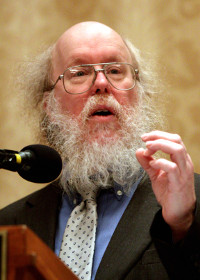
James Bovard (born 1956) is an American libertarian author and lecturer whose political commentary targets examples of waste, failures, corruption, cronyism and abuses of power in government. He is a USA Today columnist and is a frequent contributor to The Hill. He is the author of Attention Deficit Democracy and nine other books. He has written for the New York Times, Wall Street Journal, Washington Post, New Republic, Reader's Digest, The American Conservative and many other publications. His books have been translated into Spanish, Arabic, Japanese and Korean.
Born
Awards Received
1995 Szasz Award for Outstanding Contributions to the Cause of Civil Liberties, by Center for Independent Thought, Thomas S. Szasz Award for Outstanding Contributions to the Cause of Civil Liberties, 1995
Associations
The Future of Freedom Foundation, Policy Adviser
Websites
James Bovard author page
Personal website, sections include his blog, biography, books, speeches, essays and photo gallery
Personal website, sections include his blog, biography, books, speeches, essays and photo gallery
Web Pages
Advocates for Self-Government - Libertarian Education: James Bovard - Libertarian
Includes photo, biographical profile, description of some of Bovard's books and quotes
Includes photo, biographical profile, description of some of Bovard's books and quotes
Journalist James Bovard has written a series of remarkable political books and articles that have knocked the props out from under some of the biggest government policy frauds of our times. His articles have appeared in some of the nation's most distinguished magazines and newspapers, including The New York Times, The Wall Street Journal, Newsweek, Washington Post, New Republic, Reader's Digest and many more. Bovard is an Associate Policy Analyst at the Cato Institute. He writes a hard-hitting column each month in the Future of Freedom Foundation Foundation's excellent publication Freedom Daily.
James Bovard
Bovard's personal blog, with commentary since Dec 2005
Bovard's personal blog, with commentary since Dec 2005
James Bovard, Author at The Future of Freedom Foundation
Author page at The Future of Freedom Foundation; includes photograph, profile, list of books authored and links to recent and archived articles
Author page at The Future of Freedom Foundation; includes photograph, profile, list of books authored and links to recent and archived articles
James Bovard is a policy advisor to The Future of Freedom Foundation ... . He is a USA Today columnist ... He was the 1995 co-recipient of the Thomas Szasz Award for Civil Liberties work, awarded by the Center for Independent Thought, and the recipient of the 1996 Freedom Fund Award from the Firearms Civil Rights Defense Fund of the National Rifle Association. His book Lost Rights received the Mencken Award as Book of the Year from the Free Press Association. His Terrorism and Tyranny won Laissez Faire Book's Lysander Spooner award for the Best Book on Liberty in 2003.
Laissez Faire Books
Short biographical and bibliographical profile, followed by a selection of Bovard's investigative findings and comment on his favorite books
Short biographical and bibliographical profile, followed by a selection of Bovard's investigative findings and comment on his favorite books
Author of the recent Terrorism and Tyranny, journalist Bovard (b. 1956) has established himself as today's most effective investigative reporter for liberty. Nobody comes up with more graphic material and serves it up so dramatically, which is why he has been denounced by many of the President's top underlings ... Freedom in Chains: The Rise of the State and the Demise of the Citizen (1999), ... combined investigative reporting with philosophical depth ... For his overall contributions to civil liberties, Bovard won the Thomas S. Szasz Award (1995) and the Freedom Fund Award (1996).
Archived Articles
Future of Freedom Foundation
since Sept 1994
since Sept 1994
Articles
Sanctions: The Cruel and Brutal War against the Iraqi People, Part 1, by Jacob G. Hornberger, Freedom Daily, Jan 2004
Tells the history of the U.S. government sanctions against Iraq imposed by the United Nations before military action in the 1990 Gulf War, exacerbated by military targeting during the war and kept in place after the war
Tells the history of the U.S. government sanctions against Iraq imposed by the United Nations before military action in the 1990 Gulf War, exacerbated by military targeting during the war and kept in place after the war
In his new book, Terrorism and Tyranny, James Bovard cites the official U.S. reports that document the state of mind of U.S. officials when they decided to destroy Iraq's sewage, water, and electric-power facilities. For example, the Defense Intelligence Agency noted that "unless the water is purified with chlorine, epidemics of such diseases as cholera, hepatitis, and typhoid could occur." A Pentagon analysis confirmed the DIA's analysis: "Cholera and measles have emerged at refugee camps. Further infectious diseases will spread due to inadequate water treatment and poor sanitation."
Socialism: Illegitimate, Not Just Inefficient, by Gary North, 15 May 2001
Discusses two aspects in the criticism of socialism: whether it is efficient compared to capitalism (according to the theory of value-free economics) and whether it is immoral (or contrary to human nature)
Discusses two aspects in the criticism of socialism: whether it is efficient compared to capitalism (according to the theory of value-free economics) and whether it is immoral (or contrary to human nature)
I cannot stand to read much of a James Bovard's book at one sitting. His books enrage me too much. He catalogues horrors of interventionism. He monitors the enforcement of government regulations by real-world bureaucrats ... His case studies are not randomly accumulated; they are carefully selected to support a moral case against government intervention into the economy ... Occasionally, he offers an aphorism. "Democracy is two wolves and a sheep voting on what to have for dinner." That one is worthy of Bastiat. Bovard's books evoke moral outrage. This is why they are so important.
Related Topics: F. A. Harper, Étienne de La Boétie, Market economy, Ludwig von Mises, Murray N. Rothbard, Socialism
Writings
The 9/11 Servility Reflex, Freedom Daily, Dec 2007
Discusses how the general American public reacted after the 9/11 attacks and how the 9/11 Commission and the mainstream media helped reinforce that reaction
Discusses how the general American public reacted after the 9/11 attacks and how the 9/11 Commission and the mainstream media helped reinforce that reaction
Many citizens react to their rulers like little kids who recognize that a stranger is acting suspiciously and may be up to no good—but then decide whether to trust the man depending on the type of candy he pulls from his pockets. It is as if a Reese's Peanut Butter Cup trumps the beady eyes, sweaty forehead, and ... trench coat ...
The government's appearing to be a necessary evil does not oblige people to trust it. We face a choice of trusting government or trusting freedom—trusting overlords who have lied and abused their power or trusting individuals to make the most of their own lives.
The government's appearing to be a necessary evil does not oblige people to trust it. We face a choice of trusting government or trusting freedom—trusting overlords who have lied and abused their power or trusting individuals to make the most of their own lives.
Blockbuster Victory for the Second Amendment, Freedom Daily, Aug 1999
Comments on the April 1999 decision by a federal district judge in Texas to consider unconstitutional a 1994 law that decreed that a person under a domestic restraining order could not own firearms
Comments on the April 1999 decision by a federal district judge in Texas to consider unconstitutional a 1994 law that decreed that a person under a domestic restraining order could not own firearms
Last April, federal judge Sam Cummings issued a decision that chilled the hearts of gun grabbers across the nation. Cummings struck down as unconstitutional a provision in a 1994 law that routinely turned husbands and others targeted by domestic restraining orders into felons ...
It will be amusing to watch the contortions of the Clinton administration and other anti-gun advocates as they fight this decision. Cummings has given the defenders of freedom lofty high ground on which to take a stand. The future of this case could be a bellwether on whether Leviathan can be leashed.
It will be amusing to watch the contortions of the Clinton administration and other anti-gun advocates as they fight this decision. Cummings has given the defenders of freedom lofty high ground on which to take a stand. The future of this case could be a bellwether on whether Leviathan can be leashed.
Booze Busting: The New Prohibition, Freedom Daily, Dec 1998
Discusses various anti-alcohol laws and enforcement actions, including the law raising the minimum drinking age during the Reagan administration, and what medical research has to say about moderate alcohol consumption
Discusses various anti-alcohol laws and enforcement actions, including the law raising the minimum drinking age during the Reagan administration, and what medical research has to say about moderate alcohol consumption
Sixty-odd years after the repeal of Prohibition, a new anti-alcohol fervor is sweeping the nation. The anti-alcohol mentality is leading to absurd practices: An elementary school in Brandon, Vermont, forced sixth-graders to undergo breath tests to see whether any of them had been consuming alcohol ...
The New England Journal of Medicine recommended moderate alcohol consumption as one of the nine "primary prevention" methods for avoiding heart disease and concluded that low-to-moderate drinkers have up to a 45 percent lower chance of being hit by a heart attack ... Life is short—drink good beer!
The New England Journal of Medicine recommended moderate alcohol consumption as one of the nine "primary prevention" methods for avoiding heart disease and concluded that low-to-moderate drinkers have up to a 45 percent lower chance of being hit by a heart attack ... Life is short—drink good beer!
Related Topics: Connecticut, South Dakota, Health, Indiana, Ohio, Oregon, Prohibition, Ronald Reagan, Wisconsin
Bush's Opium Boom, Freedom Daily, Apr 2003
Describes attempts by the Taliban (from July 2000 to October 2001—the U.S. invasion), the U.S., the United Nations and the Karzai government to control opium poppy production in Afghanistan
Describes attempts by the Taliban (from July 2000 to October 2001—the U.S. invasion), the U.S., the United Nations and the Karzai government to control opium poppy production in Afghanistan
Last year saw what is probably the single biggest one-year increase in opium production in world history. Since the Bush administration toppled the Taliban regime, opium production in Afghanistan has increased from 185 tons in 2001 to 3,700 tons in 2002 ...
The TV ad campaign ... preaches that anyone who uses drugs is a de facto terrorist financier. If anyone who buys any drug in the United States is automatically liable for any attack by terrorists anywhere, why shouldn't the president be held responsible for deposing perhaps the most successful drug warriors in modern world history?
The TV ad campaign ... preaches that anyone who uses drugs is a de facto terrorist financier. If anyone who buys any drug in the United States is automatically liable for any attack by terrorists anywhere, why shouldn't the president be held responsible for deposing perhaps the most successful drug warriors in modern world history?
Bush's Signing Statement Dictatorship, 9 Oct 2006
Details some of Bush's (more than 800) signing statements and his "unitary executive" doctrine (invoked almost 100 times since he took office)
Details some of Bush's (more than 800) signing statements and his "unitary executive" doctrine (invoked almost 100 times since he took office)
President Bush has once again decreed that his personal pen is the highest law of the land. In a statement issued on October 4, 2006, he announced that he would ignore many provisions of the Homeland Security appropriations act he signed earlier in the day. His action vivifies that the rule of law now means little more than the enforcement of the secret thoughts of the commander in chief. ... So what is the meaning of "limited government" in the Bush era? Merely that the courts and Congress must be prohibited from limiting the president's power. Bush's signing statements are building blocks for dictatorship.
Related Topics: George W. Bush, Rule of Law
The Bush Torture Memos, Freedom Daily, Nov 2006
Examines how the Bush Justice Department and the Pentagon twisted legal interpretations to absolve themselves of charges of torture in dealing with "enemy combatants" in the "war on terror"
Examines how the Bush Justice Department and the Pentagon twisted legal interpretations to absolve themselves of charges of torture in dealing with "enemy combatants" in the "war on terror"
President Bush is proposing to medievalize the American legal code by permitting the use of coerced confessions in judicial proceedings. This is one of the most stunning proposals in U.S. political life since Franklin Roosevelt banned private ownership of gold in 1933. It is vital for Americans to understand the thinking that led the government ... to legalize barbaric treatment ...
These memos trumpet the Bush administration's determination to be restrained by no law or by any accepted standard of decency. Americans cannot say that they were not warned about their government's descent.
These memos trumpet the Bush administration's determination to be restrained by no law or by any accepted standard of decency. Americans cannot say that they were not warned about their government's descent.
China: From Brutal Oppressor to Terrorist Victim, Freedom Daily, Dec 2003
Describes how both the U.S. and Chinese governments changed their policies with respect to certain "terrorist" groups, in particular, the East Turkestan Islamic Movement (ETIM) in China, to suit their own ends
Describes how both the U.S. and Chinese governments changed their policies with respect to certain "terrorist" groups, in particular, the East Turkestan Islamic Movement (ETIM) in China, to suit their own ends
Since 9/11, President Bush has endlessly reminded the world that he is leading a "freedom-loving coalition" to vanquish terrorists anywhere and everywhere. However, the more closely one examines the details of the Bush coalition, the more difficult it becomes to detect any love of freedom ...
Americans should be wary of how the Bush administration is undermining the reputation and honor of the United States in its war against terrorism. Unfortunately, the war on terrorism is proving far more effective at unleashing governments than at ending terrorism.
Americans should be wary of how the Bush administration is undermining the reputation and honor of the United States in its war against terrorism. Unfortunately, the war on terrorism is proving far more effective at unleashing governments than at ending terrorism.
Democracy Versus Liberty, The Freeman, Aug 2006
Discusses the dangers of equating liberty with "self-government" as majority rule, with representative actions or quotes by several U.S. presidents from Lincoln to George W. Bush
Discusses the dangers of equating liberty with "self-government" as majority rule, with representative actions or quotes by several U.S. presidents from Lincoln to George W. Bush
If a foreign power took over the United States and dictated that American citizens surrender 40 percent of their income, required them to submit to tens of thousands of different commands ..., prohibited many of them from using their land, and denied many the chance to find work, there would be little dispute that the people were being tyrannized ...
In the same way that a political candidate's lies don't create a presumption that his opponent is honest, the fact that democracies routinely violate rights and liberties creates no presumption that other forms of government would not be worse.
In the same way that a political candidate's lies don't create a presumption that his opponent is honest, the fact that democracies routinely violate rights and liberties creates no presumption that other forms of government would not be worse.
Dictatorship of Gadflies, Freedom Daily, Nov 1998
Discusses the efforts of the National Trust for Historic Preservation and similar groups to preserve much broader targets than historically meaningful buildings
Discusses the efforts of the National Trust for Historic Preservation and similar groups to preserve much broader targets than historically meaningful buildings
In any catalog of late 20th-century dementia, the historic-preservation movement will take an honored place. A movement that did much to educate the public on the value of historic buildings in the 1960s and 1970s has long since been replaced by "hysterical preservationism." ...
Politicians and bureaucrats must learn to respect the most important historic treasure in this country—the Bill of Rights ... The preservation police are preventing the natural flux of change and suppressing potentially new beauty and innovations arising from individual decisions about their own property ...
Politicians and bureaucrats must learn to respect the most important historic treasure in this country—the Bill of Rights ... The preservation police are preventing the natural flux of change and suppressing potentially new beauty and innovations arising from individual decisions about their own property ...
Related Topics: Eminent domain, Government, Philadelphia, Private Property, Property Rights, Vermont, Washington
Do Elections Guarantee Freedom?, Freedom Daily, Nov 2007
Discusses whether democratic elections achieve the purported objective of "will of the people" controlling the government
Discusses whether democratic elections achieve the purported objective of "will of the people" controlling the government
Elections are sometimes portrayed as practically giving people automatic "remote control" on the government. Elections kindly provide a chance for people to pre-program the government for the following years. The government will be based on the popular will, regardless of the ignorance of the populace or the duplicity of the government. ...
Representatives are merely representatives, not incarnations of the General Will or the voice of God ... Even when representative government works tolerably well, it is difficult to inspire [them] to do much more than hustle for their own reelection.
Representatives are merely representatives, not incarnations of the General Will or the voice of God ... Even when representative government works tolerably well, it is difficult to inspire [them] to do much more than hustle for their own reelection.
Related Topics: George W. Bush, Bill Clinton, United States Constitution, Government, Lyndon B. Johnson, Ronald Reagan, Voting
Drug War Dementia, Freedom Daily, Nov 1996
Details various police, military and school actions and legislation in the government's war on users of certain banned substances, and the generally unrecognized side effects of these policies
Details various police, military and school actions and legislation in the government's war on users of certain banned substances, and the generally unrecognized side effects of these policies
H. L. Mencken observed in 1918: "A politician normally prospers under democracy in proportion ... as he excels in the invention of imaginary perils and imaginary defenses against them." In recent years, politicians have found few better ways to frighten voters than with the specter of drugs ...
The question is ... whether government has a right to punish people for how they treat their own bodies. It is naive to view most drug users as innocent victims of pushers. But it is ludicrous to view casual drug users as dangerous social enemies that deserve a dose of ayatollah-justice.
The question is ... whether government has a right to punish people for how they treat their own bodies. It is naive to view most drug users as innocent victims of pushers. But it is ludicrous to view casual drug users as dangerous social enemies that deserve a dose of ayatollah-justice.
Ellsberg's Lessons for Our Time, Freedom Daily, May 2008
Reviews Daniel Ellsberg's Secrets: A Memoir of Vietnam and the Pentagon Papers (2003) and points out how its commentary applies to the then current conflict in Iraq
Reviews Daniel Ellsberg's Secrets: A Memoir of Vietnam and the Pentagon Papers (2003) and points out how its commentary applies to the then current conflict in Iraq
Daniel Ellsberg is the kind of American who should receive a Medal of Freedom. Except that [those] are ... routinely [given] to "useful idiots" and apologists for ... wars and power grabs. It should be renamed the Medal for Enabling or Applauding Official Crimes in the Name of Freedom ... Unfortunately, even when government officials risk their freedom and careers to leak information, the media sometimes refuse to publish it ... Who knows how many other leaks have never seen the light of day because of a media that kowtowed to President Bush and Vice President Cheney as if they were gods?
"Every Day is 1956": The Hungarian Revolution Today, 27 Oct 2006
Describes events in Hungary in 1956, 1986 (when Bovard visited), 1989 (when the Iron Curtain fell) and in 2006 (when government lying was in the news) and ties it back to lying by U.S. officials
Describes events in Hungary in 1956, 1986 (when Bovard visited), 1989 (when the Iron Curtain fell) and in 2006 (when government lying was in the news) and ties it back to lying by U.S. officials
Friends of freedom should doff their hats to the Hungarians this week. Fifty years ago, the Hungarian people bravely expelled Soviet tanks from Budapest and proclaimed their intention to create a democracy. Shortly thereafter, the Soviets returned ... killing thousands of Hungarians ... [I]f lying is simply another perk of the presidency, then Americans should ... stop preening about being self-governing. If the citizenry does not punish liars, then it cannot expect the truth. Hungary again reminds us that we do not need to bow down to whomever manages to capture political power.
The Fraudulent Meaning of Elections, Freedom Daily, Apr 2006
Examines the arguments raised in the debate between Democrats and Republicans in Congress over the certification of the 2005 Ohio Electoral College voters
Examines the arguments raised in the debate between Democrats and Republicans in Congress over the certification of the 2005 Ohio Electoral College voters
Politicians strive to make Americans view elections as sacrosanct. Challenges to election results are portrayed as heresies that threaten to destroy the entire republic. After the 2004 presidential election, many Democrats went on the warpath over alleged voter fraud and manipulation in Ohio and elsewhere ...
[E]lections are now about consecration ... Elections have become something for rulers to shroud themselves in, rather than leashes used by the people. Politicians are obsessed with maintaining the imagined dignity of their class, not in resolving doubts about honest vote counting.
[E]lections are now about consecration ... Elections have become something for rulers to shroud themselves in, rather than leashes used by the people. Politicians are obsessed with maintaining the imagined dignity of their class, not in resolving doubts about honest vote counting.
Freedom to Farm Washington, Freedom Daily, Jan 1999
Discusses the results of the 1996 Freedom to Farm Act after three years and further farm subsidies made in 1998
Discusses the results of the 1996 Freedom to Farm Act after three years and further farm subsidies made in 1998
Nothing better symbolizes the collapse of Republican principles than the multiple farm bailouts that Congress enacted late last year. Agricultural subsidies are skyrocketing, and the 1996 "Freedom to Farm Act" — ritually invoked as a triumph of the Republican Revolution — is as much in ruins as a Sudanese pharmaceutical factory ... Perhaps Republicans should forthrightly admit their socialist concept of freedom — that the more handouts government gives, the more freedom farmers will have. Worst of all, such double-crosses as the "Freedom to Farm" act may actually turn some citizens into cynics.
Free Speech on the Ropes, Freedom Daily, Jan 2006
Constrasts President Bush's "we love our freedom" rhetoric with actions to suppress dissent by establishing "free speech zones"; tells the story of a protester arrested and released but then prosecuted in non-jury trial by the Justice Department
Constrasts President Bush's "we love our freedom" rhetoric with actions to suppress dissent by establishing "free speech zones"; tells the story of a protester arrested and released but then prosecuted in non-jury trial by the Justice Department
The First Amendment states that "Congress shall make no law ... abridging the freedom of speech." The Founding Fathers could have done nothing to make it clearer that the government has no right to gag the American people. However, ... the Constitution is proving little or no barrier to systematic repression ...
Rather than protecting the president's safety, the Secret Service aims to suppress lèse majesté—any affront to the dignity of the supreme ruler. If Americans tolerate such official repression, then their docility will earn them whatever chains the government chooses to impose.
Rather than protecting the president's safety, the Secret Service aims to suppress lèse majesté—any affront to the dignity of the supreme ruler. If Americans tolerate such official repression, then their docility will earn them whatever chains the government chooses to impose.
"Free-Speech Zone", The American Conservative, 15 Dec 2003
Provides various examples of "free speech zone" incidents ("zones" set up by local law enforcement at the request of George W. Bush's Secret Service) as well as reactions in the U.S. and overseas
Provides various examples of "free speech zone" incidents ("zones" set up by local law enforcement at the request of George W. Bush's Secret Service) as well as reactions in the U.S. and overseas
On Dec. 6, 2001, Attorney General John Ashcroft informed the Senate Judiciary Committee, "To those who scare peace-loving people with phantoms of lost liberty ... your tactics only aid terrorists, for they erode our national unity and ... give ammunition to America's enemies." ...
Is [the administration] carrying out a war on dissent? Probably not—yet. But the trend lines in federal attacks on freedom of speech should raise grave concerns to anyone worried about the First Amendment or about how a future liberal Democratic president ... might exploit the precedents that Bush is setting.
Is [the administration] carrying out a war on dissent? Probably not—yet. But the trend lines in federal attacks on freedom of speech should raise grave concerns to anyone worried about the First Amendment or about how a future liberal Democratic president ... might exploit the precedents that Bush is setting.
Hoover's Second Wrecking of American Agriculture, Freedom Daily, Dec 2005
Follow-up to "How the Feds Took Over Farming", describes the policies of Hoover's Federal Farm Board, the Smoot-Hawley Act, the Federal Reserve and taxes as contributors to the Great Depression and particularly their effect on farmers
Follow-up to "How the Feds Took Over Farming", describes the policies of Hoover's Federal Farm Board, the Smoot-Hawley Act, the Federal Reserve and taxes as contributors to the Great Depression and particularly their effect on farmers
My last Freedom Daily article traced how the federal government wrecked the agricultural sector after World War I and how the Agriculture Department became a permanent lobby for "socialism in one industry." But President Calvin Coolidge steadfastly resisted the push to have the feds take over crop pricing ... [Federal farm programs] have been embraced by generations of Republican and Democratic politicians. But it is difficult to detect what sort of policy differences occurred as a result of Republicans' or Democrats' being in charge, since the socialist core of the policies has been preserved.
Illegal Surveillance: A Real Security Threat, FFF.org, 27 Feb 2006
Describes how the FBI, IRS and other agencies spied on Americans on both sides of the political spectrum during the 1960s and 1970s, and warns about the NSA wiretaps ordered by George W. Bush
Describes how the FBI, IRS and other agencies spied on Americans on both sides of the political spectrum during the 1960s and 1970s, and warns about the NSA wiretaps ordered by George W. Bush
Americans seem to have forgotten why the Founding Fathers prohibited government from spying on them. Public opinion polls show that a rising percentage ... approve of the warrantless National Security Agency wiretaps of Americans that Bush ordered. But such blind faith in government simply ignores the lessons of U.S. history ...
Illegal wiretaps will pave the way for other government crimes. The more information government gathers on people, the more power it will have over them. The more expansive and secretive government intrusions become, the easier it becomes for government to rule by fear.
Illegal wiretaps will pave the way for other government crimes. The more information government gathers on people, the more power it will have over them. The more expansive and secretive government intrusions become, the easier it becomes for government to rule by fear.
Related Topics: American Revolutionary War, Government, Richard Nixon, Unreasonable Searches and seizures
Iraqi Sanctions and American Intentions: Blameless Carnage? Part 1, Freedom Daily, Jan 2004
Examines the effects of the destruction of Iraqi infrastucture during the 1990-91 Gulf War, the subsequent UN sanctions and the "oil for food" program
Examines the effects of the destruction of Iraqi infrastucture during the 1990-91 Gulf War, the subsequent UN sanctions and the "oil for food" program
President Bush's advisors assured Americans that U.S. troops would be greeted as liberators — with flowers and hugs — when the United States invaded Iraq. That promise turned out to be one of the biggest frauds of the Iraqi debacle. One major reason for the animosity to U.S. troops is the lingering impact ... of the UN sanctions imposed on the Iraqis for 13 years ... Sanctions advocates claimed that the punitive policy would spur discontent and eventually undermine Saddam's rule. However, a Harvard International Review analysis noted, "Sanctions seem to have bolstered Saddam’s domestic popularity ..."
Iraqi Sanctions and American Intentions: Blameless Carnage? Part 2, Freedom Daily, Feb 2004
Further examination of the effects of the Iraqi sanctions and the hypocritical comments from the administrator for the U.S. Agency for International Development, after the 2003 invasion
Further examination of the effects of the Iraqi sanctions and the hypocritical comments from the administrator for the U.S. Agency for International Development, after the 2003 invasion
While Pentagon officials bluntly admitted in 1991 that sanctions aimed to punish the Iraqi people, candor evaporated as the death toll rose. The State Department's website announced in June 1999, "Sanctions are not intended to harm the people of Iraq. That is why the sanctions regime has always specifically exempted food and medicine." This was false ... Rather than continue to pirouette on the world stage as a great benefactor, the Bush administration should open the files and let everyone learn what the U.S. government knew — and when it knew it — about the devastation sanctions wreaked upon Iraq.
Killing in the Name of Democracy, Freedom Daily, Jun 2006
Revised text of the "Messianic Democracy" chapter of Attention Deficit Democracy (2006) with additional parallels to George W. Bush
Revised text of the "Messianic Democracy" chapter of Attention Deficit Democracy (2006) with additional parallels to George W. Bush
President George W. Bush perpetually invokes the goal of spreading democracy to sanctify his foreign policy. Unfortunately, he is only the latest in a string of presidents who cloaked aggression in idealistic rhetoric. Killing in the name of democracy has a long and sordid history ...
As ... Walter McDougall observed, "The best way to promote our institutions and values abroad is to strengthen them at home." But there is scant glory for politicians in restraining their urge to "save humanity." The ignorance of the average American has provided no check on "run amok" politicians and bureaucrats.
As ... Walter McDougall observed, "The best way to promote our institutions and values abroad is to strengthen them at home." But there is scant glory for politicians in restraining their urge to "save humanity." The ignorance of the average American has provided no check on "run amok" politicians and bureaucrats.
Related Topics: George W. Bush, Democracy
A Legacy of Anti-Terrorist Failure in Lebanon, Freedom Daily, Oct 2006
In the wake of a July 2006 invasion of Lebanon by Israeli forces, details Israeli and U.S. involvement in Lebanon, starting with the 1982 Operation Peace for Galilee, the Sabra and Shatila massacre, and the 1983 attacks on the U.S. embassy and Marine HQ
In the wake of a July 2006 invasion of Lebanon by Israeli forces, details Israeli and U.S. involvement in Lebanon, starting with the 1982 Operation Peace for Galilee, the Sabra and Shatila massacre, and the 1983 attacks on the U.S. embassy and Marine HQ
The Bush administration is fond of favoring tough measures against terrorists. With the Bush team cheer-leading all the way, Israel reinvaded Lebanon in July in response to Hezbollah's seizure of two Israeli soldiers. Israel and Hezbollah had been exchanging bombs and missiles for months ... Americans need to pay attention to what is happening in Lebanon because there are many politicians ... in Washington who want to see U.S. troops join the fray. This would be as foolish now as it was in 1982. Inserting the Stars and Stripes into the crossfire will achieve nothing more than overcrowding Arlington National Cemetery.
Lies and Leviathan, Freedom Daily, Aug 2006
Describes the deceit used to institute and expand the U.S. Social Security program, as well as various other programs such as job training and placement, the No Child Left Behind Act, the Office of Strategic Influence, and various duplicitous officials
Describes the deceit used to institute and expand the U.S. Social Security program, as well as various other programs such as job training and placement, the No Child Left Behind Act, the Office of Strategic Influence, and various duplicitous officials
Big government requires big lies—and not just on wars but across the board. The more powerful government becomes, the more abuses it commits and the more lies it must tell. Interventions beget debacles that require cover-ups and denials. The more the government screws up, the more evidence [it] is obliged to bury or deny ...
Lying is part of the larger problem of deference to the government ... If citizens wish to retain their liberty, they cannot assume that those who seek power over them are honest. Skepticism of government is one of the most important—and most forgotten—bulwarks of freedom.
Lying is part of the larger problem of deference to the government ... If citizens wish to retain their liberty, they cannot assume that those who seek power over them are honest. Skepticism of government is one of the most important—and most forgotten—bulwarks of freedom.
Related Topics: George W. Bush, Jimmy Carter, Compulsory education, Government, Social Security Tax, Taxation
A Modest Proposal for the Next Drug-War Shootdown, Freedom Daily, Aug 2001
Offers recommendations (some tongue in cheek, later serious) after the shootdown by the Peruvian air force of a Cessna carrying American Baptist missionaries (but claimed to carry traffickers)
Offers recommendations (some tongue in cheek, later serious) after the shootdown by the Peruvian air force of a Cessna carrying American Baptist missionaries (but claimed to carry traffickers)
The Bush administration and federal agencies are still struggling with the backlash from the shootdown by Peruvian jet fighters of a Cessna airplane [with] five Americans ... Everybody regrets the fact that a CIA surveillance plane notified Peruvian jets that a plane carrying Baptist missionaries might contain drug traffickers ... Unless heads roll because of this debacle—in the sense that people are fired, careers are ruined, and charges of gross incompetence ... are filed—Americans can safely assume that the next such shootdown of innocent people will cause even less of a ripple in the media.
The Most Absurdities per Kilo, Freedom Daily, Feb 2006
Describes Operation Pipe Dreams, a group of raids led by the Department of Justice to confiscate drug paraphernalia, and particularly the attack on Tommy Chong's residence, subsequent arrest and sentencing
Describes Operation Pipe Dreams, a group of raids led by the Department of Justice to confiscate drug paraphernalia, and particularly the attack on Tommy Chong's residence, subsequent arrest and sentencing
The war on drugs has produced more absurdities per kilo than any other federal policy. Drug warriors have had high-profile belly flop after belly flop. Yet most of the media and the vast majority of American politicians continue to treat this war with deference, if not reverence ...
When Bush's Drug Enforcement Agency chief Asa Hutchinson was sworn in ..., he announced, "I would hope that we are judged by the lives that are touched and the hope that we give America." Yet Bush and his drug-war team seem more devoted to frightening voters than to protecting public health or respecting liberty.
When Bush's Drug Enforcement Agency chief Asa Hutchinson was sworn in ..., he announced, "I would hope that we are judged by the lives that are touched and the hope that we give America." Yet Bush and his drug-war team seem more devoted to frightening voters than to protecting public health or respecting liberty.
My Time in the Tower of London, Freedom Daily, Dec 2006
Relates a visit to the Tower of London and then compares the torture of centuries past in the Tower, as described in particular in Shakespeare's Richard III, with the 2006 legalization of similar practices in the United States
Relates a visit to the Tower of London and then compares the torture of centuries past in the Tower, as described in particular in Shakespeare's Richard III, with the 2006 legalization of similar practices in the United States
I visited the Tower of London in May on an overcast, dreary Friday afternoon. The home of so many famous executions and king-approved murders is kept in spiffy shape. The tour guide ... regaled listeners with tales of beheadings gone wrong, drunks with axes hacking away at half-dead corpses, never quite getting a clean cut ...
[N]o one can know how the absolute power that Congress sought to grant Bush will be used in the coming months and years. And if the Bush team decides to ratchet up the repression, Muslims and Muslim sympathizers will merely be the launch pad.
[N]o one can know how the absolute power that Congress sought to grant Bush will be used in the coming months and years. And if the Bush team decides to ratchet up the repression, Muslims and Muslim sympathizers will merely be the launch pad.
Nonsense on the Inevitability of Democracy, Freedom Daily, May 2006
Examines Francis Fukuyama's assertion about the "universalization of Western liberal democracy" as the final form of government, and related pronouncements by George W. Bush
Examines Francis Fukuyama's assertion about the "universalization of Western liberal democracy" as the final form of government, and related pronouncements by George W. Bush
Many Americans are being lulled into assuming that democracy is inevitable. This is a favorite theme of President Bush's beating on the same drumhead used by ... Clinton, ... Wilson, and other notable demagogues. But the fact that politicians agree does not make something true ...
Some people insist that democracy is inevitable because it is the only just form ... The more that democracy is assumed to be inevitable, the more likely [it] will self-destruct. Faith in inevitability deadens the sense of peril—and people blithely acquiesce to one power seizure after another by the ruling class.
Some people insist that democracy is inevitable because it is the only just form ... The more that democracy is assumed to be inevitable, the more likely [it] will self-destruct. Faith in inevitability deadens the sense of peril—and people blithely acquiesce to one power seizure after another by the ruling class.
Parity: Bureaucratic Tyranny by Moral Fraud, Freedom Daily, Sep 1999
Discusses the consequences of establishing "parity" for agricultural prices, in the name of "fairness", as was done by the Agricultural Adjustment Act of 1933 (and subsequent legislation)
Discusses the consequences of establishing "parity" for agricultural prices, in the name of "fairness", as was done by the Agricultural Adjustment Act of 1933 (and subsequent legislation)
The word "fairness" sometimes has the same mesmerizing effect upon people's critical faculties that the phrase "divine right" had a few centuries ago. Modern morality is based on "push-button fairness": the government announces a new regulation, enforcers twist arms, and—voilà!—fairness triumphs ... Unfortunately, the absurdity of the parity doctrine has not been widely recognized by the American public—or by non-farm state congressmen. As a result, the farm lobby has cloaked farm subsidies in a cloud of mysticism—and put the onus of unfairness or injustice on any attempt to reduce handouts.
Political Plundering of Property Owners, Freedom Daily, Nov 2002
Details the effects of local government land and property seizures allegedly for urban renewal purposes, for improving "blighted" neighborhoods or for the benefit of sports team owners
Details the effects of local government land and property seizures allegedly for urban renewal purposes, for improving "blighted" neighborhoods or for the benefit of sports team owners
For the first 175 years of the American republic, it was clearly recognized that government should not casually seize people's property and give it to other people for their private use. The Supreme Court ruled in 1937 that "one person's property may not be taken for the benefit of another private person without a justifying public purpose ..." ...
To allow the government practically unlimited control and jurisdiction over private property is to give politicians and bureaucrats almost unlimited power to intervene in private lives. We face a choice of private property or political subjugation.
To allow the government practically unlimited control and jurisdiction over private property is to give politicians and bureaucrats almost unlimited power to intervene in private lives. We face a choice of private property or political subjugation.
Related Topics: George W. Bush, California, Eminent domain, Illinois, Michigan, New York City, Private Property, Washington, D.C.
The Reagan Roadmap for Antiterrorism Disaster, CounterPunch, 8 Oct 2003
Details events before and after the 23 Oct 1983 bombing of the U.S. Marine barracks in Beirut
Details events before and after the 23 Oct 1983 bombing of the U.S. Marine barracks in Beirut
In his televised speech ... President Bush declared, "In the past, the terrorists have cited the examples of Beirut and Somalia, claiming that if you inflict harm on Americans, we will run from a challenge. In this, they are mistaken." ... The Reagan administration paid no political price for its Beirut debacle. Reagan and Bush Sr. succeeded in falsifying, blustering, and smearing their way out of political trouble. Now, two decades later, the only "lesson" that seems to be recalled is to stick resolutely to floundering policies – at least until the number of dead soldiers threatens to become politically toxic.
Warring as Lying Throughout American History, Freedom Daily, Feb 2008
Recounts how U.S. Presidents and their administrations since James Polk have been deceitful about wars and military engagements
Recounts how U.S. Presidents and their administrations since James Polk have been deceitful about wars and military engagements
Americans are taught to expect their elected leaders to be relatively honest. But it wasn't always like that. In the mid 1800s, people joked about political candidates who claimed to have been born in a log cabin that they built with their own hands. This jibe was spurred by William Henry Harrison's false claim of a log-cabin birth ... Lying and warring appear to be two sides of the same coin. Unfortunately, many Americans continue to be gullible when presidents claim a need to commence killing foreigners. It remains to be seen whether the citizenry is corrigible on this life-and-death issue.
Related Topics: Bill Clinton, Gulf War, Abraham Lincoln, Nicaragua, Ronald Reagan, Franklin D. Roosevelt, Terrorism, Vietnam War, War, Woodrow Wilson, World War II
Book chapters
Killing in the Name of Democracy, Attention Deficit Democracy, 27 Jan 2006
Excerpt from the chapter 4 "Messianic Democracy", details various U.S. presidents' policies and actions from McKinley to Eisenhower
Excerpt from the chapter 4 "Messianic Democracy", details various U.S. presidents' policies and actions from McKinley to Eisenhower
The U.S. government's first experience with forcibly spreading democracy came in the wake of the Spanish-American War. When the U.S. government declared war on Spain in 1898, it pledged it would not annex foreign territory. But, after a swift victory, the United States annexed all of the Philippines ...
[T]he federal government was confiscating huge swaths of private land throughout American inner cities ... [T]he U.S. government got miffed over a 1954 Guatemalan government buyout offer helped produce decades of repressive rule and the killings of hundreds of thousands of Guatemalan civilians.
[T]he federal government was confiscating huge swaths of private land throughout American inner cities ... [T]he U.S. government got miffed over a 1954 Guatemalan government buyout offer helped produce decades of repressive rule and the killings of hundreds of thousands of Guatemalan civilians.
Related Topics: George W. Bush, Democracy, Dwight D. Eisenhower, Guatemala, William McKinley, Mexico, Philippines, Franklin D. Roosevelt, Woodrow Wilson, World War I
Reviews
Misguided Democracy, by George C. Leef, Freedom Daily, Mar 2006
Review of Attention Deficit Democracy (2006) by James Bovard
Review of Attention Deficit Democracy (2006) by James Bovard
Bovard has made quite a writing career out of his desire to penetrate the fog of deception that shrouds so much of what government does these days to expose the truth that the state is becoming ever stronger and the sphere of liberty is constantly shrinking. (His earlier books include Lost Rights, Freedom in Chains, and Feeling Your Pain ...) ... [H]e asks unsettling questions about the future of a nation afflicted with "attention deficit democracy" and concludes that unless the United States experiences a dramatic shift in its political philosophy, our freedom will continue melting away.
Interviews
Interview with Jim Bovard, by James Bovard, Sunni Maravillosa, Apr 2006
Extensive dialogue (13 web pages), from Jim's first paid writing to an upcoming book, the publishing industry, the Future of Freedom Foundation, his books, radio hosts and much more
Extensive dialogue (13 web pages), from Jim's first paid writing to an upcoming book, the publishing industry, the Future of Freedom Foundation, his books, radio hosts and much more
Sunni: Hi Jim! Thanks so much for taking some time to talk with me today. How are things there near the belly of the beast?
Jim: The chatter about impeachment is rising, so it ain't all bad.
Sunni: ... You got enough beer to keep your whistle wet throughout our conversation? [laughs]
Jim: Am I allowed to drink during the interview? Well, that changes everything ...
... By the way, on May 2, FFF is sponsoring a talk by me at the National Press Club on Attention Deficit Democracy. Should be lots of fun. The admission is free, and the event is walking distance from the best brewery in the Washington area.
Jim: The chatter about impeachment is rising, so it ain't all bad.
Sunni: ... You got enough beer to keep your whistle wet throughout our conversation? [laughs]
Jim: Am I allowed to drink during the interview? Well, that changes everything ...
... By the way, on May 2, FFF is sponsoring a talk by me at the National Press Club on Attention Deficit Democracy. Should be lots of fun. The admission is free, and the event is walking distance from the best brewery in the Washington area.
Related Topics: George W. Bush, Cato Institute, The Future of Freedom Foundation, Government, Liberty
James Bovard Interview, by James Bovard, Scott Horton, The Scott Horton Show, 16 Oct 2004
"Scott talks to Jim Bovard, author of the new book The Bush Betrayal, about the book, and about the administration."
"Scott talks to Jim Bovard, author of the new book The Bush Betrayal, about the book, and about the administration."
Books Authored
Attention Deficit Democracy, 2005
Partial contents: Ignorance and the Mirage of Informed Consent - Fearmongering and the Battered Citizen Syndrome - Messianic Democracy - Lying and Legitimacy - Elections as Reverse Slave Auctions - Trusting Government at Any Cost - Democracy vs. Liberty
Partial contents: Ignorance and the Mirage of Informed Consent - Fearmongering and the Battered Citizen Syndrome - Messianic Democracy - Lying and Legitimacy - Elections as Reverse Slave Auctions - Trusting Government at Any Cost - Democracy vs. Liberty
- ISBN 1403971080: Hardcover, Palgrave Macmillan, 2006
- ISBN 140397666X: Paperback, Palgrave Macmillan, 2007
The Bush Betrayal, 7 Aug 2004
Partial contents: 9/11: Canonization and Coverup - A War on Dissent? - Ed Fraud 101 - Spending as Caring - The Political Profits of Pointless Punishment - Airport Antics: The TSA Attitude Police - Afghan Absurdities - Iraq: The Iron Fist of Freedom
Partial contents: 9/11: Canonization and Coverup - A War on Dissent? - Ed Fraud 101 - Spending as Caring - The Political Profits of Pointless Punishment - Airport Antics: The TSA Attitude Police - Afghan Absurdities - Iraq: The Iron Fist of Freedom
This book does not aim to analyze all Bush policies. Instead, it examines an array of his domestic and foreign actions that vivify the damage Bush is inflicting and the danger he poses both to America and the world. Bush governs like an elective monarch, entitled to reverence and deference on all issues.
Related Topic: George W. Bush
- ISBN 140396727X: Hardcover, Palgrave Macmillan, 2004
- ISBN 1403968519: Paperback, Palgrave Macmillan, 2005
Feeling Your Pain: The Explosion and Abuse of Government Power in the Clinton-Gore Years, 2000
Partial contents: Plundering and Blundering: The IRS - Affirmative Action, Now and Forever - Searching Everywhere - Forfeiture Follies - Freedom to Farm Washington - The Green Iron Fist - Waco - The Ruby Ridge Cover-up - The Reno-Freeh Whitewash Team
Partial contents: Plundering and Blundering: The IRS - Affirmative Action, Now and Forever - Searching Everywhere - Forfeiture Follies - Freedom to Farm Washington - The Green Iron Fist - Waco - The Ruby Ridge Cover-up - The Reno-Freeh Whitewash Team
Related Topic: Bill Clinton
- ISBN 0312230826: Hardcover, St. Martin's Press, 1st edition, 2000
- ISBN 031224052X: Paperback, Palgrave Macmillan, 1st pbk edition, 2001
Freedom in Chains: The Rise of the State and the Demise of the Citizen, 1999
Partial contents: The Great Pretending: The State, Ideal & Real - The Mirage of Welfare State Freedom - Cagekeepers and Caretakers: Modern Democracy - The Moral Glorification of Leviathan - Sovereignty & Political Slavery
Partial contents: The Great Pretending: The State, Ideal & Real - The Mirage of Welfare State Freedom - Cagekeepers and Caretakers: Modern Democracy - The Moral Glorification of Leviathan - Sovereignty & Political Slavery
Related Topic: The State
- ISBN 0312214413: Hardcover, St. Martin's Press, 1st edition, 1999
- ISBN 0312229674: Paperback, St. Martin's Griffin, 2000
Lost Rights: The Destruction of American Liberty, 1994
Partial contents: The New Leviathan - Seizure Fever: The War on Property Rights - The Proliferation of Petty Dictatorships - Subsidies and Subjugation - The Opportunity Police - Guns, Drugs, Searches, and Snares - Taxing and Tyrannizing
Partial contents: The New Leviathan - Seizure Fever: The War on Property Rights - The Proliferation of Petty Dictatorships - Subsidies and Subjugation - The Opportunity Police - Guns, Drugs, Searches, and Snares - Taxing and Tyrannizing
Related Topic: Rights
- ISBN 0312103514: Hardcover, Palgrave Macmillan, 1st edition, 1994
- ISBN 0312123337: Paperback, Palgrave Macmillan, Reprint edition, 1995
Terrorism and Tyranny: Trampling Freedom, Justice and Peace to Rid the World of Evil, 2003
Partial contents: The First American War on Terrorism - Blundering to 9/11 - Plunder and Proclaim Victory - Salvation through Surveillance - Groping to Safety - License for Tyranny - State Terrorism and Moral Clarity - The Drugs-Terrorism Charade
Partial contents: The First American War on Terrorism - Blundering to 9/11 - Plunder and Proclaim Victory - Salvation through Surveillance - Groping to Safety - License for Tyranny - State Terrorism and Moral Clarity - The Drugs-Terrorism Charade
Related Topic: Terrorism
- ISBN 1403963681: Hardcover, Palgrave Macmillan, 1st edition, 2003
- Kindle Book available at Amazon
- ISBN 1403966826: Paperback, Palgrave Macmillan, Reprint edition, 2004
The introductory paragraph uses material from the Wikipedia article "James Bovard" as of 6 Jun 2018, which is released under the Creative Commons Attribution-Share-Alike License 3.0.